 Johannesburg Travel Guide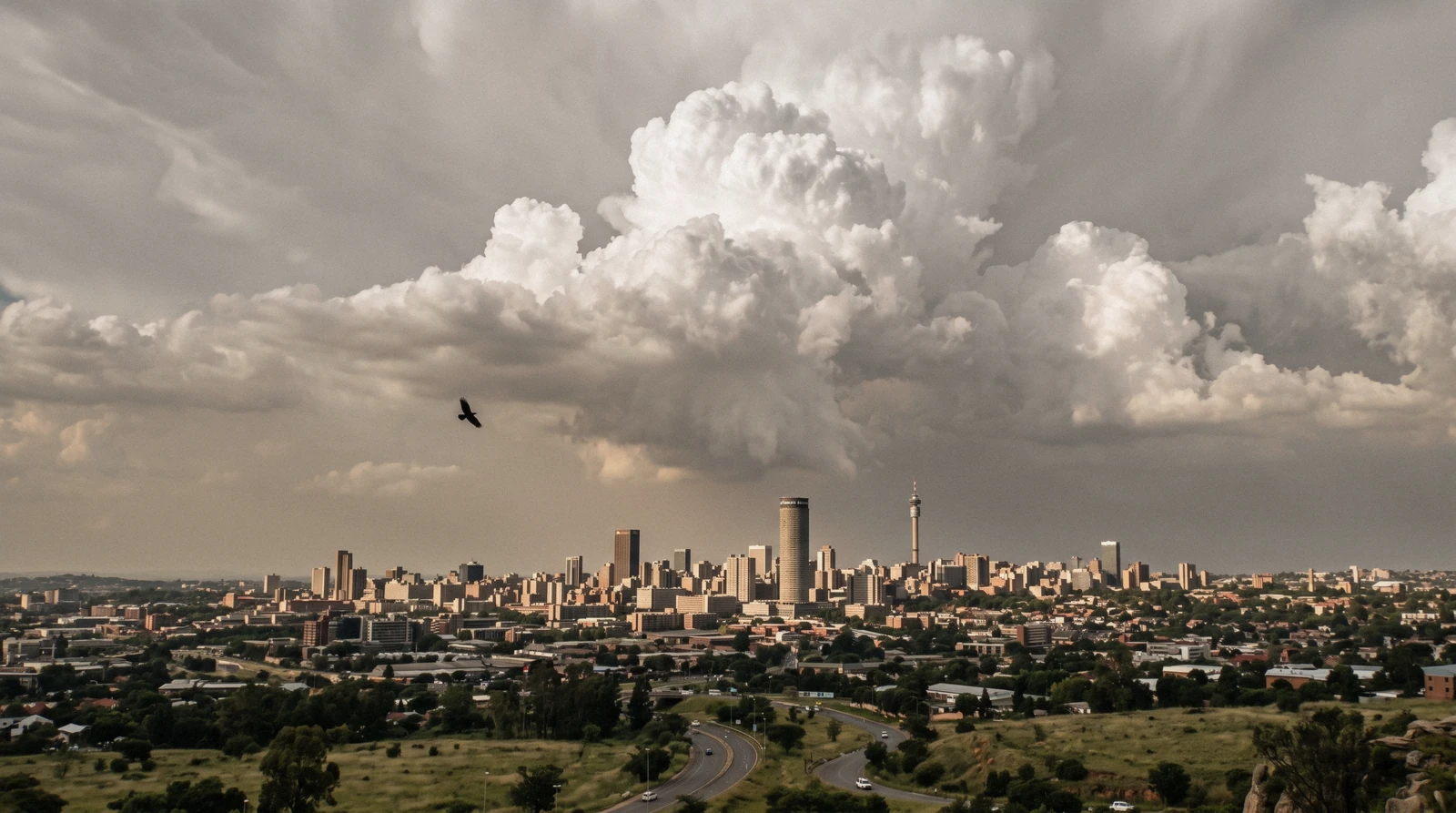
The best time to visit Johannesburg is April, with September and October close behind — the months where the highveld is warm, dry and clear at the same time. This page is built on thirty years of computed local weather rather than adjectives: the month-by-month table comes from the ERA5 archive, and the guides below translate it into a packing list, a storm strategy, a sunburn warning, and the closing-day calendar that quietly decides most itineraries. Plan the rest of the stay from the Johannesburg city guide homepage.
Quick answer The two best windows, the winter catch and the summer storm pattern
April is the best month to visit Johannesburg: daytime highs average 20.7°C with only 49 mm of rain, and the summer grass is still on the veld. September and October run it close — warm, dry, and before the storm season properly restarts. Summer (October to April) is warm rather than hot, with dramatic afternoon thunderstorms peaking at 133 mm in December; winter (May to August) is dry and sunny but the dawns are genuinely cold — July's average low is 2.7°C.
Key takeaways
- The full series — highs, lows, rain and rain days for all twelve months — is in the month-by-month table, computed from 10,958 days of the ERA5 archive.
- The season-defining booking is the dawn balloon flight over the Cradle of Humankind: the coldest, clearest hour of the day is the one the balloons need.
- Weather is half the answer; the other half is closing days — the Apartheid Museum and Sterkfontein shut every Monday, and the whole calendar of closures and crowd weeks is below.
Johannesburg Month by Month: Highs, and What Each Stretch Is For
Average daily high temperature in Celsius with the Fahrenheit reading underneath, computed from the Open-Meteo ERA5 reanalysis for the Johannesburg CBD over 1995–2024. The bands group the year the way a planner uses it: the two best windows, the dry winter, the storm months and the December peak.
Series computed from the Open-Meteo ERA5 archive for −26.2041, 28.0473 over 10,958 days (1995–2024); qualitative cross-checks against gov.za's own climate descriptions.
The Full Series: Every Month, Computed
Computed from the Open-Meteo ERA5 archive for the Johannesburg CBD coordinates (−26.2041, 28.0473): every day from 1995 to 2024 — 10,958 days — reduced to monthly averages. Rain days count days with at least 1 mm.
| Month | Average high | Average low | Rain | Rain days |
|---|---|---|---|---|
| January | 24.5°C (76°F) | 14.3°C (58°F) | 132.4 mm | 15.8 |
| February | 24.4°C (76°F) | 14.1°C (57°F) | 108.1 mm | 13.7 |
| March | 23.2°C (74°F) | 12.7°C (55°F) | 80.7 mm | 12.0 |
| April | 20.7°C (69°F) | 9.7°C (49°F) | 48.9 mm | 7.5 |
| May | 18.6°C (65°F) | 6.3°C (43°F) | 19.3 mm | 3.2 |
| June | 16.4°C (62°F) | 3.4°C (38°F) | 8.6 mm | 1.4 |
| July | 16.5°C (62°F) | 2.7°C (37°F) | 2.8 mm | 0.7 |
| August | 19.8°C (68°F) | 5.4°C (42°F) | 9.0 mm | 1.9 |
| September | 23.6°C (74°F) | 8.9°C (48°F) | 20.8 mm | 3.4 |
| October | 24.8°C (77°F) | 11.3°C (52°F) | 68.0 mm | 9.9 |
| November | 24.5°C (76°F) | 12.7°C (55°F) | 93.1 mm | 13.3 |
| December | 24.5°C (76°F) | 14.0°C (57°F) | 133.3 mm | 17.6 |
Computed from the Open-Meteo ERA5 archive for this guide; gov.za's qualitative picture agrees — a summer-rainfall region where altitude (Johannesburg sits at 1,694 m by the government's own figure, 1,753 m by Wikipedia's) keeps average summer temperatures below 30°C.
The Two Best Windows: April, then September–October
The data gives a first and a close second, and both for the same reason: the warm-and-dry overlap almost never happens anywhere else in the year.
April is the pivot month. The storms have stopped — rain falls to 48.9 mm across 7.5 days — while the heat has not: the average high holds at 20.7°C (69°F), the dawns at 9.7°C are cool rather than cold, and the summer grass is still green on the ridges. It is the month where every entry on the things to do list works on the same day.
September and October are the spring window. September reads 23.6°C against 20.8 mm of rain; October is the warmest month of the year at 24.8°C, though its 68 mm says the storm season is stirring again by late month. Take October for heat, September for certainty.
Two details worth knowing. First, wind is never the problem here — the mean of the daily maximum wind speeds runs 14.8–19.7 km/h across the whole year, so rain drives every choice on this page and nothing else. Second, the shoulder of the best window has a crowd trap: Freedom Day on 27 April is one of the six days Constitution Hill opens free to everyone, which makes late April both the finest and the busiest museum day of the autumn.
Summer Thunderstorms: October to April
The wet season is not a grey season. Johannesburg's summer rain arrives as theatre — a clear morning, a towering afternoon cumulus, a forty-minute storm, a washed evening.
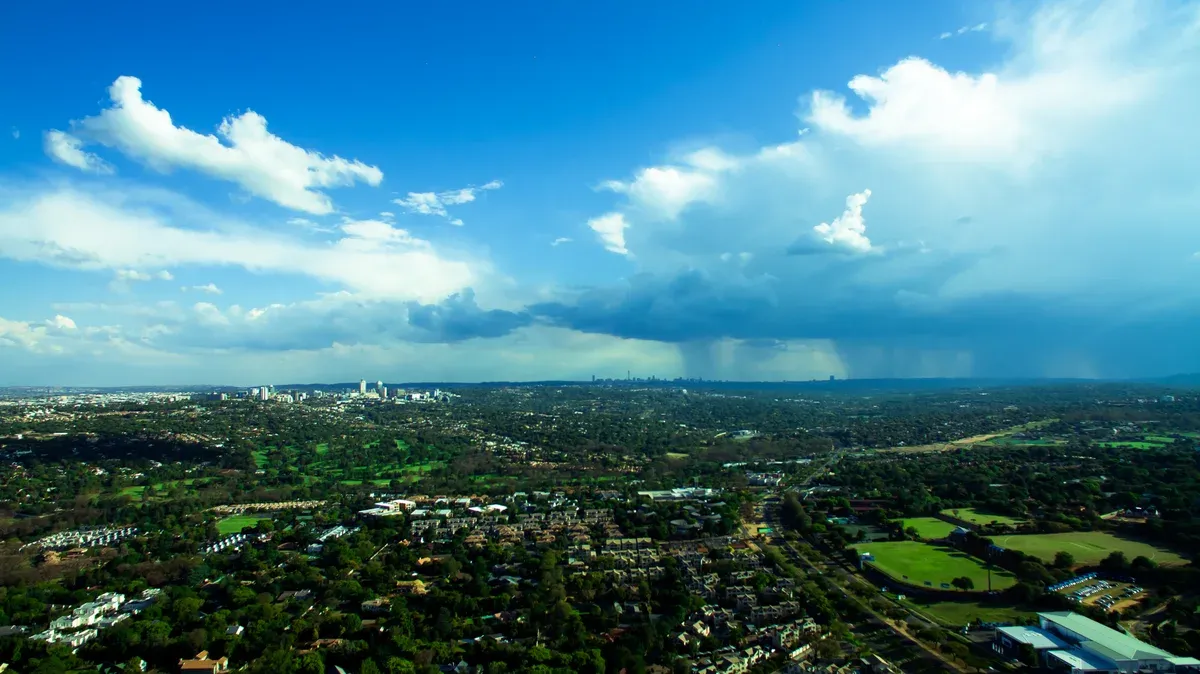
The classic highveld afternoon: warm day, electrifying thunderstorm, clear again by dark. Photo: Ryanj93, CC BY-SA 4.0, via Wikimedia Commons
The mechanics: Johannesburg sits in South Africa's summer-rainfall region, as gov.za puts it, and the convection builds most days between November and March. January averages 132.4 mm over 15.8 rain days and December 133.3 mm over 17.6 — yet neither month is gloomy, because the rain arrives in short, violent afternoon storms rather than all-day fronts. The practical pattern that a Johannesburg summer runs on: outdoors in the morning, an indoor fallback for the late afternoon, and the evening usually clears. Soweto tours, the red bus and the Pilanesberg day trip all run year-round through this pattern.
The altitude writes the other half of the summer story. At 1,694–1,753 m the city stays warm rather than hot — gov.za credits the altitude for keeping average summer temperatures below 30°C, and the thirty-year series agrees: no month's average high reaches 25°C. You plan around storms here, not around heat. The exception to pack for is the sun itself, and it gets its own section below.
The Dry Winter: May to August, and Its Cold Dawns
Winter is the driest, clearest stretch of the Johannesburg year — 2.8 to 19.3 mm of rain a month — with a catch that catches almost everyone: the dawns are cold enough to plan around.
The numbers: July, the coldest month, averages a high of 16.5°C (62°F) against a low of 2.7°C (37°F), with 0.7 rain days — the driest month in the series. June is nearly as dry at 8.6 mm. Daylight hours behave like a season at the latitude: dark by about half past five, which quietly shortens the sightseeing day.
The dawns are the part travel articles skip. gov.za's own climate text warns that winter nights "can drop to freezing point or lower", and the thirty-year average agrees at 2.7°C for July — before any cold snap. Everything that starts early in Johannesburg starts cold for half the year: the balloon launches at first light, the Pilanesberg day trips collect from hotels between six and six thirty, and the game-drive gates open at 06:30 in the May–September window. The answer is layering, not avoidance — a Johannesburg winter day climbs fifteen degrees from breakfast to lunch, under the clearest skies in the series. If your month in the city is May to August, the dawn balloon flight is the booking the season exists for; frost on the Cradle of Humankind at sunrise is the picture the winter has been saving.
The Ultraviolet Problem at Altitude
This is the year-round warning: whatever the month on the calendar above, the sun at nearly 1,700 metres burns faster than almost anywhere the average visitor has been.
The Cancer Association of South Africa states it plainly: the country has "one of the highest monitored ultra violet (UV) levels in the world", and altitude does much of the work — the government puts Johannesburg at 1,694 m and Wikipedia's figure is 1,753 m, so every metre of thinner atmosphere is doing less filtering while you walk to lunch. CANSA's guidance says skin can burn within fifteen minutes, explicitly including overcast days, which is how winter visitors get caught: the 2.7°C dawn convinces you the sun is harmless, and the 16.5°C midday proves otherwise.
The practical layer, all CANSA's rules: keep out of direct sun between 10:00 and 16:00 — which conveniently overlaps the summer storm window — use SPF 20–50 (30–50 for fair skin), and reapply every two hours. A hat that survives wind belongs in the bag in every month of the series; the plateau sun is the one weather fact that ignores the seasons entirely.
The Calendar: Closing Days and Crowd Weeks
Weather picks your month; opening days pick your days. Johannesburg's big sights close on a Monday rhythm, Gold Reef City adds a Tuesday, and the public-holiday free-entry days are the year's crowd peaks.
The Monday rule is the one that reorganises itineraries. The Apartheid Museum opens Tuesday to Sunday 09:00–17:00 and closes every Monday, and so does Sterkfontein (Tuesday to Sunday 09:00–16:00, tours on the hour from 09:00 to 15:00). Constitution Hill is the deliberate exception — open daily 09:00–17:00 — which is why every Monday plan in this city routes through it. Gold Reef City closes Monday and Tuesday, and honesty requires the footnote that the operator's own pages disagree about Wednesday (the header says Wed–Sun, the terms say Thu–Sun): plan the theme park for Thursday to Sunday and nothing can go wrong.
Mandela House closes on the big December holidays — Christmas, the Day of Goodwill, New Year's Day, Good Friday and Family Day.
| When | What closes or crowds | The move |
|---|---|---|
| Every Monday | Apartheid Museum and Sterkfontein Caves both shut; Gold Reef City too | Route the day through Constitution Hill, the daily-open substitute (the Monday pairings) |
| Mondays and Tuesdays | Gold Reef City, on its own published days | Book the theme park Thursday–Sunday to clear the Wednesday contradiction as well |
| Six public holidays: 21 March, 27 April, 16 June, 9 August, 24 September, 16 December | Constitution Hill free for everyone — the year's crowd days, including Youth Day ceremonies on 16 June | Fine days to be inside among Joburg families; bad days to be in a hurry (the 1976 background) |
| 24 and 31 December | Constitution Hill closes early at 13:00; closed 25–26 December | Take the morning tour on the eves; give Christmas itself to Soweto's streets-free quiet |
| December school holidays | Domestic travel peaks in the wettest month (133.3 mm) — queues at the big sights, full restaurants | Book everything ahead, museum mornings at opening, storms after lunch (the 1-day plan absorbs it) |
Seasons on the Day Trips
The city barely changes with the season; the parks around it do. The gate times at Pilanesberg move four times a year, and the cableway and the caves run their own weekly rhythm.
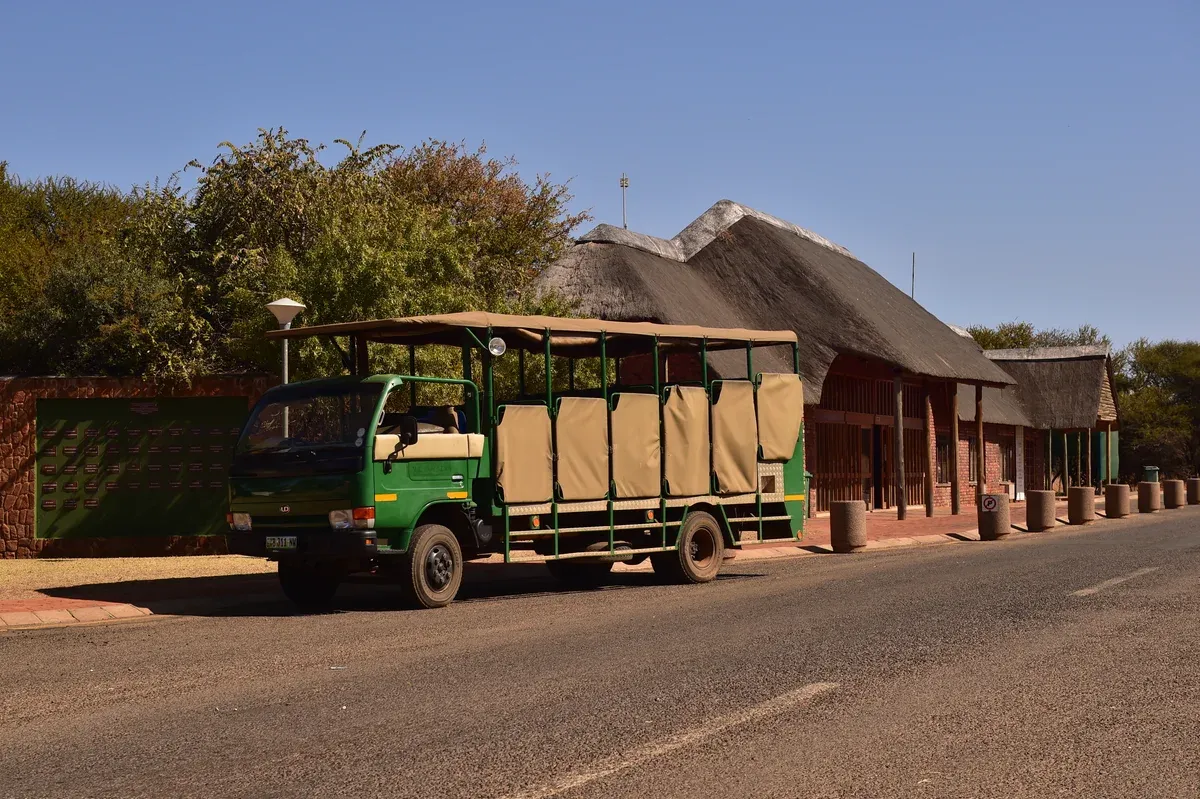
Pilanesberg's crater country — the day trip whose gate times move with the season. Photo: South African Tourism from South Africa, CC BY 2.0, via Wikimedia Commons
Pilanesberg is the season-sensitive one: malaria-free and open year-round, but its gates shift with the light — an hour's difference between a December and a June dawn, which matters when the collection van reaches your hotel between six and six thirty. The tariff figures we found sit on a booking site that explicitly disclaims any park-authority affiliation, so treat exact fees as the Pilanesberg page's problem and plan the times from the table below. Hartbeespoort's aerial cableway runs Wednesday to Sunday (closed Monday and Tuesday), 09:00 to about 16:30, in the operator's own words open "come rain or shine" and fully operational during load shedding, cashless at the gate.
Sterkfontein's caves keep a steady underground climate all year — the seasonal variable there is only the Monday closure.
| Season window | Pilanesberg gate hours | Notes for the day |
|---|---|---|
| November to February | 05:30–19:00 | Storm season: afternoon cells build over the park; morning drives are the reliable half |
| March to April | 06:00–18:30 | The first best-weather window; the park at its greenest |
| May to September | 06:30–18:00 | Cold dawns — the 2.7°C July mornings are real on an open vehicle; driest roads |
| September to October | 06:00–18:30 | The second best window: warm, dry, and the spring window this page recommends |
The Season on a Soweto Morning
Soweto is booked as a morning in every month of the series, but the weather decides which morning you get — and what to carry with you onto the street.
The guided Soweto morning runs on foot and by vehicle in mixes that change with the operator — the half-day with a local guide, the walking tour that stops for lunch, the tuk-tuk version — and all of them favour the same hours: out early, off the street by the time the summer storm builds or the winter light goes flat. In the best windows of April and September–October, the precinct — Vilakazi Street, the Hector Pieterson Memorial — sits in mild, dry, photographable light for the whole morning. In high summer, plan the township for the morning and let the 15:00 storm have the city; in winter, the 2.7°C dawn means the first hour on an open street is a jacket-and-gloves hour even under a cloudless sky.
The Soweto guide covers the street-level detail; the advisories' guided-visit rule holds in every month — why, on the safety page.
Packing for the Highveld: the Five Things the Series Implies
The thirty-year series packs your bag more honestly than any list written for "South Africa" in general — the highveld is not the Kruger and it is not the Cape.
- Layers, always: a winter day climbs fifteen degrees from the 2.7°C July dawn to its 16.5°C lunch, and a summer evening after the storm drops just as fast
- A real rain shell from October to April — the storms are short but vertical, and 132.4 mm in January has to fall somehow
- The sun kit in every month: SPF 30–50, reapply two-hourly, a hat that survives wind — the CANSA rules hold under overcast skies too
- Walking shoes that handle a downpour and a dry red evening in the same week: the pavements of the evening zones see both
- One warm layer for anything that starts before breakfast — the balloon, the Pilanesberg pickups, the cave mornings — in every month of the year
Season Bookings: the Dawn, the Park and the Caves
Three outings that answer the season rather than the season's whims: a flight that needs winter's coldest air, a park day that runs in every month of the series, and caves that ignore the weather entirely. Prices are the operators' listed USD figures; ratings are theirs in Q3 2026.
 from $338
Cradle of Humankind: Balloon Flight & Breakfast
Dawn balloon over the Cradle of Humankind with a bushveld breakfast after landing; the trip-marker pick.
Check Availability from $187.87
Full Day Ultimate Pilanesberg National Park Safari from Johannesburg or Pretoria
Viator's full-day Pilanesberg with an early start and the park's whole southern loop driven.
Check Availability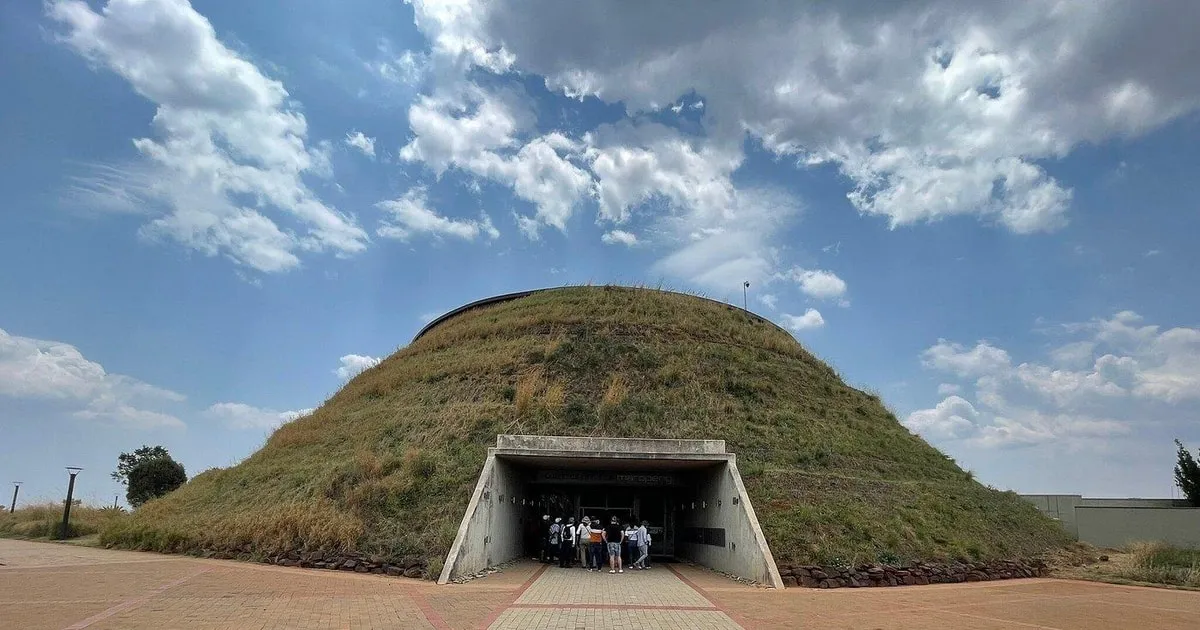 from $131
Johannesburg: Cradle of Humankind Guided Tour with Transfers
The Cradle of Humankind day with transfers from Johannesburg: Maropeng's museum and the Sterkfontein area in one trip.
Check AvailabilityPrices, ratings and details are the platform's own. dollar figures are the listed prices — the platform bills in your account's currency.
Where to plan next
The three pages that turn a chosen month into a booked trip.
What the days cost
The price basket barely moves with the season — entry fees, the airport train and a day at three budgets, built from official prices. Johannesburg costs.
Budgeting Read the guideOne day, structured
The month picks the weather; this picks the order — including the Monday variant when the museums close. The 1-day itinerary.
Itinerary Read the guideApartheid Museum
The museum every month wants and every Monday refuses: hours, the full official price schedule, and the quiet slots. Apartheid Museum guide.
The Monday problem Read the guideBest time to visit Johannesburg: the questions readers ask
What is the best month to visit Johannesburg?
April. It is the month where the year's two good qualities overlap: the summer rain has stopped (48.9 mm and falling) and the warmth has not (highs 20.7°C, lows 9.7°C). If April does not fit, September and October are the spring version of the same window — the two best windows section has the detail.
What is the rainy season in Johannesburg?
October to April, peaking in December (133.3 mm over 17.6 rain days) and January (132.4 mm over 15.8). It arrives as short, dramatic afternoon thunderstorms rather than all-day rain, so mornings stay usable through the wet months — the storm section explains the daily pattern.
How cold does Johannesburg get in winter?
Dawn-cold, day-mild. July averages a low of 2.7°C (37°F) against a high of 16.5°C (62°F), and gov.za warns winter nights can drop to freezing or lower. There is no heating culture to speak of in older buildings, so pack layers you can shed by ten in the morning — the winter section has the full picture.
Is April a good time to visit Johannesburg?
It is the best month in the series: warm days, cool dawns, the year's second-lowest rain and the veld still green from summer. Two footnotes — Freedom Day on 27 April brings free entry and crowds to Constitution Hill, and Easter shuffles some opening days. Neither is a reason to skip it; both are reasons to book ahead.
When should I avoid Johannesburg?
Nowhere in the series is a write-off, but two stretches ask more of you: late November to January combines the biggest storms with domestic school-holiday travel, and any Monday removes the Apartheid Museum and Sterkfontein from the board. If your dates land there anyway, the calendar section shows exactly which days to route around.
Does Johannesburg have four seasons?
No — the highveld runs two: a wet-warm summer from October to April and a dry, cold-dawn winter from May to August, with September and April as the shoulders that make the best months. The series above is the proof: rain falls on 17.6 days in December and 0.7 days in July, while every month of the year stays within a nine-degree high-temperature band.
What is the weather like in Johannesburg at Christmas?
Warm, wet and crowded. Christmas Day sits in the wettest month of the series — December averages 133.3 mm over 17.6 rain days — with a high of 24.5°C and a low of 14.0°C, and it falls inside the domestic school-holiday peak. Expect a building morning, a probable afternoon storm, and queues at anything open; several venues close the Christmas weekend outright (the calendar section).
When is the driest month in Johannesburg?
July, by a distance: 2.8 mm of rain across 0.7 rain days — statistically, most Julys see one wet hour all month. The trade is the cold dawn, 2.7°C on average, and the shortest evenings of the year. June runs it close at 8.6 mm, and if you want the dry month with more daylight at each end, that is the argument for the September side of the winter.
Johannesburg Weather on Film: Storms, Rain and a Cold Front
Local news weather coverage is the honest preview of the storm season and the winter fronts — three bulletins that show what the series above looks like on screen.
SA Weather | Johannesburg Emergency Services on high alert as risk warnings remain
The storm season at its most serious — what a highveld severe-weather day actually looks like on local news.
Video: SABC NewsExtreme Weather | Joburg residents urged to exercise caution amid persistent rainfall
Persistent summer rainfall in the city — the wet end of the December–January peak this page quantifies.
Video: SABC NewsJoburg EMS on high alert as cold front hits city
A winter cold front arriving — the reason the 2.7°C July dawns in the series deserve their own section.
Video: SABC NewsVideos load from YouTube only when you press play.
Prices, hours and terms are set by the venue or operator and confirmed at checkout.
We may earn a commission if you book through one of our links, at no extra cost to you. Full affiliate disclosure