 Johannesburg Travel Guide
Johannesburg costs less than the fear of it suggests: the headline admissions run $6.13–$24.50 (R100–R400), the airport train is $13.99 (R228), and a full mid-range day lands near $70.6 (R1,150) a person by the basket built below. Every admission and fare on this page is an official published price; the meals and taxi rides are our benchmarks, labelled as such, because — honest finding — no restaurant or e-hailing operator publishes a price list a guide can cite. The full routing sits on the Johannesburg travel guide homepage.
Quick answer The daily number, the big-ticket prices and where the money actually goes
A mid-range day in Johannesburg runs about $70.6 (R1,150) per person by our basket: one big entry like the Apartheid Museum at $14.72 (R240), honest meals, and e-hailing between the sprawl's nodes. Travellers on a short leash do the day for $32.8 (R535); the top-bracket day with two entries and a Sandton dinner reaches $134.0 (R2,185). The airport train adds $13.99 (R228) each way, and no entry on this page crosses $24.5 (R400).
Key takeaways
- The big-ticket basket prices the eight headline items from official pages — that is where every budget starts.
- The cheapest guided day in our index is the Soweto walking tour with lunch included: one price, no taxis, no tipping arithmetic.
- Where you sleep moves the total more than anything here — the areas and their trade-offs are on the where to stay guide.
What the Rand Feels Like
Three amounts a visitor actually handles, in rand with live conversions beside them. The rate behind every dollar figure on this page is $1 = R16.30 — the rand is always the official number — and the meal amounts are our benchmarks, not published prices.
R120
A lunch at a township or mall-food counter (our benchmark)
- USD$7.36
- EUR€6.46
- GBP£5.56
R360
A museum day: the big entry plus lunch
- USD$22.09
- EUR€19.38
- GBP£16.67
R1,200
A day for two: entries, riding between nodes, dinner
- USD$73.64
- EUR€64.58
- GBP£55.57
Every admission quoted on this page is an official published price; the meal and taxi benchmarks are ours, argued in the sections below (what food money buys). Source: European Central Bank reference rates via api.frankfurter.dev.
The Big-Ticket Basket: Eight Headline Prices
The eight figures most itineraries are built around, dollar-first at $1 = R16.30 and each taken from the operator's own published adult rate. Where a venue prices South Africans differently, that rate is shown in its cell.
| Item | Official adult price | What it includes | How you book |
|---|---|---|---|
| Apartheid Museum | $14.72 (R240) | International adult, audio tour included; South African adults with ID pay $10.43 (R170) | At the door or Webtickets — no booking needed |
| Constitution Hill, Highlights tour | $9.20 (R150) | One-hour guided tour, hourly departures; the two-hour full-site tour is $12.27 (R200) | Walk-in or Webtickets (5% online discount) |
| Mandela House, Soweto | $11.35 (R185) | International adult; South African adults $6.44 (R105); under-7s free | At the door — the venue is cashless |
| Sterkfontein Caves | $9.20 (R150) | Full guided tour including the exhibition; children 6–18 pay $7.67 (R125) | Webtickets or on site — closed Mondays |
| Gold Reef City mine tour | $9.20 (R150) | The underground mine tour alone; with theme-park admission $21.8 (R355) | Online only |
| Hartbeespoort Aerial Cableway | $24.5 (R400) | Adult return; children 4–14 pay $16.26 (R265) | At the gate — cashless; runs Wednesday to Sunday |
| Gautrain, OR Tambo airport to Sandton | $13.99 (R228) | One-way, flat fare at peak and off-peak; the Gautrain Card is $1.29 (R21) with a $2.33 (R38) minimum load | Station kiosk or a contactless bank card |
| City Sightseeing red bus | $23.0 (R375) | One-day hop-on hop-off over 13 stops; juniors 4–17 pay $13.80 (R225) | Online or the Rosebank ticket office |
All eight are the operators' published adult rates on their own pages. Buying the whole basket would cost about $115.2 (R1,878) — nobody does; the point is the shape of the money, where a world-class museum morning costs less than the airport transfer. in Q3 2026
Where the Money Goes
South African price tags come with fewer surprises than most destinations: the tax is already inside, the cards work, and the quirks that remain are the dual rates and the cashless doors.
The price you see is the price you pay
South Africa's VAT runs 15% (the standard SARS rate; a proposed increase was reversed in 2025), and — the part your budget cares about — displayed prices in shops and on menus carry it already. There is no add-on at the till and no tourist tax layered on a restaurant bill. What sits outside the sticker is the tip, which has its own section below, and almost nothing else: the two memory museums, the cableway and the garden gate all quote single all-in figures.
Cards first, cash for the edges
The card network covers the city: card-tap works on the Gautrain gates without a dedicated card, and four venues in the basket above — Mandela House, Constitution Hill, the Walter Sisulu garden and the Hartbeespoort cableway — are cashless outright. Cash still earns its place in the day for the small counters, the markets and the tips, but nobody needs a currency exchange strategy: change money inside banks or secure malls per the advisory's own rule, and skip the street changers entirely.
Tipping: the 10–15% Rule
Tipping in South Africa is guidance, not law — but it is guidance the whole service economy runs on, and it is the one cost the menu price does not include.
The working rule for restaurants is 10–15%, rising to 15–20% for excellent service; check the bill first, because some venues print a service charge, and doubling it is the classic tourist overpay. Around that: car guards (the informal attendants who watch street parking) take a small note or coin on return, porters a few rand a bag, and e-hailing drivers a tip in the app rather than cash. Carry a small float of notes for exactly these edges — the cashless museum door does not solve the car guard.
On a $70.6 (R1,150) mid-range day, the tips are a rounding error, not a budget line: the error visitors make is forgetting them entirely, not undershooting them.
Transport Money: Gautrain, E-hailing and the Red Bus
Three systems carry almost every visitor rand spent on movement, and each prices differently: one published and flat, one quoted in an app, one bundled per day.
The Gautrain is the published one: OR Tambo airport to Sandton costs $13.99 (R228) one way, flat at peak and off-peak, tapped with a contactless bank card or a Gautrain Card that costs $1.29 (R21) with a $2.33 (R38) minimum load. The red bus is the bundled one: $23.0 (R375) buys a one-day hop-on hop-off over 13 stops from Rosebank, with a complimentary shuttle from Sandton hotels and the last departure at 15:00 — a full city loop for less than two long e-hailing rides.
E-hailing is the honest gap in every Johannesburg budget guide: Uber and Bolt publish no fare table, and each trip quotes in-app by distance, demand and route — so no writer can print a true number, including us. What we can say: visitors who budget by app-quoting their actual routes the night before land within a few rand, and the minibus taxis, the city's cheapest system, are not the visitor option — the FCDO's own transport advice ranks them behind the Gautrain and e-hailing (why, on the safety page). Rea Vaya, the bus rapid transit network, publishes no accessible fare sheet at all — its official site has been unreachable with an expired certificate on every check we have made, so its fares ride as not stated.
The Sandton Bracket and the Township Counter
Johannesburg's cost of eating spans a bigger range than its cost of entry: the same meal — starch, protein, chakalaka — exists at both ends of the city, priced an order of magnitude apart.
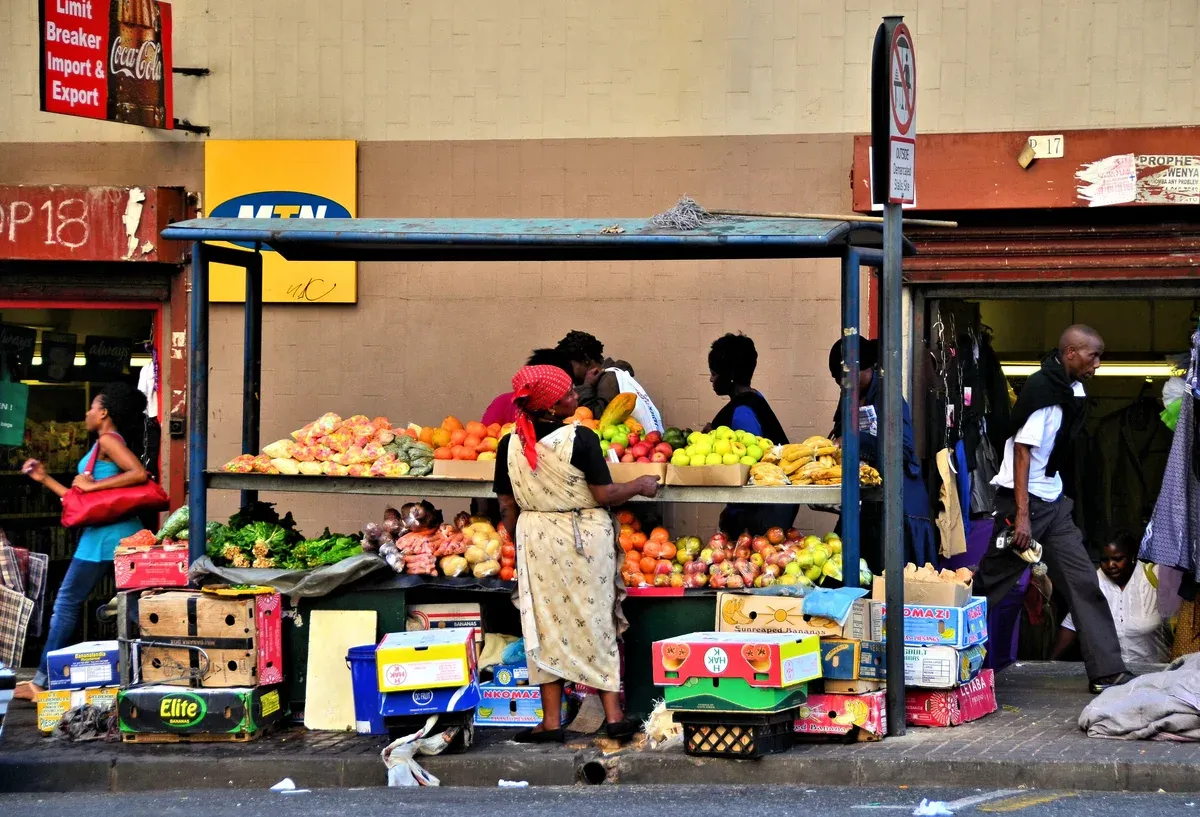
The counter end of the brackets: pavement and market food is where Johannesburg's price advantage lives. Photo: Ossewa, CC BY-SA 4.0, via Wikimedia Commons
No official source publishes restaurant prices — there is no national menu register — so this is the page's declared benchmark zone, and every figure in it is ours: a lunch plate at a township counter or a mall food floor lands near our R120 benchmark, while a starter-to-dessert dinner in Sandton runs toward our R700-for-two benchmark. Between them sits everything else: the market halls, the shisa nyama counters, the Fordsburg food streets.
The sourced way to taste across the brackets without guessing is a booked food walk: the Joburg street food tour eats through Fordsburg, the city's oldest suburb, for $78 with a born-and-raised guide, and the Soweto walking tour folds lunch into a $43 morning. What to order once you are there — and which dishes define each bracket — is the typical food guide's job; the venue-by-venue shortlist is on where to eat.
Museum Money: the Price Quirks
Five quirks decide what a culture day actually costs, and four of them save money for the visitor who knows them in the queue.
The first is dual pricing: the two memory museums charge international and South African rates, and the local rate needs a South African ID at the desk — no visitor workaround exists, so budget the international column. The second is the single-rate venues: Constitution Hill and Sterkfontein price everyone the same, which makes them the value picks for an international wallet. Third, the red bus receipt: the Apartheid Museum's own ticket office cuts the international adult rate to $13.50 (R220) on presentation of a City Sightseeing booking receipt — the only published discount of its kind in the basket.
Fourth, the combo that does not exist: nothing on the museum's official price list links it to Gold Reef City next door, so plan the two as separate entries. And fifth, the missing number: the Hector Pieterson Museum's published fees cover elderly visitors at $1.84 (R30), teenagers and students at $0.61 (R10) and children at $0.31 (R5) — an adult rate is simply not listed anywhere official, so arrive with card options rather than assumptions.
| Venue | International adult | South African adult (ID at the desk) |
|---|---|---|
| Apartheid Museum | $14.72 (R240) | $10.43 (R170) |
| Mandela House | $11.35 (R185) | $6.44 (R105) |
| Constitution Hill | $9.20 (R150) — one rate for all | $9.20 (R150) |
| Sterkfontein Caves | $9.20 (R150) — one rate for all | $9.20 (R150) |
A Day at Three Budgets
The same Johannesburg day, priced three ways, from the official entries and our labelled benchmarks. Per person, excluding the room — the where to stay guide handles that line.
The structure of the table matters more than any single cell: entries are official and identical for everyone, meals and taxis are the levers, and the distance between the budget day and the top day is almost entirely food and ride choices — the sights cost the same whether you arrive hungry or full.
- Entries are the operators' official prices; every meal, drink and taxi cell is our benchmark, because no operator publishes one
- The cheapest sourced day-tour — the red bus at $17.00 — replaces the entries and the transport lines at a stroke
- Two people do not double the entry line at dual-rate venues' cheaper categories, but they do double every benchmark: our day-for-two benchmark is R1,200 on the rand panel above
| Line item | Budget day | Mid-range day | Top day |
|---|---|---|---|
| The day's big entry | Walter Sisulu Botanical Garden — $6.13 (R100) | Apartheid Museum — $14.72 (R240) | Constitution Hill full-site tour — $12.27 (R200) |
| Second entry | — | — | Mandela House — $11.35 (R185) |
| Lunch | R120 — our counter benchmark | R150 — our market-hall benchmark | R250 — our benchmark |
| Dinner | R150 — our benchmark | R350 — our benchmark | R700 — our Sandton-dinner benchmark |
| Getting around | R120 — two short e-hailing hops (our benchmark) | R350 — an e-hailing day (our benchmark) | R600 — an e-hailing day, longer hops (our benchmark) |
| Coffee and a nightcap | R45 — our benchmark | R60 — our benchmark | R250 — our benchmark |
| The day's total | ≈ $32.8 (R535) | ≈ $70.6 (R1,150) | ≈ $134.0 (R2,185) |
What Free Looks Like
The city's free tier is real but oddly shaped: one serious museum costs nothing every day it opens, one costs nothing exactly six days a year, and the safari's front gate is free everywhere but inside.
The Wits Art Museum in Braamfontein is the daily free entry: serious African art, Tuesday to Saturday 10:00–16:00, no ticket and no charge, at the corner of Jorissen and Bertha — and it pairs naturally with Constitution Hill up the same ridge. Constitution Hill itself, the big one, flips its gate free for everyone on six public holidays — 21 March, 27 April, 16 June, 9 August, 24 September and 16 December — which are the finest and the most crowded museum days of the year at once. Outside the city centre, the Lion & Safari Park charges nothing at its gate — the fees start with the activities, from the self-drive at $24.5 (R400) to the guided safaris — and the Walter Sisulu garden prices its waterfall-and-eagles morning at $6.13 (R100).
The full free tier, itemised, lives on the Johannesburg for free page.
The Money You Should Never Spend
The cheapest part of a Johannesburg budget is the line items that were never real: three sums the advisories and the road rules have already deleted.
Visa-agent fees come first. Most visitors from the US, UK, Germany, France, Brazil and a long list of others do not need a visa for tourist stays of up to 90 days under the Department of Home Affairs' exemption list, and the applications that are needed run through VFS Global — so a "guaranteed tourist visa" fee is the scam itself, one of the FCDO's named frauds. There is no eTA yet; check the immigration directive in force before you travel and pay nobody who guarantees one (the full scam list).
Second, e-toll charges on a rental quote: the Gauteng e-tolls ended, with the gantries switched off at midnight on 11 April 2024 — any e-toll administration line on a Johannesburg rental agreement is a fossil, and worth a question at the counter. Third, the ATM "helpers": a stranger's assistance at a cash machine is a skimming play, and the advisory's rule — machines inside banks and secure malls only — costs nothing to follow.
The Value Cards: What Money Already Buys Guided
Three bookings where the guided price beats the do-it-yourself arithmetic — transport, lunch or a whole food day folded into one number. Prices are the operators' listed USD figures; ratings are theirs at the last check.
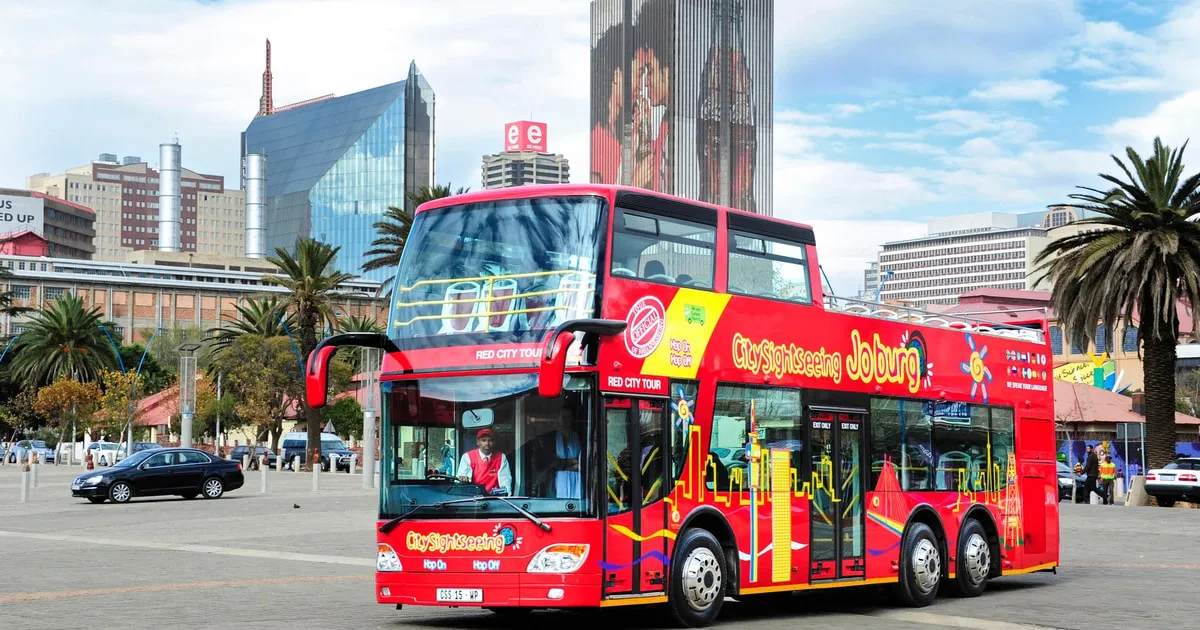 from $17.00
Johannesburg: Hop-On Hop-Off Bus with Optional Soweto Tour
The red double-decker loop with a recorded commentary and hotel-shuttle links; the cheapest way to see the CBD's spread safely.
Check Availability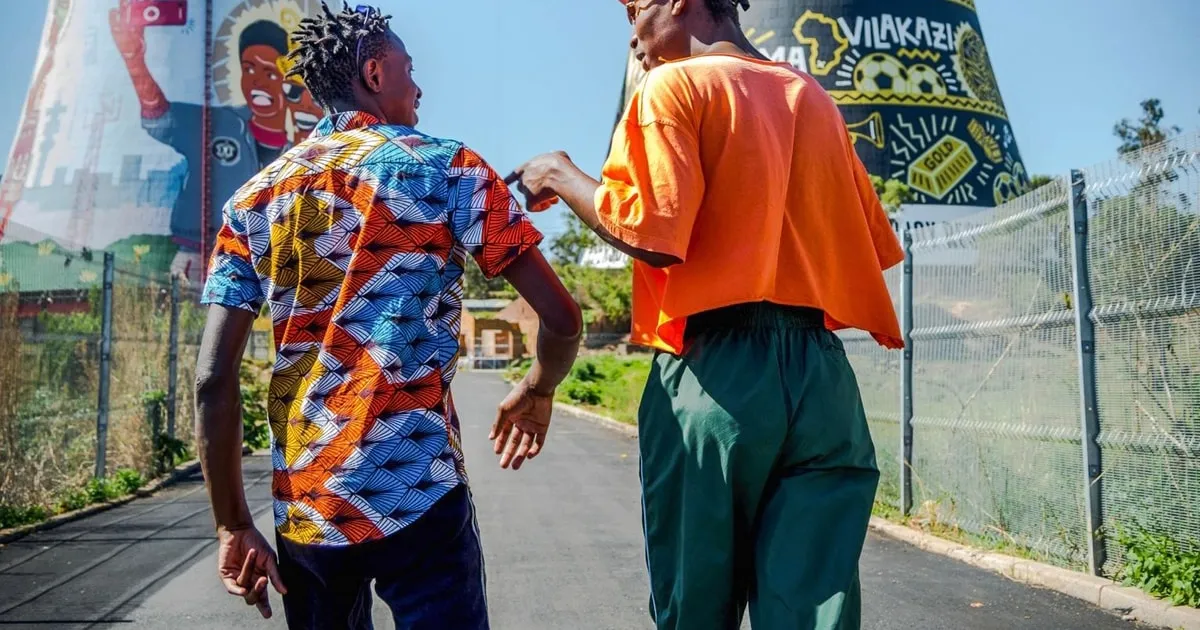 from $43
Soweto: Walking Tour with a Local Guide and Lunch
Walk Soweto's streets with a local resident, eat where the neighbourhood eats; the most honest two hours you can buy there.
Check Availability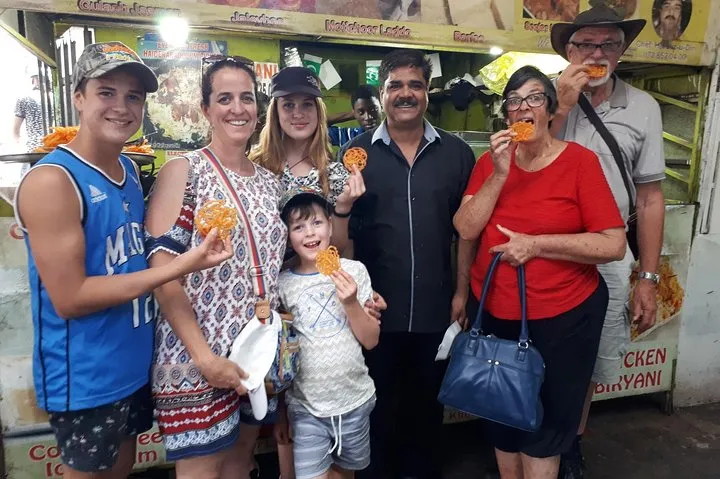 from $78
Joburg street food tour in it's oldest suburb!
Eat through Fordsburg, the city's oldest suburb, one street-food counter at a time.
Check AvailabilityPrices, ratings and details are the platform's own. dollar figures are the listed prices — the platform bills in your account's currency.
The pages that finish the budget
The room, the riding and the eating — the three lines this page benchmarks rather than prices.
Where to stay
The room moves the trip total more than every entry fee combined — the area trade-offs, from Sandton towers to Melville porches. Where to stay.
The biggest line item Read the guideGetting around
Gautrain, e-hailing, the red bus and driving on one page — the systems behind the transport money above. Getting around guide.
The daily lever Read the guideWhat to eat
The dishes behind the brackets — from the township counter plate to the Sandton dining room. What to eat in Johannesburg.
The benchmark zone Read the guideJohannesburg costs: the questions readers ask
Is Johannesburg an expensive city to visit?
No — it is one of the better-value big cities a visitor can draw. The headline admissions run $6.13–$24.50 (R100–R400), a full mid-range day lands near $70.6 (R1,150) by the basket above, and the rand stretches meals and rides further than most capitals. What the city does demand is planning — the sprawl makes transport the real variable (the transport money section).
Is $100 a lot in South Africa?
A hundred US dollars — $100.0 (R1,630) — is a full mid-range day for one person in Johannesburg with change: entry, meals, rides and tips by the basket above, or nearly five days of the budget-day version. In South Africa locally it is a strong day's budget rather than a fortune; the honest frame is what it buys, not what it sounds like.
How much is the train from OR Tambo airport to Sandton?
$13.99 (R228) one way, a flat fare at peak and off-peak, tapped with a contactless bank card or a Gautrain Card that costs $1.29 (R21) plus a $2.33 (R38) minimum load. The station is inside the terminal building — the airport-to-city page compares it with e-hailing and transfers.
Do I need cash in Johannesburg?
Less than you expect and more than zero. Cards cover the big doors — Mandela House, Constitution Hill, the cableway and the botanical garden are cashless outright — but the small counters, the markets, the car guards and some tips live on notes, and card machines ride on the mobile network during the rare outage. A modest float of small rand notes covers every gap; change money only in banks or secure malls.
How much should I tip in Johannesburg?
10–15% at restaurants, rising to 15–20% for excellent service — and check the bill first, because a printed service charge means the tip is already on it. Small notes for car guards and porters, in-app tips for e-hailing drivers. Tipping is guidance rather than law here, but the service wages are built around it (the tipping section).
Is Johannesburg cheaper than Cape Town?
Honestly: nobody can say with the numbers in print. No source publishes a like-for-like visitor basket for both cities, and we will not invent one — our Cape Town counterparts would have to run the identical basket. What the official prices do show: Johannesburg's headline entries sit at $6.13–$24.50 (R100–R400), which is modest by any world-city standard, and the rest of the Johannesburg or Cape Town question was never really about money.
Are any museums free in Johannesburg?
Two, on different clocks. The Wits Art Museum is free every day it opens (Tuesday to Saturday 10:00–16:00), and Constitution Hill throws its gate open to everyone on six public holidays a year — 21 March, 27 April, 16 June, 9 August, 24 September and 16 December — which are also the crowd peaks (what free looks like).
How much does a Soweto tour cost?
From $43 for the guided walking tour with lunch — the best value in our index — through the tuk-tuk version at $58 and half-day vehicle tours around $120, all listed in USD by the operators. The Soweto-tour verdict weighs whether the guide is worth it; the safety page explains why the advisories say it is.
Where the Money Goes on Screen
Three videos behind the budget lines: how the Gautrain fare system actually works, what a well-planned first day looks like, and the city the money is spent in.
Gautrain 101 - Tickets and Fares
The rail system's own explainer of the card, the fares and the gates behind the $13.99 (R228) airport line in the basket above.
Video: Gautrain Gautrain Management AgencyJOHANNESBURG, SOUTH AFRICA (2026) | Top Things To Do For A 1 Day Visit (+ Tips)
A recent pass through the first-timer's day — the shape of the itinerary the three-budget table prices.
Video: World Wild HeartsJohannesburg, South Africa — Africa's Richest City
The city itself, district by district — useful context for why the same meal spans a Sandton dinner and a township counter.
Video: CoolVisionVideos load from YouTube only when you press play.
Prices, hours and terms are set by the venue or operator and confirmed at checkout.
We may earn a commission if you book through one of our links, at no extra cost to you. Full affiliate disclosure