 Johannesburg Travel Guide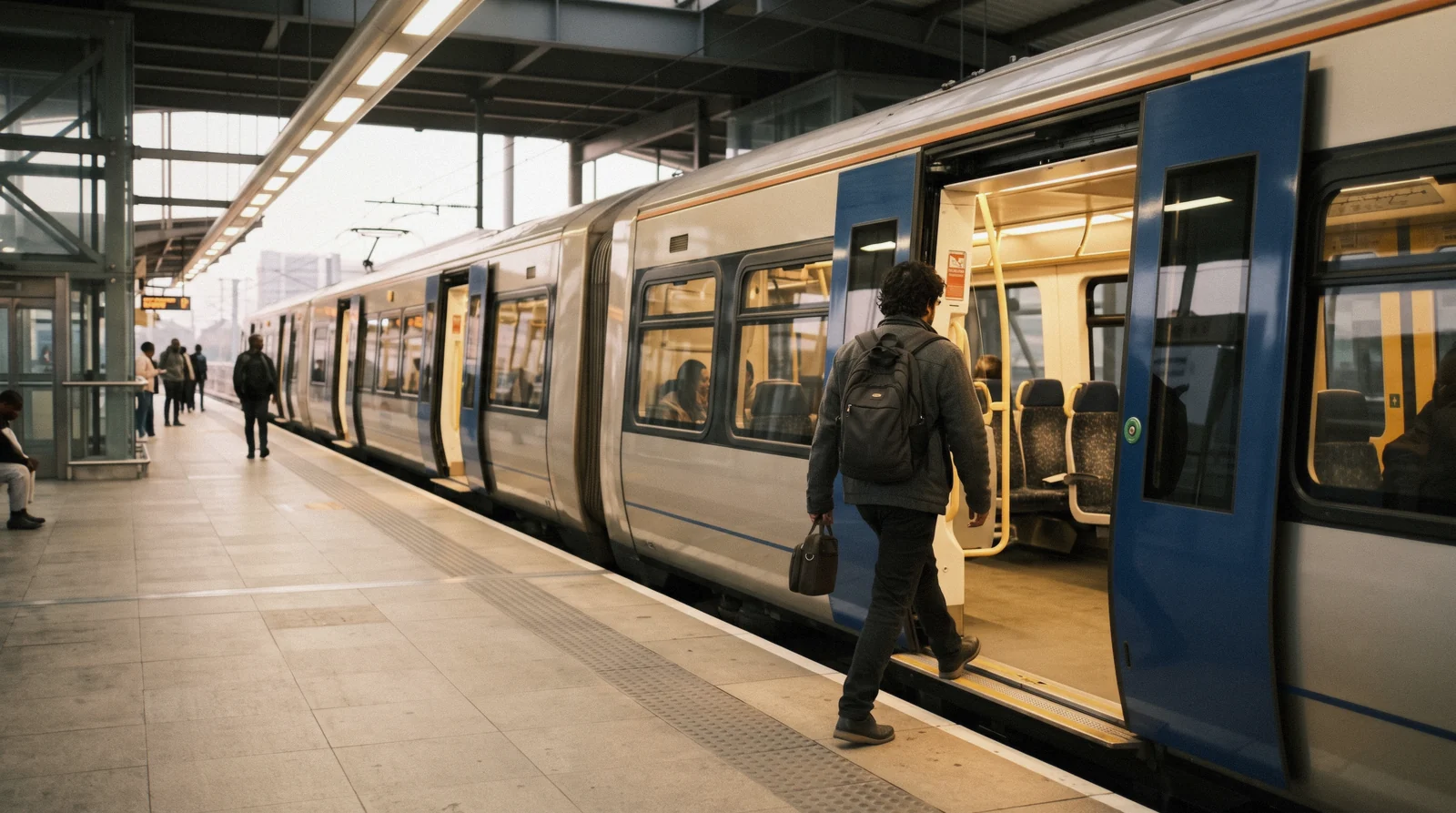
Johannesburg is a driving city that visitors should not drive into blind: the distances are big, the advisory is blunt about after dark, and the honest answer to getting around Johannesburg is a mix — the Gautrain for the airport and the Sandton spine, e-hailing for almost everything else, the red bus for one car-free day, and guided tours where the driving and the deciding both come bundled. The full routing sits on the Johannesburg travel guide homepage.
Quick answer The honest frame: a driving city, three visitor systems, and the rule that shapes them all
Johannesburg has no visitor-friendly single transit system — it is a driving city, and visitors get around with a mix: the Gautrain rail line (airport to Sandton for $13.99 (R228) at $1 = R16.30, the rate used once here), e-hailing apps for point-to-point trips, the red bus for one structured day, and guided tours that double as transport. The Foreign Office advice that shapes all of it: do not walk after dark, including to and from Gautrain stations, and prefer the train and e-hailing over minibus taxis.
Key takeaways
- The modes table compares all six options with their published prices and the advisory caveat each one carries.
- One booking that removes the transport decision entirely: the hop-on hop-off bus with hotel shuttle at $17.00 listed, the cheapest guided day in our index.
- Landing first? The airport-to-city page runs the train-versus-transfer decision in detail.
The Modes Compared
The six ways a visitor actually weighs, each costed from its own operator's published figures at the page rate set in the quick answer, with the Foreign Office caveat that applies to it written plainly in the last column — because in this city the caveat is part of the price.
| Mode | Cost from | Best for | The caveat |
|---|---|---|---|
| Gautrain (airport line) | $13.99 (R228) OR Tambo–Sandton single | Airport arrivals, the Sandton–Rosebank spine, Pretoria day trips | Do not walk to or from stations after dark (FCDO) — e-hail the last stretch |
| E-hailing (Uber, Bolt) | Quotes in-app — no operator publishes a fare table | Almost every point-to-point trip a visitor makes | Confirm driver and plate before boarding; fake e-hailing drivers work airport pickups (FCDO) |
| City Sightseeing red bus | $23.0 (R375) adult 1-day | One car-free sightseeing day on a fixed 13-stop loop | Last departure 15:00 from Rosebank; the printed timetable is due its annual refresh |
| Minibus taxi | Not a visitor mode — this is the city's resident commuter network | Minimally regulated and ranked behind Gautrain and e-hailing by the FCDO; taxi violence reported near stations and airports | |
| Rental car | Day trips (Cradle of Humankind, Hartbeespoort) and families with luggage or car seats | Drives on the left; rental firms often want a year's experience (FCDO); no official page states a minimum rental age | |
| Guided tours as transport | $17.00 hop-on bus to $92 full-day city and Soweto, listed | First-timers who want the driving and the deciding done for them | You trade flexibility for the guide's route — and the FCDO specifically recommends guiding for township areas |
The Gautrain and red bus figures are the operators' published rand prices; the tour figures are platforms' listed USD; the e-hailing and rental cells stay empty because no operator publishes a rate sheet a guide can cite. in Q3 2026
The Gautrain Line: the One Piece of Rail That Matters
The Gautrain is a fast, gated, airport-grade rail network running a north-south spine from OR Tambo airport through Sandton to Park station and on to Pretoria — the one piece of Johannesburg public transport built to the standard a nervous first-timer hopes for.
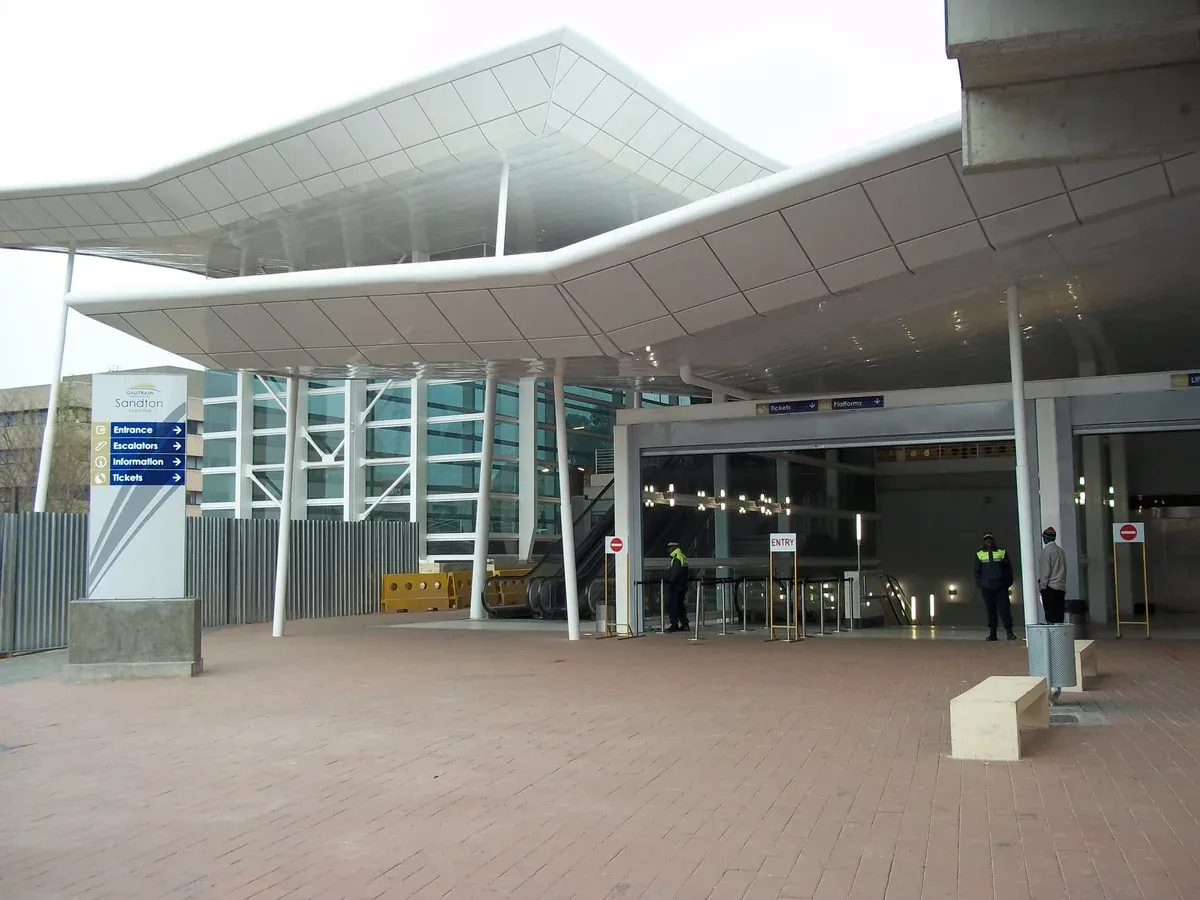
Sandton station, the network's flagship, under Rivonia Road in the commercial heart. Photo: Nolween, CC BY-SA 3.0, via Wikimedia Commons
What the airport line costs, station by station
The fare sheet that matters is the airport line's, repriced from 1 September 2026 with flat peak and off-peak singles: OR Tambo to Sandton is $13.99 (R228), to Rosebank $13.99 (R228), to Park in the city centre $14.72 (R240), and through to Pretoria $15.83 (R258). Return products run $28.0 (R456), $29.4 (R480) and $31.7 (R516) on the same bands. Fares between the non-airport stations live in the operator's online fare calculator rather than a printed table — we print only what the operator publishes.
| From OR Tambo airport to | Single | Return product |
|---|---|---|
| Sandton | $13.99 (R228) | $28.0 (R456) |
| Rosebank | $13.99 (R228) | $28.0 (R456) |
| Park (city centre) | $14.72 (R240) | $29.4 (R480) |
| Pretoria, Centurion or Midrand | $15.83 (R258) | $31.7 (R516) |
Cards, gates and the money you need at the machine
The system is gated and cashless at the platform: a dedicated Gautrain Card costs $1.29 (R21) with a minimum load of $2.33 (R38), and contactless bank cards are accepted straight at the gates, which makes the card purchase optional for a short stay. The airport station sits inside the terminal building — no shuttle, no transfer — and it keeps airport hours: roughly 05:12 to 21:14 at OR Tambo and 05:06 to 21:20 at Sandton on the operator's current schedule include. Land outside those windows and the train is not an option; the airport-to-city page prices the alternatives.
Which station is yours, and the after-dark rule
Sandton is the flagship station, under Rivonia Road with 24-hour security and direct access to the malls and hotel towers — for most visitors it is both the destination and the hub. Rosebank is an underground stop on Oxford Road opposite The Zone shopping centre, handy for the art market and the red bus's ticket office. Park serves the old city centre grid and Constitution Hill's ridge.
The line works beautifully in daylight. After dark the Foreign Office is explicit: do not walk around, including to and from Gautrain stations, and its advisory also records taxi-related violence near the stations — so the play is train to the gate, then a matched-plate e-hail to the door, a two-trip habit the e-hailing rules below make routine.
E-hailing: the Workhorse, With Rules
Uber and Bolt cover the whole metro and are the practical default for visitors — the Foreign Office itself ranks e-hailing with confirmed bookings among the safer options, ahead of the minibus taxis locals rely on.
The honest gap first: neither operator publishes a fare table, every trip quotes in-app by distance, demand and route, and no writer can print a true city-wide number — so this page does not pretend to. What can be printed is the discipline that makes the system work here. Request rides from indoors where you can, check the plate and the driver's rating against the app before anyone's door opens, and sit behind the driver with bags in the boot. At OR Tambo the advisory's warning sharpens: fake e-hailing drivers have worked the arrival halls, so walk to the designated pickup zone and decline every unmarked offer on the way — the arrival discipline section runs the full routine.
Two trip patterns cover most itineraries: short hops inside a node (Sandton mall to hotel, Maboneng gallery to lunch) and the long crossovers between nodes (Sandton to Soweto is 30–40 minutes on the road each way). Budget by quoting your actual routes in the app the night before — visitors who do that land within a few rand, and the number is theirs, not ours. For the areas themselves — what clusters together and what never does — the neighbourhoods index is the map in words.
Minibus Taxis: What They Are, and Why the Advisory Words It That Way
The minibus taxi is Johannesburg's real mass transit — a vast privately-run network of sixteen-seat vans that moves most of the working city — and the Foreign Office still ranks it behind the Gautrain and e-hailing for visitors.

The resident network at work in Maboneng — cheap, dense and everywhere, and not the visitor system. Photo: Shade Schutze Photography, CC BY-SA 4.0, via Wikimedia Commons
Understanding the system helps you understand the advice. Minibus taxis are informal, hand-signalled, cash-run and minimally regulated, in the advisory's own wording, and the industry's history includes violent route wars — the FCDO specifically records taxi violence near Gautrain stations and the airport. A resident who knows the routes, the hand signals and the ranks rides it safely every day; a visitor who does not know where a rank goes has no way to make any of those judgements. That asymmetry, more than any single statistic, is why every official travel page routes visitors around the system rather than through it.
There is also a positive version of the same advice: the things a minibus taxi does for residents — cheap, dense, everywhere — the Gautrain and e-hailing do for visitors at visitor prices, with a recorded route and a receipt. A guided Soweto day in a licensed vehicle is the way to experience the routes without improvising them. The one thing this page asks you not to do is wave one down from the kerb on instinct because it is the cheapest thing moving.
Driving Yourself: Left Side, 120/60, No E-tolls
Renting works well for the day-trip circuit and for families, and Johannesburg's freeways are the country's best — the advisory calls the roads generally very good — but the rules differ from most visitors' habits in ways that matter at the counter and on the road.
The rules you are graded on
Traffic keeps to the left, speed limits run 120 km/h on highways and 60 km/h on major roads, and the Foreign Office adds practical discipline: keep the fuel above half a tank, be extra vigilant driving at night, and know that hire-car companies often impose stricter requirements than the state — a year of driving experience is the common one. A UK photocard licence is usable for up to 12 months; other licences should check their own embassy page. One honest gap: no page we could fetch — rental firm or government — states a minimum rental age for Johannesburg, so confirm your case at booking rather than assuming.
E-tolls are gone; the gantries are off
Gauteng's e-toll saga ended: the gantries were switched off at midnight on 11 April 2024, and road-users on the Gauteng freeways are no longer charged. That kills the classic rental-quote surprise — any e-toll administration line on a Johannesburg agreement is a fossil and worth a question at the counter. Ordinary toll roads still exist on the long inter-city routes, so keep coins or a card for those, and read the fuel policy: distances here are big, Sandton to Soweto alone is 30–40 minutes, and the half-tank rule exists because highways between nodes can be sparse.
Where a car earns its keep — and where it does not
A car earns its keep west and north: the Cradle of Humankind sites, the Lion & Safari Park, the Walter Sisulu garden and the Hartbeespoort cableway all sit beyond the rail map, and parking at every one is simple and free or cheap. Inside the nodes the calculus flips — Sandton and Rosebank park easily in secured parkades, but the inner-city precincts are foot-scale and the after-dark rule applies to drivers too, with the advisory advising against returning rental cars after dark. The day trips hub prices the self-drive circuit against its guided equivalents.
The Hop-On Bus and the Tour-as-Transport Trick
Two structured ways to see the city without driving or hailing anything: the City Sightseeing loop, and the guided tours that bundle the vehicle, the guide and the itinerary into one booking.
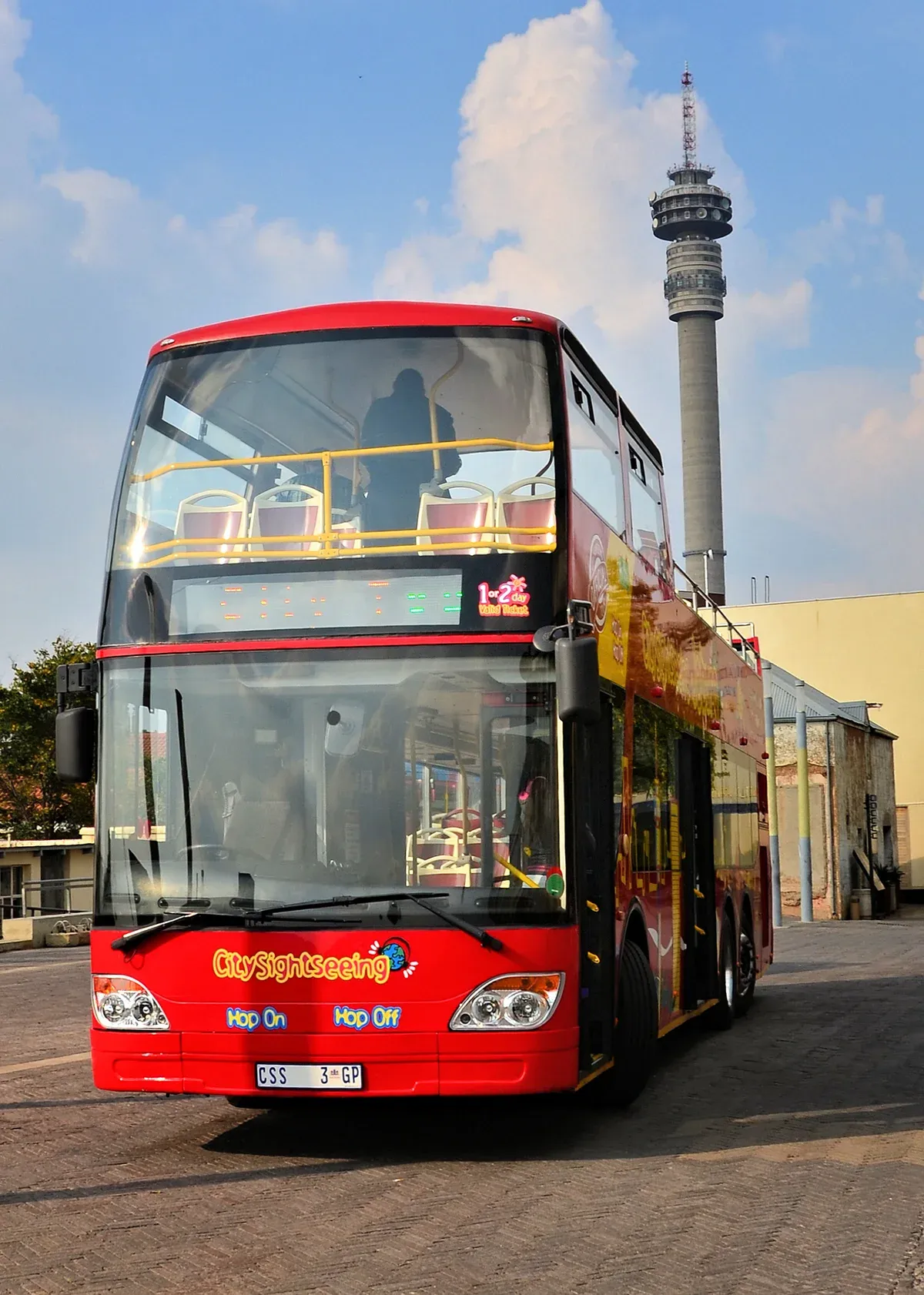
The red bus at its Rosebank start — the only sightseeing vehicle that parks at all thirteen stops for you. Photo: Ossewa, CC BY-SA 4.0, via Wikimedia Commons
The red bus: $23.0 (R375) for the car-free day
City Sightseeing's 1-day hop-on hop-off ticket costs $23.0 (R375) for adults and $13.80 (R225) for juniors aged 4–17, and rides a 13-stop loop that does the sightseeing spine no car could park on: Rosebank office, Melrose Arch, the Mandela Foundation, Constitution Hill, the Mining District, the Apartheid Museum and Gold Reef City, Newtown, Braamfontein, the Holocaust centre, the zoo and the military museum. The full loop runs about two and a half hours, first departure is 09:00 from Rosebank and the last is 15:00, a complimentary shuttle lifts Sandton hotel guests to the start (last return 17:35), and a Soweto extension departs Gold Reef City hourly from 10:30 to 14:30 — the combined bus-plus-Soweto ticket is $53.7 (R875) for adults, $29.1 (R475) juniors. One freshness note we print because the operator prints it first: the timetable PDF in circulation carries an expiry stamp that makes a refreshed one imminent — confirm times on the operator's site the week you ride.
Tours that are really transport
The line between a tour and a ride is thin here, and it pays to shop it. The hop-on bus via GetYourGuide lists at $17.00 with a 4.68 rating from 1,196 reviews and folds the hotel shuttle in; the same loop on the other platform lists at $18.50 (compare the two). A step up, the full-day city and Soweto tour with lunch at $92 listed, rated 4.86 by 526 reviewers, is the honest answer to the question a lot of first-timers actually have — not how do I move, but who is driving, and it covers the Apartheid Museum, Soweto and the views in one licensed vehicle with the itinerary handled.
Rea Vaya: the honest blank in the table
Rea Vaya, the city's bus rapid transit network, is the system a resident would defend hardest and a visitor can least verify: its fares and route map are not stated anywhere we can cite, because the official site has been unreachable on every check we have run, serving an expired security certificate instead. We will not reprint third-party fare guesses, so the finding stands as printed — no stated fare — and the practical advice for a short stay is to build the plan on Gautrain, e-hailing and the red bus, none of which require a leap of faith.
Load-Shedding and the Road: the Torch-in-the-Glovebox Page
South Africa's rolling power cuts have been suspended for 497 consecutive days since 16 May 2025 on Eskom's own statement — but the advisory still plans around them, and so should a driver.
The status first: Eskom reported 497 days without national load-shedding at the time of the last check, with the fleet's weekly performance around 70%. Two caveats ride along. Eskom's separate "load reduction" — local network curtailment in stressed areas — still touches roughly 3.4% of customers, concentrated in Gauteng and KwaZulu-Natal.
And the Foreign Office keeps its standing note that planned cuts "can still occur", hitting traffic lights, ATMs, card machines and security systems, with a raised crime risk wherever lighting or alarms are down. For a driver this compresses into three habits. A set of traffic lights out turns an intersection into an unmanaged crossing — slow right down, make eye contact, and go only when the crossing is clearly yours; expect exactly this at rush hour on the big arterials.
Keep a torch in the car and the fuel above half, per the advisory's own rule, because a dark petrol station forecourt is a bad place to discover both. And if your evening depends on lifts or card machines, screenshot the plan before you leave the hotel: the day the network hiccups is the day you want the address already on your phone. None of this is a reason to change an itinerary — it is the difference between a story and a delay.
The Gautrain Stations That Matter
Three pins cover almost every visitor journey on the rail map — the airport, the flagship, and the red bus's home stop.
- 1 OR Tambo airport stationInside the terminal building — no shuttle needed. $13.99 (R228) to Sandton flat at any hour it runs, which is about 05:12–21:14; land later and the transfer options take over.
- 2 Gautrain Sandton stationThe network's flagship, under Rivonia Road with 24-hour security, opening straight into the mall and hotel grid. Most itineraries start, change or end on this platform.
- 3 Gautrain Rosebank stationUnderground on Oxford Road opposite The Zone, a two-minute walk to the red bus ticket office and the art market — the practical interchange between rail and the sightseeing loop.
Numbers match the pins on the map.
The line continues north through Marlboro, Midrand, Centurion and Pretoria Hatfield — relevant for the Pretoria day trip, skippable for a city-only stay.
Bookings That Do the Driving for You
Four cards where the vehicle, the route and the guiding come as one price — the platforms list in USD and set the availability. Ratings are the operators' own.
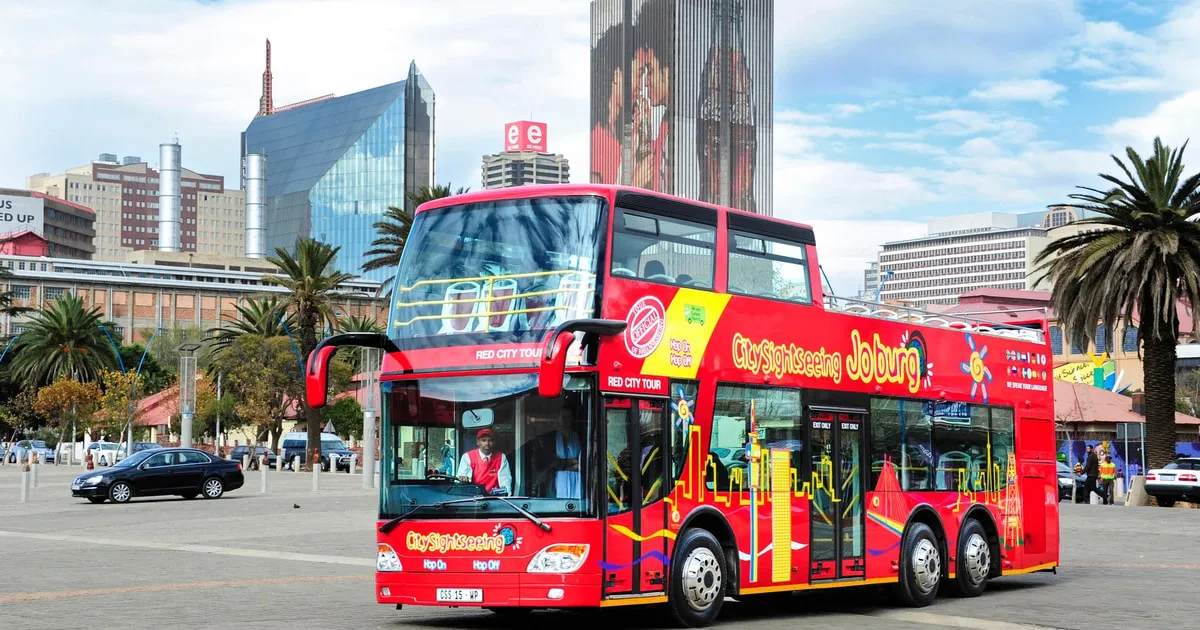 from $17.00
Johannesburg: Hop-On Hop-Off Bus with Optional Soweto Tour
The red double-decker loop with a recorded commentary and hotel-shuttle links; the cheapest way to see the CBD's spread safely.
Check Availability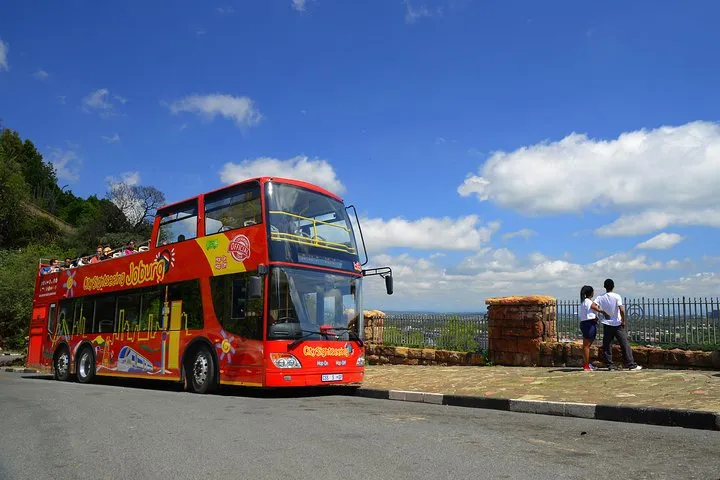 from $18.50
Johannesburg Hop-On Hop-Off City Tour with Soweto Option
Viator's version of the red-bus loop with the Soweto add-on; same buses, different checkout.
Check Availability from $39.52
1-4 Passenger Johannesburg - Airport Transfer
A pre-booked private transfer between OR Tambo and the city for up to four people, one fixed price.
Check Availability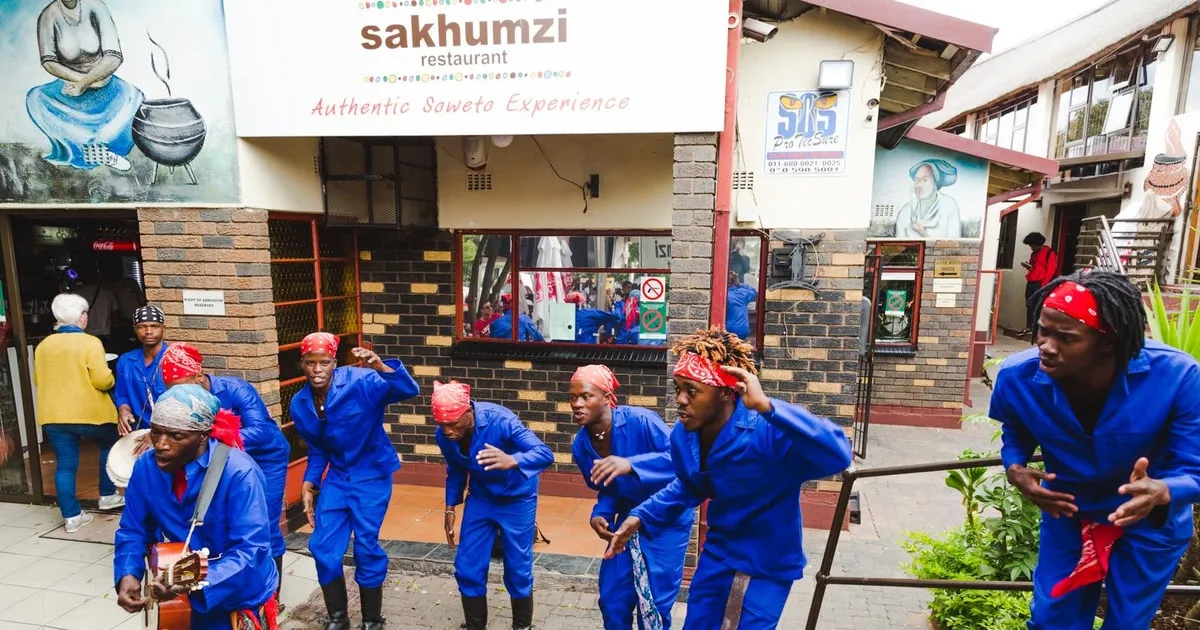 from $92
Johannesburg and Soweto Apartheid Full Day Tour w/Lunch
Full day by vehicle with lunch included: the Apartheid Museum, central Johannesburg and Soweto with Vilakazi Street, in one booking.
Check AvailabilityPrices, ratings and details are the platform's own. dollar figures are the listed prices — the platform bills in your account's currency.
The pages that finish the plan
Three routes a transport decision usually opens onto — the landing, the budget and the hub.
Johannesburg airport to city
The train-in-the-terminal against pre-booked transfers and e-hails, with the arrival discipline printed plainly. Airport to city.
Your first ride Read the guideJohannesburg costs
What a day actually costs by basket — where transport sits among the entries and meals. Johannesburg costs.
The daily lever Read the guidePlan a trip
Seasons, budgets, safety and paperwork — every planning page in one rail. Johannesburg trip planning.
The hub Read the guideGetting around Johannesburg: the questions readers ask
What is the best way to get around Johannesburg?
A mix, honestly: the Gautrain for the airport and the Sandton–Rosebank spine, e-hailing for point-to-point trips, the red bus for one structured car-free day, and guided tours where you want the driving handled. No single system covers a visitor day, which is why this page prices the mix rather than crown a winner (the modes table).
Can I use Uber in Johannesburg?
Yes — Uber and Bolt both cover the metro fully and are the practical default for visitors. No fare table exists to quote, so every trip prices in-app; the discipline that matters is matching the plate before boarding and using designated pickup points, especially at the airport where the advisory warns about fake e-hailing drivers.
Do I need a car in Johannesburg as a tourist?
Not inside the city: the node-hopping a short stay involves is exactly what e-hailing does well, and parking plus the after-dark rules make self-driving a chore downtown. A rental earns its keep for families and for the western day-trip circuit — Cradle of Humankind, the Lion & Safari Park, the Hartbeespoort cableway (where a car wins).
Are minibus taxis safe for visitors to use?
The Foreign Office ranks them behind the Gautrain and e-hailing — they are minimally regulated, and taxi violence near stations and airports is recorded in its advisory. Residents who know the routes ride them daily; visitors cannot make the route judgements the system assumes, so the advice here is the same as the advisory's: use the train and e-hailing (the full context).
Is Johannesburg tourist friendly for a first-time visitor?
More than its reputation suggests, once you accept its shape: the Gautrain is world-class, e-hailing is reliable and cheap by world standards, and the red bus builds a whole car-free day. What the city asks in return is discipline — no walking after dark, matched plates, planned routes — all of it written plainly on the safety page.
Does Johannesburg have a metro or subway?
The Gautrain is the closest thing and better than a metro: a gated express rail network linking the airport, Sandton, Rosebank, Park station and Pretoria, flat-fared from the airport. It does not serve Soweto, Maboneng or the northern suburbs — those are e-hailing territory — and it stops running in the evening, with the airport station closing around 21:14.
Can I walk between places in Johannesburg?
In daylight, inside defined precincts — Maboneng, Braamfontein's ridge, the Sandton mall grid, Vilakazi Street in Soweto — walking is the right tool and a pleasure. Between the nodes nothing is walking distance; the sprawl is real. After dark the Foreign Office advice is flat: do not walk around, including to and from Gautrain stations, whatever the distance.
Is the hop-on bus worth it in Johannesburg?
For a first stay without a car, yes — it is the only way to string together Constitution Hill, the Apartheid Museum and Newtown in one day without hailing six rides, and at $23.0 (R375) it costs less than most single e-hail days. The two honest limits: the last departure leaves Rosebank at 15:00, so it is a daylight plan, and Soweto needs the extension ticket or a separate tour.
The Systems on Screen
Three videos behind the modes: how the Gautrain's fares and gates actually work, what a first ride feels like, and the platform-to-city route most visitors ride first.
Gautrain 101 - Tickets and Fares
The network's own explainer of the card, the gates and the fare logic behind the airport line priced above.
Video: Gautrain Gautrain Management AgencyAmerican Family's Not-So-Simple First Gautrain Experience!
A family's honest first ride — the card-and-gate learning curve every new user climbs, filmed exactly as it happens.
Video: The Demouchet FamilyGautrain Park Station to Sandton (how gautrain works)
The city-centre-to-Sandton leg walked platform to platform — the spine journey of the [modes table](#modes).
Video: Walk_AfricaVideos load from YouTube only when you press play.
Prices, hours and terms are set by the venue or operator and confirmed at checkout.
We may earn a commission if you book through one of our links, at no extra cost to you. Full affiliate disclosure