 Johannesburg Travel Guide
Pilanesberg or Kruger: Which Safari Your Trip Should Book
Pilanesberg or Kruger is the safari question every Johannesburg itinerary eventually asks, and it deserves a numerical answer rather than a shrug. Both parks carry the Big Five; they are not the same product, and the difference is mostly arithmetic — hours in a vehicle, days on the clock, the fee at the gate. This page runs that arithmetic: the verdict first, one scorecard, then the seven questions that actually decide it, with every Pilanesberg figure taken from the published tariff grid and the tour platforms' listed dollars. Rand prices are the official published ones, converted at $1 = R16.30. For the rest of the radius around the city, the day-trips hub keeps the score; this page settles the big two.
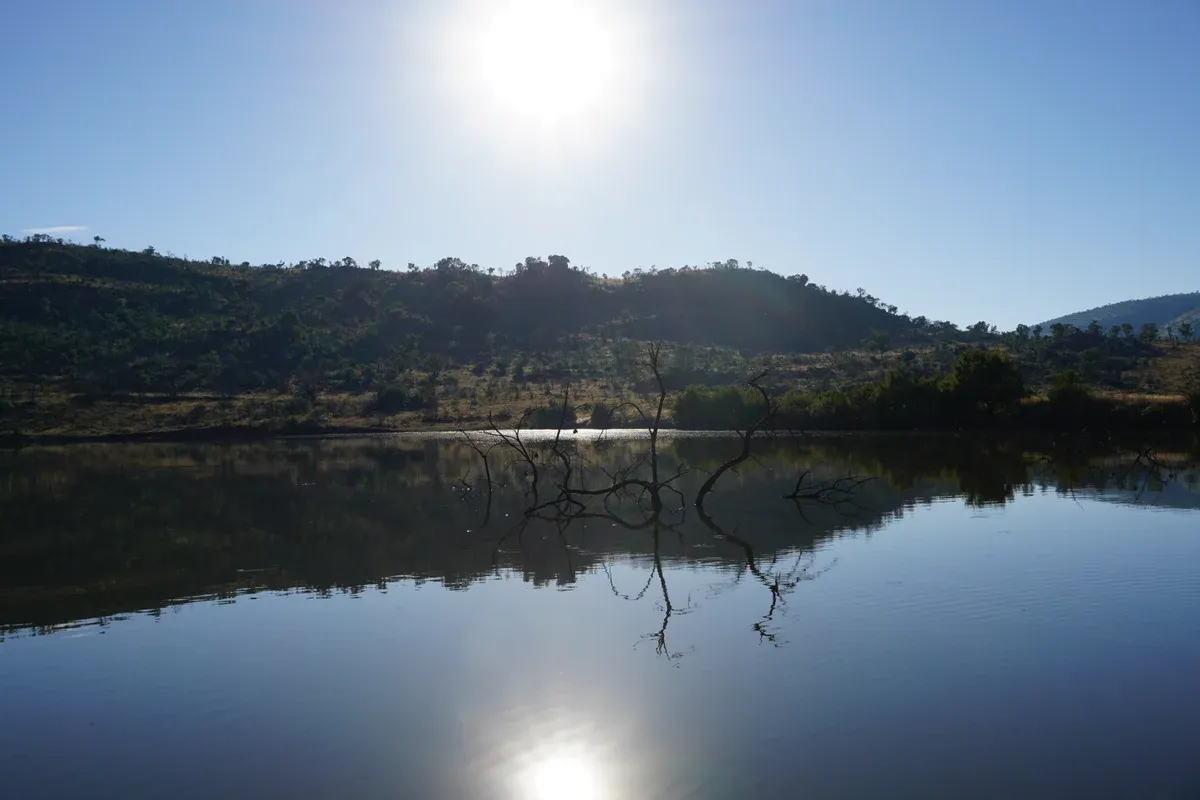
Dawn inside the Pilanesberg ring — the hour its gates open and the safari day starts. Photo: Matt Kieffer, CC BY-SA 2.0, via Wikimedia Commons
Quick answer The verdict in two lines, the gate arithmetic, and the zero-logistics alternative
From Johannesburg with one to three nights, Pilanesberg wins on the math: the park sits a two-to-two-and-a-half-hour drive away, an international adult pays $45.9 (R748) at the gate, and a genuine Big Five day fits between breakfast and dinner. Kruger wins when you have four or more days and a flight in the budget — it runs to roughly two million hectares against Pilanesberg's 55,000, and the wilderness gap is the whole point. Below four days, Kruger's own logistics eat the safari: the drive is about six hours each way, so a short trip spends most of its first and last day on the road.
Key takeaways
- The gate arithmetic, priced: $45.9 (R748) international adult plus $10.31 (R168) per car — $56.2 (R916) for a solo driver — with the full fee grid on our Pilanesberg guide
- The zero-logistics version of the same day: the full-day guided safari at $184 listed, rated 4.76 by more than 1,500 travellers, with hotel pickup before dawn
- The booking curve for either park, and everything else in the city, sits on how far ahead to book Johannesburg
The Scorecard: One Pilanesberg Day Against a Kruger Multi-Day
The two options as a Johannesburg visitor actually buys them: a Pilanesberg day and a Kruger multi-day leg. Pilanesberg's figures are the published tariff grid and the platforms' listed dollars; Kruger's column carries road time and scale from our research and deliberately no price, because no official Kruger figure exists in our sources.
| Dimension | Pilanesberg day | Kruger multi-day |
|---|---|---|
| Time from Johannesburg | Two to two-and-a-half hours each way, door to gate | About six hours each way by road, or a flight |
| Cost from | $56.2 (R916) self-drive solo; guided days $77–$188 listed | No printed figure — priced per booking, not at a gate |
| The animals reality | Big Five inside a 572 km² crater ring; a full cross-section in one day | Roughly two million hectares; depth, remoteness, wilderness |
| Best for | One spare day, a first safari, malaria-free requirement | Four or more days, wilderness priority, repeat safari-goers |
Four rows, whole argument: the day trip buys certainty, the multi-day buys scale, and the length of the trip you actually have picks between them.
Question One: How Many Days Does the Trip Actually Have?
This question answers most of the comparison by itself. With a single spare day, Pilanesberg is not the compromise — it is the only shape that works: pickup at the hotel around 06:00, inside the park by mid-morning, and back in the city by dinner, which is exactly the format the full-day safari card sells. With two or three nights in Johannesburg, the arithmetic still lands the same way; the day trip is one line in the itinerary, not a reorganisation of it.
Kruger is a different animal: the operators who run both parks put the road distance at about six hours, and their own advice is blunt about the cost — on a short safari you spend most of the first day and most of the last day travelling, leaving a single full day inside the park. Four or more days available, they say, and the travelling starts earning its keep. So the honest split reads: one to three nights, Pilanesberg; four or more, Kruger becomes worth the logistics.
The rest of the radius — half-day options, the Cradle, Hartbeespoort — lives on the day-trips hub.
Question Two: the Malaria Question, Answered Only Where We Have a Source
Pilanesberg is malaria-free, year-round — that is the park tariff source's own phrasing, and it is why the safari operators around Johannesburg sell the park as the malaria-free Big Five for short stays. For a family trip or a pregnancy-affected itinerary, that single line can settle the whole comparison on its own, and it costs nothing: no tablets, no clinic appointment, no prophylaxis budget line. Kruger is where this page stops, deliberately: none of our sources carries a malaria-status statement for Kruger that we can quote, so we print no claim about it in either direction.
If that question decides your trip, put it to a travel clinic when you book — not to a comparison blog, including this one. What we can say is structural: the malaria-free label belongs to Pilanesberg in every source this page is built on, and it is doing real work in the one-to-three-night verdict above.
Question Three: Self-Drive or Guided?
Pilanesberg answers this one officially: game drives run "either self-driven or guided," in the tariff source's words, and a passenger car adds $10.31 (R168) at the gate. The park is public, the roads are graded for ordinary sedans, and no off-road driving is allowed anywhere inside the ring — you watch from the tar and gravel like everyone else. The honest cost of that freedom is traffic: on weekends the waterholes line up with private cars, so the sightings you reach last have a queue behind them.
The guided alternative removes the wheel entirely. The current cards list from $77 to $187.87 per person, with hotel pickup between 06:00 and 06:30 and the park's southern loop driven in an open vehicle — the MoAfrika full day at $187.87 listed, rated 4.85 from more than 1,600 reviews, is the earliest start of the set. Kruger is different in kind: from Johannesburg without your own vehicle, the trip points toward fly-in or transfer-in multi-day formats, and the self-drive question becomes a once-you-are-there question rather than a day-trip decision.
Question Four: Which Season Are You Travelling In?
Both parks sit in the same summer-rainfall region as Johannesburg, so one climate table covers the comparison. The 30-year numbers read: April is the all-rounder, 20.7 °C afternoons and under 50 mm of rain; September and October repeat the trick warmer, 23.6–24.8 °C with three to ten rain days a month. May to July is the driest, sunniest stretch — under 20 mm a month — with frost-clear nights down to 2.7 °C, which matters at 06:00 in an open vehicle: pack for the morning, not the afternoon.
November to March is the wet season, 81–133 mm and up to 17.6 rain days, with the thunderstorms building most afternoons. Pilanesberg's gates move with it: November to February they run 05:30–19:00, May to September 06:30–18:00 — the dawn pickup on the tour cards exists because the park opens before the heat, and the animals move with it. For Kruger, the general safari rule that game concentrates where water is scarce favours the dry winter months; treat that as guidance, because the sourced part of this page is the arithmetic above.
Question Five: What Each Option Costs at the Official Figures
Pilanesberg prices cleanly, because the tariff is published. International visitors pay $45.9 (R748) per adult and $16.87 (R275) per child aged 5–12; South African citizens pay $10.31 (R168) per adult and $5.15 (R84) per child or pensioner, with ID possibly requested at the gate. A passenger car adds $10.31 (R168), so the solo international self-driver is at $56.2 (R916) before fuel — and a car of four splits the same per-person grid.
One caveat belongs in the price section: the tariff page we source is a booking site that states it is not affiliated with the park authority, whose own domain was unreachable when the figures were pulled, so treat the grid as near-official and re-confirm before you drive up. The guided format prices at $77 for the value pick up to $187.87 listed for the early-entry full day — both dollars are the platforms' listed prices, entry terms as shown on each product page. Kruger: we print no Kruger price.
Nothing in our sources is an official Kruger tariff, and a multi-day price is lodges plus flights plus transfers — a number assembled, not published — so anyone quoting you one from a blog is guessing. at the last check
Question Six: the Animals Reality — a Cross-Section Against a Wilderness
Pilanesberg's 572 km² is the floor of a 1,200-million-year-old extinct volcano, stocked with all of the Big Five and dense enough that a single day produces a genuine cross-section — elephant at a waterhole, lion asleep in the grass, rhino at distance. The concentration is the feature: inside a ring that size, a full day with a competent guide covers the habitat types, and the no-off-road rule means the sightings behave. What it cannot manufacture is emptiness.
The scale comparison the Pilanesberg forum regulars trade is about 55,000 hectares against Kruger's roughly two million — about forty times the ground — and the numbers are the right way to understand the difference: Kruger is not a bigger park, it is a different category, a self-contained ecosystem with remote interior roads where a whole day passes between vehicles. A day trip from Johannesburg cannot buy that; four days inside it can. So the animals reality splits honestly: the cross-section in a day is Pilanesberg's, and the depth — the sense of the bush being bigger than your presence in it — is Kruger's, and no marketing line from either side changes that.
Question Seven: Who Each Park Is Actually Best For
Pilanesberg is for the traveller whose constraint is time: the first safari, the family with one free day, the itinerary that already carries Soweto and the Apartheid Museum and cannot give up more than a day to the bush. It is the malaria-free answer, the no-flight answer, and — with Sun City on the park's southern border, whose day-visitor arithmetic our Pilanesberg guide prices separately — a two-stop day if the group wants one. Kruger is for the trip that has grown past Johannesburg: four or more days, a flight already in the budget, wilderness as the point rather than a bonus.
The trade's own split matches the math — visitors with limited time choose Pilanesberg, travellers with three or more days usually prefer Kruger — which is as close to a consensus as this comparison gets. The error both directions is symmetric: booking Kruger into a three-day city trip and losing two days to the road, or flying to South Africa for a week and spending it entirely inside a 572 km² ring when the country's greatest park was one connection away.
Pick Pilanesberg, or Pick Kruger, by the Trip You Are Taking
If you have one spare day from Johannesburg
Pilanesberg, without a debate — the guided full day turns it into a Big Five day with no driving and no logistics.
If the trip is two or three nights in total
Pilanesberg wins on the math; a Kruger leg would spend two of those days in a car or an airport.
If malaria tablets are a hard constraint
Pilanesberg — malaria-free year-round in the park's own tariff source; take any other park's status question to a travel clinic.
If you want to drive yourself between the lions
Pilanesberg self-drive: the park allows it officially, a car is $10.31 (R168), and the roads take a sedan.
If you have four or more days and a flight in the budget
Kruger, finally — at that length the longer drive and the transfers stop being overhead and the park's scale starts paying out.
If wilderness is the reason you are going at all
Kruger, and skip the comparison — Pilanesberg will show you the animals, but not the emptiness.
The Do-Both Minimum
Seeing both parks in one trip is a five-day minimum, honestly counted, and most travellers should treat that as the floor rather than the target. The shape that works: run the city on the three-day Johannesburg plan, which already stacks the Pilanesberg day as its safari line, then give Kruger its own three-to-four-night leg by flight — road-transferring it in under four days is exactly the Day-1-and-Day-3 trap the six-hour drive predicts. Book the two halves separately and early; the Kruger leg is lodge-and-flight inventory that moves by season, and the booking-lead guide carries the lead times that hold for it.
What the do-both trip should never do is split down the middle: two thin days of each park is the worst version, because Pilanesberg only needs one day and Kruger only starts being Kruger at three.
The Honest Concessions
Kruger wins the wilderness dimension, and it is not close — two million hectares against 55,000 is not a matchup, it is a different sport, and any page that scores that row for Pilanesberg is selling something. Concede the other direction too: if four or more days exist, Kruger is the better safari full stop, and the one-to-three-night verdict above is a statement about your calendar, not about the parks' relative quality. Pilanesberg's own concessions: it is a public park with weekend traffic, it is not Kruger lite but a genuinely smaller experience, and for a traveller who has already done big reserves the ring can feel like a very good park drive rather than an expedition.
What it does not concede is the short trip: inside one day from Johannesburg, nothing in this comparison beats it, which is why the verdict is a function of days and not of loyalty.
Booking the Pilanesberg Day
If the verdict gives the day to Pilanesberg, these two cards carry it: the highest-rated full day with the earliest gate entry, and the walkthrough of what each format actually includes. Prices are the platforms' listed dollars at the time of the last check.
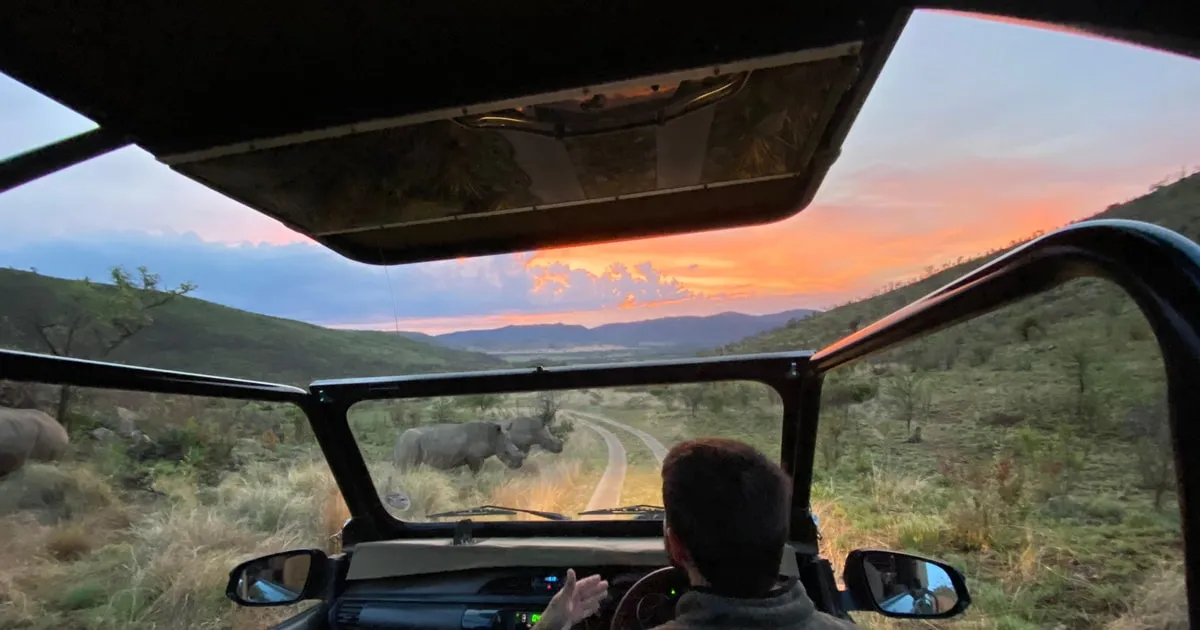 from $184
From Johannesburg: Pilanesberg Nature Reserve Game Safari
The Big Five day out: Pilanesberg's extinct volcano ring, in the park before the heat, back in the city by dinner.
Check Availability from $187.87
Full Day Ultimate Pilanesberg National Park Safari from Johannesburg or Pretoria
Viator's full-day Pilanesberg with an early start and the park's whole southern loop driven.
Check AvailabilityPrices, ratings and details are the platform's own. dollar figures are the listed prices — the platform bills in your account's currency.
What a Day in the Ring Looks Like
Three films shot inside Pilanesberg, so you can see the day-trip experience — the waterholes, the ring roads, the sightings density — before deciding whether it satisfies the safari itch or leaves it demanding Kruger.
A Day in Pilanesberg National Park
The full day-trip arc from gate opening to last light — the exact format the verdict prices above.
Video: Biggestleaf TravelA Spontaneous Safari | Pilanesberg National Park
What the ring delivers without a plan: the self-drive case in one film.
Video: WildWild JourneysPilanesberg Safari at Its Best | Lions, Leopards, Cheetahs & Unreal Sightings
The predators-on-a-good-day reel — the counterargument to anyone calling the park a consolation prize.
Video: Wildlife Beyond The LensVideos load from YouTube only when you press play.
Pilanesberg or Kruger: the Questions This Page Gets Asked
Is Pilanesberg or Kruger better for a first safari?
For a first safari attached to a Johannesburg trip of up to three nights, Pilanesberg: a genuine Big Five day, malaria-free, two to two-and-a-half hours from your hotel, with guided formats that need no planning from you. Kruger becomes the better first safari when the trip has four or more days to give it — then its scale turns a first safari into the real expedition rather than an introduction.
Is Pilanesberg malaria-free, and what about Kruger?
Pilanesberg is malaria-free year-round in its own tariff source, which is why it dominates short-stay and family recommendations. We carry no sourced malaria-status statement for Kruger and print no claim either way; if that question decides your trip, ask a travel clinic when you book rather than a comparison page.
How far is Kruger from Johannesburg?
About six hours by road, each way. The operators who run both parks are blunt about what that does to a short itinerary: a two-night Kruger trip spends most of its first and last day travelling, leaving roughly one full day in the park. That is why the fly-in multi-day format exists, and why a one-day Kruger trip is not a thing this page will recommend.
Can you do Pilanesberg and Kruger on the same trip?
Yes — the minimum is about five days. Run the three-day Johannesburg plan, which already includes the Pilanesberg day, then add a three-to-four-night Kruger leg by flight. Book the Kruger leg early; lodge-and-flight inventory moves by season and the lead times sit on the booking guide.
How much does a Pilanesberg day cost compared with Kruger?
Pilanesberg prices at the gate: $45.9 (R748) international adult plus $10.31 (R168) per car — $56.2 (R916) solo self-drive — or $77 to $187.87 listed for a guided day with pickup. Kruger has no printed figure on this page because none in our sources is official: a multi-day Kruger trip is lodges plus flights plus transfers, priced per booking, and we will not invent the total.