 Johannesburg Travel Guide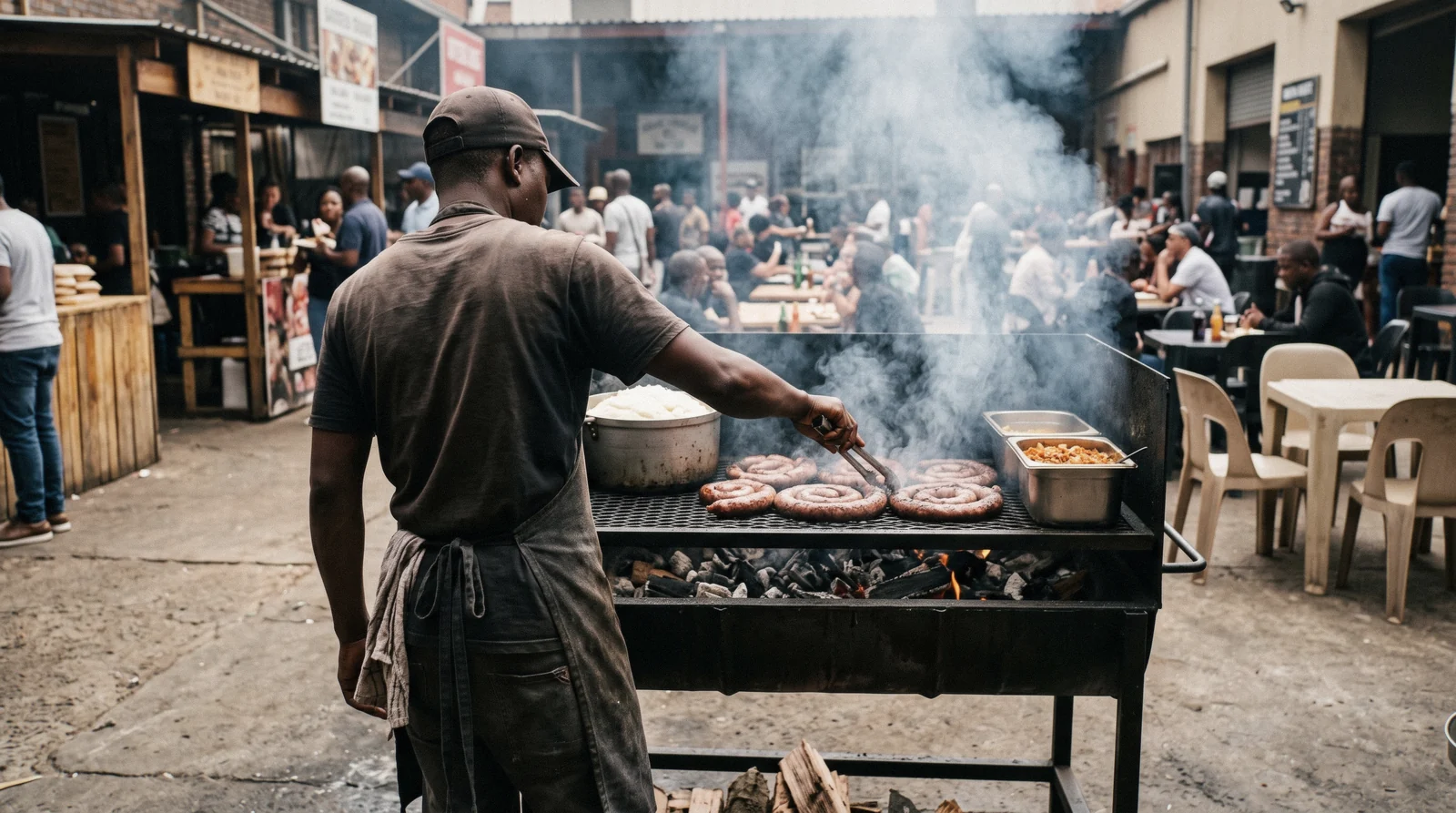
What to eat in Johannesburg is a nine-dish answer, and none of the nine needs a fine-dining booking: the city's food lives at grill stands, bakery counters, market halls and one very specific quarter-loaf. This page gives each dish its what, its why-Joburg and its where-it-finds-you, with the price question answered honestly — the places these dishes live do not publish tariffs, and no bands are invented here. The areas that serve them are mapped on where to eat.
Quick answer Nine dishes, in the order to eat them
Nine dishes cover the table: the braai and its boerewors roll, pap and chakalaka — the plate the whole city stands on — bunny chow, the kota, biltong, mogodu, and the two sweets, malva pudding and koeksisters. Eat the grill and pap plates on a guided Soweto day with lunch built in, at $43 rated 4.9 from 823 travellers, or taste the counters of the city's oldest suburb on the Fordsburg street-food walk at $78. The starter order for a short stay: boerewors roll, pap and chakalaka, then malva pudding — everything else is a bonus.
Key takeaways
- The nine dishes with the where-it-finds-you map: the table below.
- Where each dish actually lives, area by area: where to eat in Johannesburg.
- The one tour that turns the list into lunch: Soweto walking tour with lunch, $43.
The nine dishes at a glance
Nine dishes, each with what it is, where it finds you in Johannesburg, and how it is paid for. No rand figures are printed: chalkboards, corner shops and buffet decks publish no tariff a visitor can check, and printed menus already carry the 15% VAT — so the honest column is the payment format, not a made-up price.
| Dish | What it is | Where it finds you | What you pay |
|---|---|---|---|
| Braai | Meat and sausage over coals — a social institution as much as a meal | Township grill stands on a guided Soweto day; suburban gardens by invitation | Priced by the stand, cash at the coals |
| Pap and chakalaka | Firm maize porridge with a spicy vegetable relish — the plate underneath everything | The classic township plate; the Hillbrow neighbourhood tour serves pap and chicken with a drink | Counter prices, cash |
| Bunny chow | A hollowed loaf filled with curry, born in Durban's Indian community | Fordsburg, the city's Indian and Muslim quarter, is its Johannesburg home | Counter price, cash |
| Boerewors roll | Coiled farm sausage on a bun under tomato-and-onion relish | Any braai, weekend market or game-park lawn northwest of the city | Weekend-stand prices, cash |
| Biltong | Air-dried, spiced strips of beef or game — the Highveld travel snack | Butcheries, market stalls and every airport shop | By the bag, priced at the counter |
| Kota | The township quarter-loaf stacked with chips, polony, cheese and atchar | Soweto and the township streets — the walk-and-eat format of kasi life | Corner-shop counter, cash |
| Mogodu | Slow-cooked tripe, usually served with pap — the weekend stew of choice | Township and shebeen kitchens, at their fullest on Sundays | Chalkboard prices, cash |
| Malva pudding | Sticky apricot sponge drenched in a cream sauce | Restaurant dessert menus — the printed-menu economy | On printed menus, 15% VAT in the price |
| Koeksisters | Plaited, syrup-drenched fried dough — sticky by design | Bakery counters, including Fordsburg's sweet shops | By the box at the counter |
Where a dish carries a published price — the dessert menus, the bagged biltong — it is quoted at the counter, and quoted prices in South Africa include VAT at 15%. Everything else above is priced in conversation. Payment formats and tipping checked in Q3 2026.
Turn the list into lunch
Two cards do the tasting for you: the Soweto walking tour at $43, rated 4.9 from 823 travellers, which builds the township lunch into the history; and the Fordsburg food walk at $78, rated 4.8 from 32, which works the counters and sweet shops of the city's oldest suburb.
 from $43
Soweto: Walking Tour with a Local Guide and Lunch
Walk Soweto's streets with a local resident, eat where the neighbourhood eats; the most honest two hours you can buy there.
Check Availability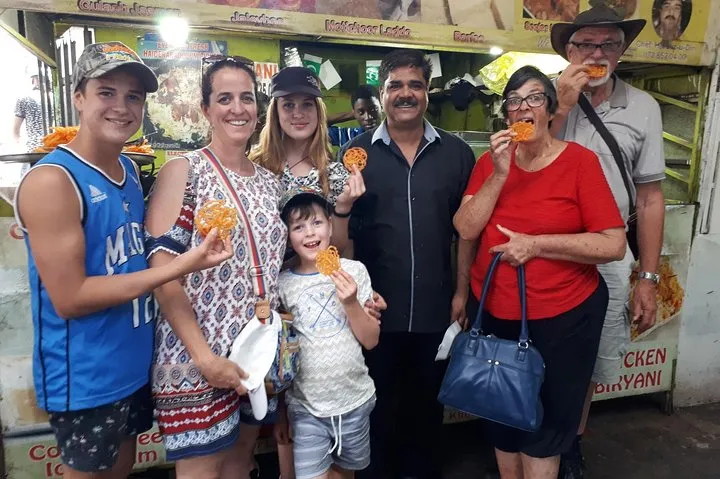 from $78
Joburg street food tour in it's oldest suburb!
Eat through Fordsburg, the city's oldest suburb, one street-food counter at a time.
Check AvailabilityPrices, ratings and details are the platform's own. dollar figures are the listed prices — the platform bills in your account's currency.
Pap and chakalaka: the plate underneath the city
Pap is the staple — maize meal cooked stiff — and chakalaka is the relish that makes it sing: tomato, pepper, onion, spice, sometimes beans. Maize porridge fed the gold camps' workforce a century ago, and it never left; it is the plate a Johannesburg kitchen assumes you know. For a visitor it arrives in three honest settings: under a grill plate on Vilakazi Street, as the Hillbrow neighbourhood tour's own plate — pap and chicken with a drink is literally what the booking includes — and at the township counters where the kota sits beside it.
The reason to eat it early in the trip is calibration: pap is the base note of half the dishes on this page, from the braai plate to the mogodu stew. Eat it once with a relish and the rest of the list starts making sense. The Hillbrow tour, at $50.18 rated 5.0 from 165 travellers, is the structured way in; the Soweto day is the scenic one.
The braai and the boerewors roll
Ask a Johannesburg household what the weekend is for and the answer is the braai. The word covers both the grill and the gathering: coals, boerewors — the coiled, spiced farm sausage — lamb chops, and the tomato-and-onion relish that turns a sausage into a boerewors roll. It is South Africa's most exported food idea and its most domestic one, and in Johannesburg it runs from suburban gardens to the grill stands of Soweto to the lawns of the game parks northwest of the city, where the braai lunch after a game drive is half the day's pleasure.
Visitors meet it in two forms: the guided Soweto day's grill-stand lunch, and the weekend market stand. The roll is the entry point — one boerewors, one bun, no ceremony — and it pairs naturally with the markets guide, because that is where the stands live. If the trip includes Lesedi, the cultural village's Nyama Choma buffet is the sit-down version of the same instinct — meat, abundance, and a dance show after — with its programmes running twice daily, 11:30–13:30 and 16:30–18:30, so the buffet lunch pairs with a morning drive and the late session with an afternoon one.
Bunny chow, kota and the street-food logic
Two breads carry Johannesburg's street food, and both are engineering answers to the same problem: how to serve a hot meal without crockery. The bunny chow — a hollowed loaf filled with curry — was born in Durban's Indian community, and its Johannesburg home is Fordsburg, the city's oldest suburb and its Indian-and-Muslim quarter, where the curry counters and sweet shops sit a few blocks apart. The kota is the township's own answer: a quarter-loaf stacked with chips, polony, cheese and atchar, eaten walking, priced in coins and notes rather than menus.
The structured way to eat both is the Fordsburg walk — $78, two and a half hours, snacks and meals included, run by a born Joburger — which reaches the counters a first-timer would never find alone. The independent way is Sunday in Maboneng, where Market on Main assembles the same instincts into one hall. Either way, the bunny chow lesson holds: eat it over the counter, with your hands, immediately.
Biltong, mogodu and the sweet endings
Three smaller entries finish the list. Biltong — spiced, air-dried strips of beef or game — is the Highveld's travel food: sold by the bag at butcheries, market stalls and every airport shop, and the single most useful souvenir on this page because it survives the flight home. Mogodu — slow-cooked tripe, served with pap — is the weekend stew of the township kitchens, a Sunday plate that rewards an appetite and a guide; the same Soweto walk that handles lunch is the honest way to meet a shebeen kitchen.
Then the sweets, which are not optional. Malva pudding — the sticky apricot sponge drowned in cream sauce — closes almost every printed menu in the city, which makes it the one dish here you can price before you order, 15% VAT included. Koeksisters — plaited, fried, syrup-drenched — come by the box from bakery counters, Fordsburg's among them. The honest order of operations: biltong on day one as trail food, mogodu when the Sunday presents itself, malva with the first proper dinner, koeksisters in the bag for the morning after.
The weather decides the table
Johannesburg sits at 1,753 m on the Highveld, and its eating calendar is an altitude calendar. Summer — October to April — is the braai season with an asterisk: afternoon thunderstorms are the rule, with the wettest months running 81 to 133 mm of rain across 12 to 18 rain days, so the market-hall lunch beats the market-courtyard lunch and any grill plan needs a roof within reach. Winter — May to August — is dry and sunny by day but genuinely cold at night, with lows of 2.7 to 6.3 °C from June to August; that is when the indoor formats on this page earn their keep, the malva-pudding dinner, the mogodu stew, the market hall with the roof on.
One more altitude fact that belongs on a food page: the UV here is among the highest monitored in the world, per CANSA's guidance — burn time runs to about 15 minutes even overcast, strongest from 10:00 to 16:00. The Sunday Market on Main queue and the Rosebank craft-market morning both sit inside those hours, so shade and sunscreen are part of the plan, not an afterthought. The month-by-month table lives on best time to visit.
Where to eat them: the honest map
Every dish above has an address on where to eat, and the mapping follows one rule: eat each dish where its economy lives, not wherever the nearest menu translates it. The grill and pap plates live in Soweto, reached on a guided day — the FCDO's township advice is a reliable guide, and daylight only. The curry breads and sweets live in Fordsburg. The market-hall versions of everything live in Maboneng, best on a Sunday. The printed-menu versions — the malva pudding dinner — live in the Sandton and Rosebank malls, which are also the honest answer to after dark.
What the map cannot do is quote prices: no tariff board in this chain publishes one, which is why the table above sticks to payment formats. What it can do is sequence a three-day trip — the day-by-day pairings put each dish in the hour that fits it. One budget route into the township dishes deserves the note it rarely gets: the red bus's Soweto extension departs Gold Reef City hourly between 10:30 and 14:30 on the operator's current timetable, which pairs the theme-park lunch stops with the township afternoon — the full fares and hours sit on the transport page.
From dishes to days
The eating areas, mapped
Five areas, five payment economies, one map with the rule that decides when to go: where to eat in Johannesburg. Or return to the Johannesburg city guide.
The addressesThe Soweto day
Vilakazi Street, the memorial and the towers — the day the grill plate belongs to: the Soweto guide.
Lunch built inThe buffet version
Lesedi Cultural Village's Nyama Choma buffet and the homestead tours behind it: the Lesedi guide.
Half day, northwestWhat to eat in Johannesburg: questions
What is Johannesburg known for food?
Grill culture first — the braai and the boerewors roll — then the street formats: pap and chakalaka underneath everything, the bunny chow in Fordsburg, the kota in the townships, and biltong everywhere. Each has an entry in the dish table; the areas that serve them are on the eating map.
What are some must-eat foods in South Africa?
The nine on this page are the working list: braai, pap and chakalaka, bunny chow, boerewors roll, biltong, kota, mogodu, malva pudding, koeksisters. For a short stay, eat the first three in order — the Soweto lunch tour covers two of them in one afternoon.
What food is South Africa best known for?
Internationally, biltong and the braai — the dried-meat snack and the grill as social institution. Domestically, the pap plate is the daily answer. Johannesburg samples of all three sit in the braai section and the shelf-and-sweets guide.
Is bunny chow from Johannesburg?
No — it was born in Durban's Indian community, and the name's origins are debated even there. What Johannesburg offers is the place it lives now: Fordsburg, the city's Indian and Muslim quarter, where the street-food walk puts the counters in order. The honest history is in the street-food section.
What can vegetarians eat in Johannesburg?
More than the grill reputation suggests: pap and chakalaka is a vegetarian plate by default, the kota works without the meat layers if you ask, and the market halls — Maboneng on Sundays above all — sell vegetable curries, bakes and salads by the counter. The eating areas map marks which formats are counter-style, where the question is easiest to ask.
What dessert should I order in Johannesburg?
Malva pudding — the sticky apricot sponge in cream sauce — is the default and the safest, because it appears on printed menus where the 15% VAT is already in the price. Koeksisters, the syrup-drenched plaits, are the bakery-counter alternative, best from Fordsburg. Both are in the sweets entry.
The dishes in their streets
The dishes travel with their streets — the grill smoke of Soweto, the market rhythm of Maboneng, the general Johannesburg pace that decides when the eating happens.
EXPLORING the BEST of Johannesburg, South Africa Travel Vlog
A food-minded pass through the city's markets and inner-city eating — the closest film to this page's list.
Video: Chews to ExploreSoweto Bike Tour - Johannesburg, South Africa
The township streets at cycling pace — the context behind the grill stands, kota corners and shebeen kitchens.
Video: 7 Continents 1 PassportSouth Africa | Maboneng, Johannesburg
Maboneng's blocks at street level — the Sunday market-hall economy in its setting.
Video: Studio28 - South AfricaVideos load from YouTube only when you press play.
Prices, hours and terms are set by the venue or operator and confirmed at checkout.
We may earn a commission if you book through one of our links, at no extra cost to you. Full affiliate disclosure