 Johannesburg Travel Guide
Johannesburg or Cape Town: Which City Deserves Your Days
Johannesburg or Cape Town is the wrong-shaped question, and a Johannesburg city guide owes you that admission first: they are not two versions of the same holiday but two different countries that share a visa. Cape Town is a scenery city — mountain, ocean, vineyards — and this page concedes that dimension to it early and without a fight; the honest case for it is made properly by the Cape Town city guide, which owns that subject the way this site owns Johannesburg. Johannesburg is a history city — the Apartheid Museum, Constitution Hill, Soweto — with safari inside two hours, and no amount of Table Mountain sunsets gives Cape Town an answer to it. This post scores the two across seven dimensions with a verdict on each, prices Johannesburg's days from the official gates at $1 = R16.30, and finishes with the do-both plan for the trips that can afford it.
Quick answer The verdict in two lines, the concession, and the do-both number
Pick Cape Town if scenery, beaches and wine are carrying the trip — it wins that dimension outright and it is not close. Pick Johannesburg if the history that built modern South Africa is why you came: the Apartheid Museum, Constitution Hill and Soweto exist nowhere else, and a Big Five day costs a drive, not a flight. With five nights or more, do both — Johannesburg first for two nights, Cape Town for the rest.
Key takeaways
- The museum and the hill price at $26.99 in official gate fees — about $43.99 with the Red Bus loop stitched in — and Soweto's guided walk starts at $43
- The safari dimension is not a contest: malaria-free Pilanesberg sits inside two hours of Johannesburg, $45.9 (R748) international gate
- The cleanest Johannesburg start is the guided full day with Soweto and the Apartheid Museum, $92 as listed with lunch
The Headline Scenery — and the Concession This Page Opens With
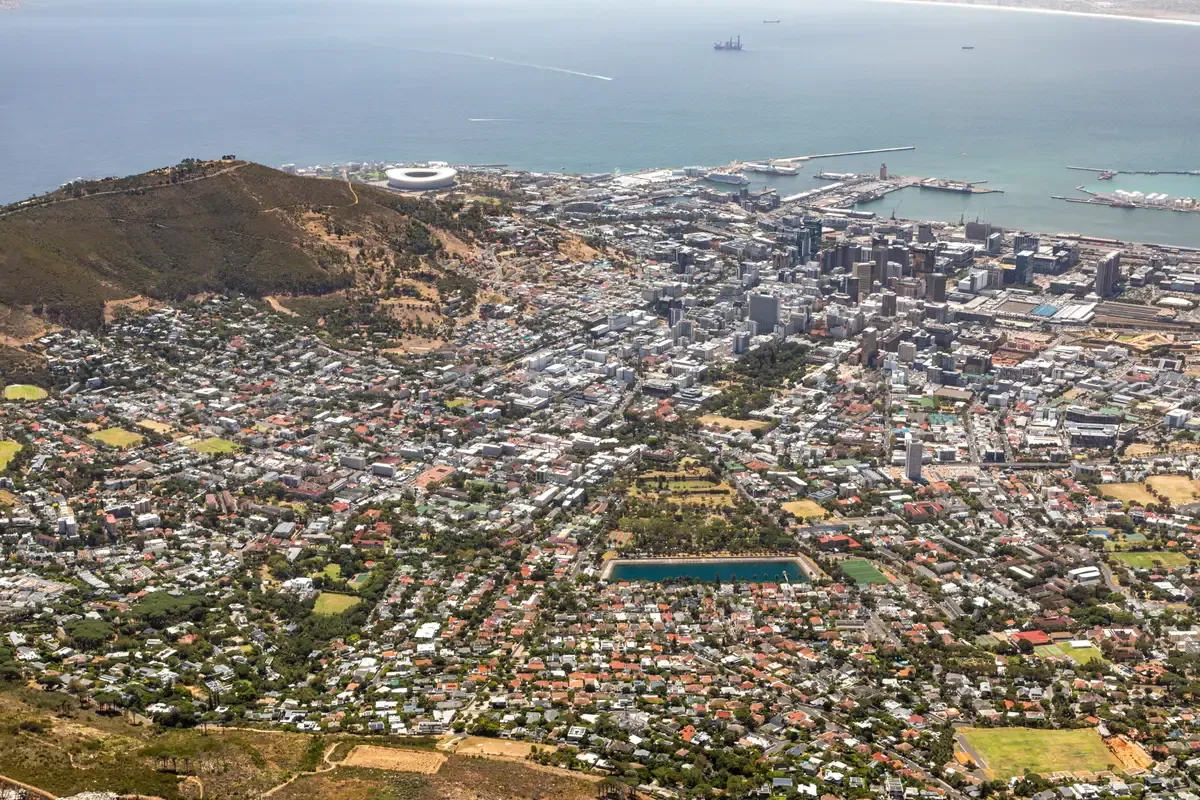
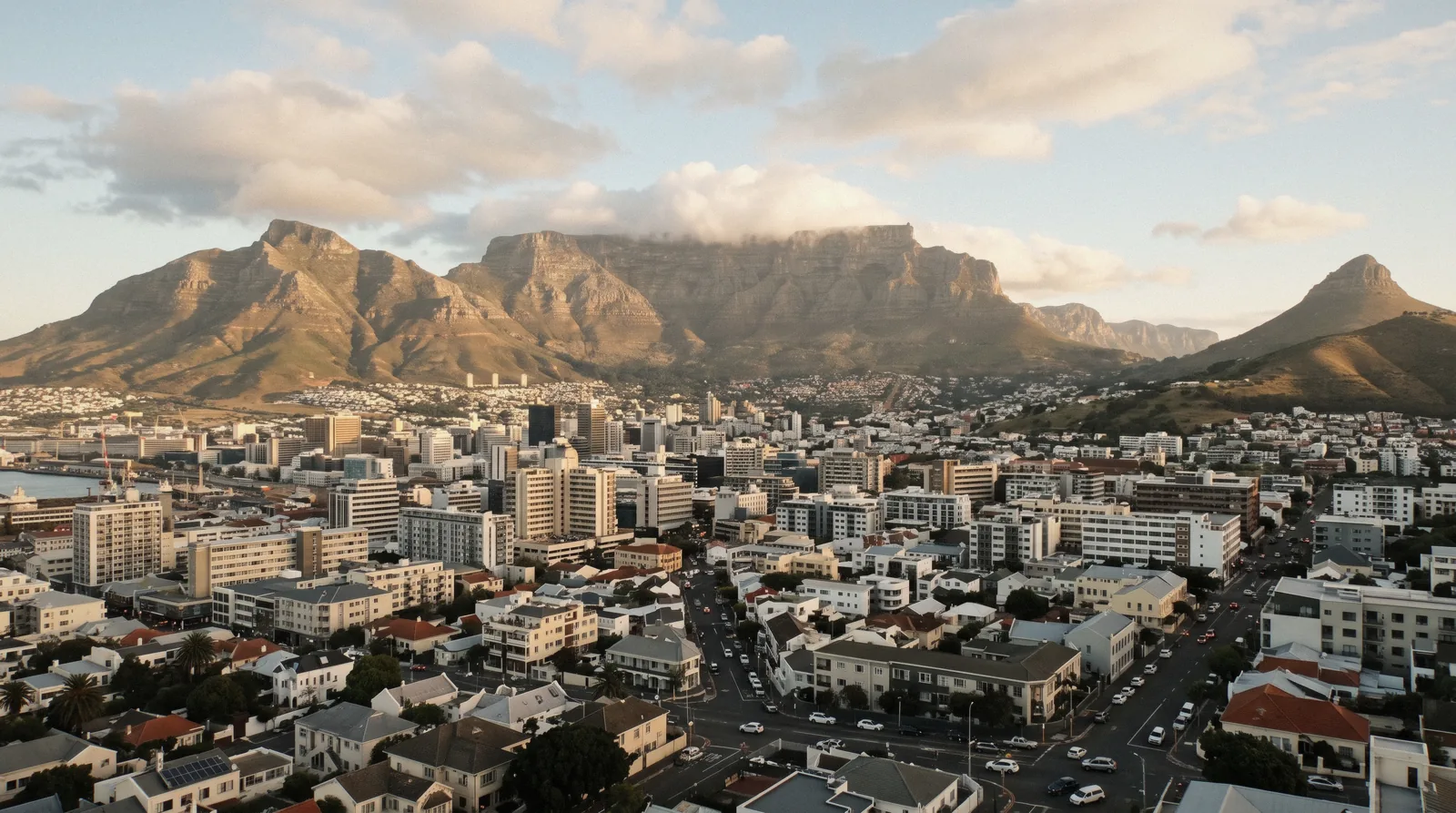
The Cape Town city bowl under Table Mountain — the scenery Johannesburg cannot answer. Photo: Dietmar Rabich, CC BY-SA 4.0, via Wikimedia Commons
Cape Town wins this dimension, and it is not close. A city bowl under a flat-topped mountain, a coastline that runs from surf beaches to penguin colonies, and a cableway up one of the most photographed hills on earth — Johannesburg has nothing in that weight class, and a Johannesburg guide who pretends otherwise is selling something. The honest Johannesburg answer is a botanical garden with a $6.13 (R100) entry and its fine waterfall at Walter Sisulu, and highveld light that photographers love and nobody flies for. If the trip's purpose is to stand in front of landscapes, book Cape Town and read the Cape Town city guide, which covers the mountain, the beaches and the winelands properly.
Verdict: Cape Town, and it is not close — this page says so in its opening paragraph and means it.
The History You Cannot See Anywhere Else
Now the counterweight, and Johannesburg wins it just as emphatically. The Apartheid Museum in Ormonde curates the entire arc of legalised racial separation — 1948 to the negotiated settlement — for $14.72 (R240) international adults with the audio tour, Tue–Sun, closed Mondays, and its entrance classification ticket makes the argument before the first exhibit does. Constitution Hill, $9.20 (R150) for the hourly Highlights tour and $12.27 (R200) for the twice-daily Full Site, holds the prison that took Gandhi, Mandela and the 1976 schoolchildren and the Constitutional Court built from its bricks — injustice and its answer in one walk. Soweto puts the story at street level: Mandela's actual house at 8115 Vilakazi Street ($11.35 (R185) international) and the memorial on the corner where the 1976 uprising turned, best read with a resident guide on the four-hour walking format from $43. Cape Town's Robben Island is a genuinely great single site; it is one site, and the depth around it is Johannesburg's.
Verdict: Johannesburg, and it is not close — the dimensions are mirrors of each other, which is the whole shape of this comparison. The full visiting detail sits on the Apartheid Museum guide and the Soweto guide.
Safety: the Question Everyone Asks, Answered Without Drama
The serious advisories treat South Africa as one country, and that is the right frame: the UK foreign office warning — violent crime, carjacking, no walking after dark, townships only with a reliable guide, e-hailing over minibus taxis — is national, not municipal. What Johannesburg adds specifically is the documented follow-home robbery pattern at OR Tambo airport and a set of distances that keeps you in vehicles longer; Cape Town's patterns run to its own townships and its own hotspots that the Cape Town guide covers on its side. Neither city rewards casual night wandering; both reward the same boring discipline — daylight movement, booked vehicles, nothing valuable on show, the full block-by-block playbook on our side.
Verdict: even, honestly — the internet argues this constantly because the answer is that the discipline matters more than the postcode. A planned day is low-risk in either city, and the unplanned kind is where both bite.
Safari Access: Not a Contest
From Johannesburg, the Big Five is a road trip: Pilanesberg's extinct volcano ring holds lion, leopard, elephant, rhino and buffalo inside about two hours' drive, malaria-free and open year-round, with international visitors paying $45.9 (R748) at the gate plus $10.31 (R168) for a car — or nothing at the wheel if you take a guided day like the full-day safari at $184 listed with 1,700-plus reviews behind its 4.76. The Lion & Safari Park version runs as a half-day from $143, and the Sterkfontein caves — human origins, $9.20 (R150), Tue–Sun — sit on the same western arc. From Cape Town, a comparable Big Five day is a flight or a very long drive, and the Cape Town city guide will tell you the same thing its side of the argument: the safari dimension belongs to the north.
Verdict: Johannesburg, decisively — and for many travellers this is the hidden half of the Johannesburg-or-Cape-Town question, because Johannesburg's airport is the one the safari flights leave from anyway.
Weather and the Month You Travel
The two cities run opposite rain calendars, which the country's own weather description formalises: the Cape is the winter-rainfall region and the rest of the country — Johannesburg included — is summer-rainfall. Johannesburg's 30-year numbers read: December wet at 133 mm across 17.6 rain days with 24.5 °C afternoons; July dry and bright with 16.4 °C highs and 2.7 °C nights — the altitude, 1,753 m, keeps summers below 30 °C and makes cold clear winter evenings; the sweet months are April and September–October, warm with almost no rain. Cape Town flips it: its wet season is the southern winter, its glorious dry warmth is December to March — exactly when Johannesburg is reading its thunderstorm forecasts. So the month picks the dimension: for a summer-holiday trip, Cape Town's weather is the headline; for a dry, sunny, cool-morning walking month, Johannesburg in April or October is underrated.
Verdict: Cape Town for the December-to-February postcard; Johannesburg for the shoulder-season city break; a draw on the year, with the best-time page carrying the full month-by-month arithmetic.
What a Day Costs in Each
Johannesburg prices cleanly because this site has sourced every gate: the full history day — Apartheid Museum $14.72 (R240) plus Constitution Hill Full Site $12.27 (R200) — is $26.99 in official tickets, about $43.99 with the $23.0 (R375) Red Bus loop as the connective tissue, and the Soweto day runs $43 guided walking plus $11.35 (R185) at Mandela House. Beds and food price below the coastal resorts' instincts: the country charges 15% VAT everywhere, and the city costs page itemises the Johannesburg day. Cape Town's own numbers are deliberately not reprinted here — we have not built the sourced Cape Town budget and will not invent one; the Cape Town city guide owns those figures the way we own these. The structural note that is safe to make: South African gate prices are set nationally, so the museum arithmetic above would not move for being on the other side of the country.
Verdict: no sourced winner, and a warning against anyone who prints one — the honest split is that Johannesburg's headline days are unusually cheap for what they are, and the rest is beds, which move by season more than by city.
Food, Wine and Nightlife
Wine: Cape Town, uncontested — the winelands are a day trip from the city bowl and a lifestyle around it, and that conversation belongs to the Cape Town guide. Food is closer than the postcards suggest: Johannesburg eats with the entire continent at its table, from the Fordsburg street-food circuit — the guided crawl runs $78 listed, 4.78 from 32 reviews — to Soweto kotas and Sandton's steakhouses, all mapped on the where-to-eat guide. Nightlife is Johannesburg's on energy and Cape Town's on setting: the amapiano clubs that score the city after dark are a genuine scene — the hosted club night at $116.04 exists because vehicle moves after dark are simply how it is done — while Cape Town's evenings come with ocean views. The Market Theatre in Newtown, open since June 1976, anchors the theatre side of Johannesburg's night.
Verdict: split — wine and setting to Cape Town, food range and after-dark energy to Johannesburg, and nobody books a flight over this dimension alone.
The Scorecard, Dimension by Dimension
The seven dimensions summarised from the sections above. Johannesburg's figures are the official published ones, converted at the rate stated in this page's intro; Cape Town's column carries no figures because the Cape Town city guide owns that city's sourced numbers. in Q3 2026
| Dimension | Johannesburg | Cape Town | Verdict |
|---|---|---|---|
| Headline scenery | Botanical garden and highveld light | Table Mountain, coast, winelands | Cape Town, not close |
| History | Museum + prison-to-court $26.99; Soweto from $43 | Robben Island: one great site | Johannesburg, not close |
| Safety | OR Tambo follow-home risk; car-scale distances | Own townships and hotspots | Even — same discipline required |
| Safari | Big Five two hours away, malaria-free, $45.89 gate | A flight or a long drive | Johannesburg, decisively |
| Weather | Summer rain, dry sunny winter, best in April and Sep–Oct | Dry hot summer, wet winter | Cape Town for summer; draw on the year |
| Day cost | History day from $26.99 in gates; fully itemised | Not reprinted — sister guide's sourced figures | Unproven, likely similar |
| Food, wine, nightlife | Continental food range, amapiano nights | Winelands and ocean-view evenings | Split — wine CT, energy JHB |
Two dimensions each, three splits — which is the truthful answer: the cities are not rivals for the same trip, they are the two halves of one country's argument, and the trip length decides whether you hear both.
Pick Johannesburg or Pick Cape Town, by the Trip You Are Taking
If the trip is scenery, beaches and wine
Cape Town, plainly — and the Cape Town city guide plans that city properly.
If the history that built modern South Africa is the point
Johannesburg, completely — start with the full-day Soweto and museum tour and the two-day plan.
If a Big Five day is non-negotiable
Johannesburg — the Pilanesberg safari day is malaria-free, two hours out, and the caves and lion park stack around it.
If you are travelling December to February
Cape Town owns that weather; Johannesburg's summer is a thunderstorm forecast. Come back to Johannesburg in April or October.
If you have five nights or more
Both — Johannesburg first for two nights, the history half, then Cape Town for the scenery half; the cities connect by a short daily hop and the order saves the best weather for last either way.
If you have fewer than four nights total
One city, done properly. Two thin halves of two cities is the worst version of this trip — and if the one city is Johannesburg, the one-day itinerary is the honest floor.
Booking the Johannesburg Half
If the scorecard gives Johannesburg your days, these cards carry most decisions: the history day, the safari day, the food crawl, the Soweto walk and the hosted night out. Each opens the operator's page with the live calendar; prices are the listed dollars.
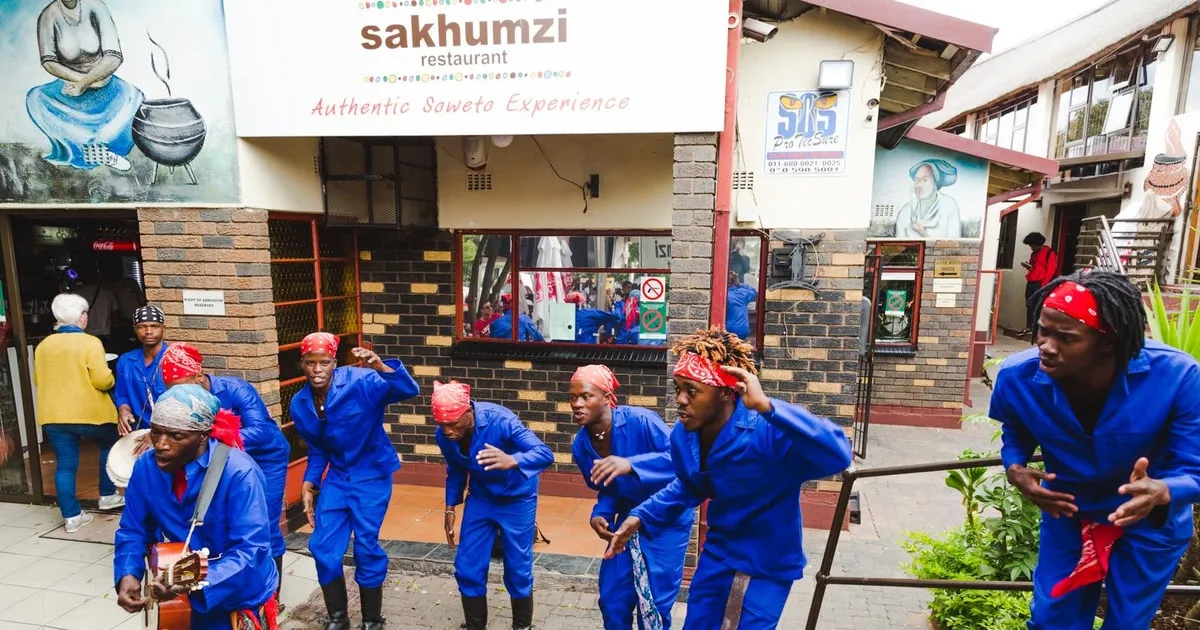 from $92
Johannesburg and Soweto Apartheid Full Day Tour w/Lunch
Full day by vehicle with lunch included: the Apartheid Museum, central Johannesburg and Soweto with Vilakazi Street, in one booking.
Check Availability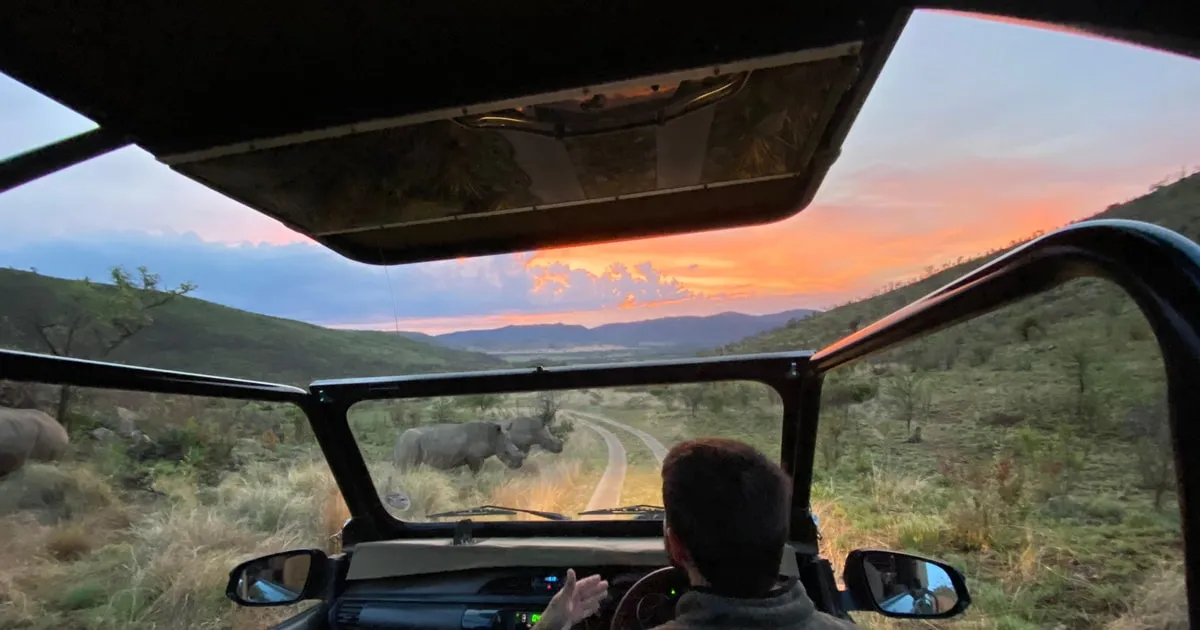 from $184
From Johannesburg: Pilanesberg Nature Reserve Game Safari
The Big Five day out: Pilanesberg's extinct volcano ring, in the park before the heat, back in the city by dinner.
Check Availability from $78
Joburg street food tour in it's oldest suburb!
Eat through Fordsburg, the city's oldest suburb, one street-food counter at a time.
Check Availability from $43
Soweto: Walking Tour with a Local Guide and Lunch
Walk Soweto's streets with a local resident, eat where the neighbourhood eats; the most honest two hours you can buy there.
Check Availability from $116.04
Amapiano & Afrobeats Nightlife Experience in Johannesburg
Amapiano and Afrobeats with a local host through Joburg's club nights; the safe way in after dark.
Check AvailabilityPrices, ratings and details are the platform's own. dollar figures are the listed prices — the platform bills in your account's currency.
Johannesburg or Cape Town: the Questions That Decide It
Which is better for a first visit to South Africa?
For most first trips of a week or more, both — two nights in Johannesburg for the history and a Cape Town finish for the scenery. With four nights or fewer, pick by purpose: history and safari make Johannesburg the answer, postcard landscapes make Cape Town's case, and the seven-dimension scorecard above is the long form of that sentence.
Is Cape Town or Johannesburg safer?
The serious advisories treat the whole country as one risk picture: no walking after dark, vehicles for evening moves, guided township visits only, e-hailing over street taxis. Johannesburg's specific documented risks are the OR Tambo follow-home pattern and long car distances; Cape Town carries its own township and hotspot geography. Planned daylight days are low-risk in both — the discipline travels, and the postcode matters less than the internet's argument suggests.
Cape Town or Johannesburg for safari?
Johannesburg, and the margin is structural: Pilanesberg's malaria-free Big Five sits roughly two hours away — $45.9 (R748) international gate plus $10.31 (R168) per car — with guided days from $184 listed, the Lion & Safari Park inside a half-day, and the Sterkfontein caves on the same arc. A comparable Big Five day from Cape Town means flying north anyway, which is Johannesburg's answer arriving by detour.
Can you visit both Johannesburg and Cape Town in one trip?
Yes, and it is the standard shape of a South African first trip: the cities connect by a short daily air hop, so five nights minimum makes both honest — Johannesburg first for two nights, then Cape Town. The do-both trap is splitting too evenly; two thin Johannesburg days buy the history half, and everything else belongs to the Cape. The three-day Johannesburg plan shows what a fuller northern half looks like.
How many days should each city get?
Johannesburg: two days covers the museum, the hill and Soweto properly, with a third only if the Pilanesberg day is in the plan. Cape Town: three to five, because its dimensions — mountain, coast, winelands — stack rather than substitute. That asymmetry is why the do-both plan starts north with two nights and gives the surplus south.