 Johannesburg Travel Guide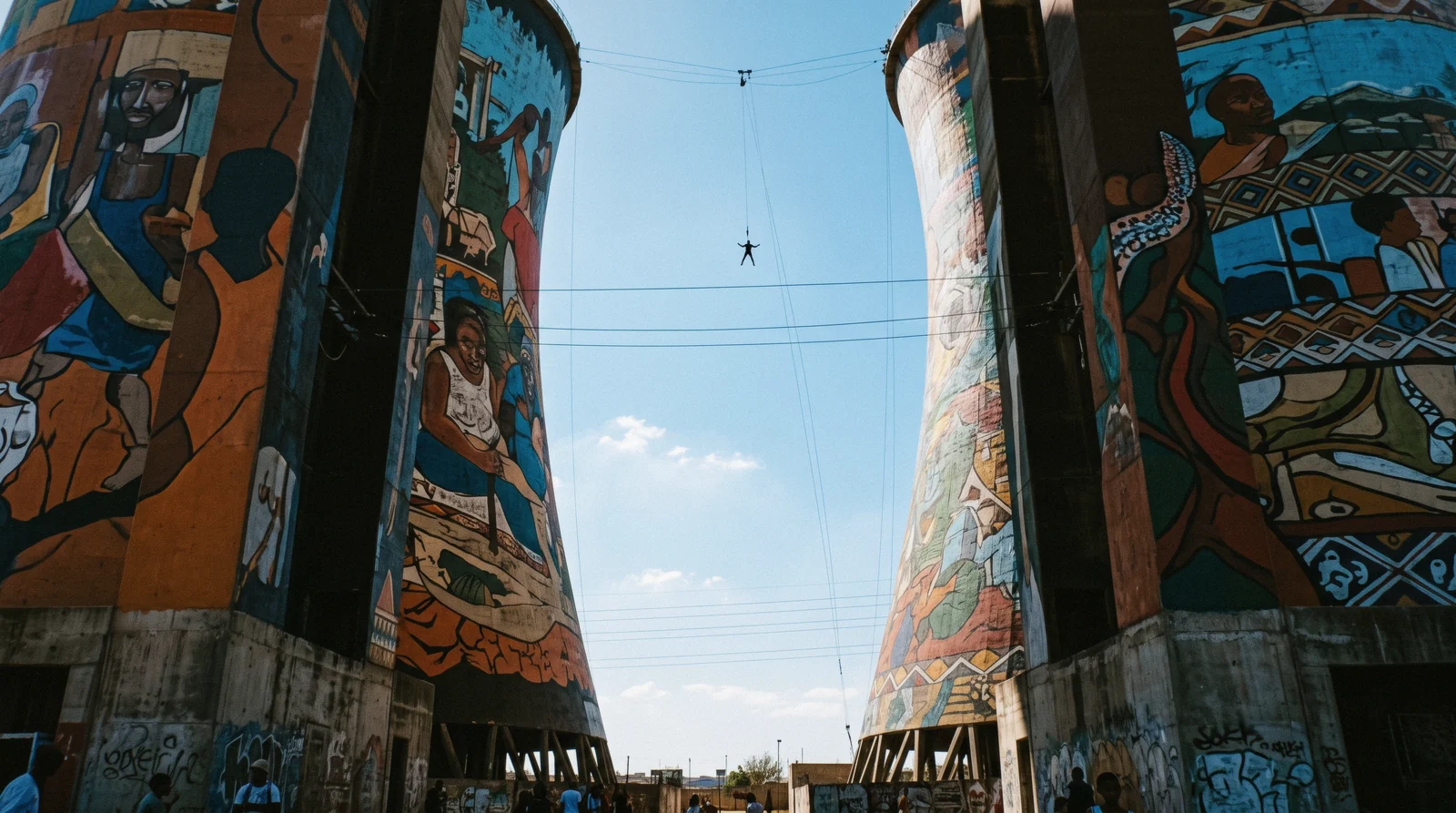
The Soweto Towers are the two painted cooling towers of the decommissioned Orlando Power Station — 100 m of concrete that once cooled a power plant, then became Soweto's billboard, its largest mural and, between the two shafts, the site of a 100 m bungee jump. This page separates what is documented from what is not, because at check the operator's own website showed nothing but a maintenance page: no prices, no hours, no booking form. Everything verifiable is printed here with its source, the reliable way to stand under the towers is a guided Soweto day, the full sight list lives on things to do in Johannesburg, and the homepage of this Johannesburg guide holds everything else.
Quick answer What the towers are, what is verified, what is not, the reliable way in
The Soweto Towers are the two 100 m cooling towers of the old Orlando Power Station, painted with murals and used for a bungee jump from a bridge strung between them. The catch, stated plainly: the operator's site was down for maintenance at check, so no official price, hour or booking channel could be verified — confirm by phone before you build a day around a jump.
Key takeaways
- What is documented: a 100 m, 33-storey bungee from a sky bridge between the towers, a power swing, an internal swing and a viewing platform, per South African Tourism
- What is not: prices, hours, and that the jump is currently operating — the official site was a maintenance page at check, so this page prints no bungee price at all
- The reliable way in: the half-day Soweto tour with a local guide stops at the towers with the story included, and the Soweto guide plans the rest of the township day
Key facts
Opening hours
| Opening hours | Not stated — the operator's website showed only a maintenance page when this page was compiled |
|---|
Admission
- Adult
- Not stated: bungee and viewing prices were not verifiable at check. The Soweto tour cards that stop at the towers list from $58 (operator listings, USD)
Planning it
- Time needed
- A photo stop: 20–30 minutes. A jump day, when operating: half a day (operator descriptions, unverified)
- Book ahead
- Optional — walk-up usually fine
- Address
- Kingsley Sithole Street, Klipspruit/Orlando West, Soweto (per OpenStreetMap — the operator publishes no address; the towers stand by the old power station site)
There is no official row in this table, because none could be verified: the towers' website was a maintenance page at check, and a price we cannot source is a price we do not print. The cards below are the Soweto tours that put you at the towers; prices are the operators' USD listings, and rand figures use $1 = R16.30.
Do you want the towers as a guided stop, or are you chasing the jump? If the jump is the point, phone before you drive.
| Option | Price | The towers part | Cancel | Book |
|---|---|---|---|---|
| Half-day Soweto tour with a local guide, 4 hFirst-timers who want the towers inside the full Soweto story, with a guide who lives there | $120 | Vilakazi Street, the Hector Pieterson Memorial and the Orlando Towers up close | Full refund up to 24 hours before | Check Availability |
| Soweto by tuk tuk, 2.5 hAnyone short on time who wants the wind, the streets and the tower photo frame | $58 | The open-sided tuk-tuk loop through Orlando's streets; the listing suggests pairing it with a towers visit booked on its own | Full refund up to 24 hours before | Check Availability |
| Soweto night tour, 5 hThe evening version of Soweto, when the township is at its loudest and the towers glow | $110 | The towers lit after dark on the drive between stops, with dinner included | Full refund up to 24 hours before | Check Availability |
None of these cards sells you the bungee — they deliver you to the towers. The jump itself, if it is running, is bought at the towers; its price is exactly the figure this page cannot print, because the operator's site was still down in Q3 2026.
Soweto tours that stop at the towers
Every card links to the operator's own page, where the calendar shows live availability. Listed prices are in USD as the operators publish them.
 from $120
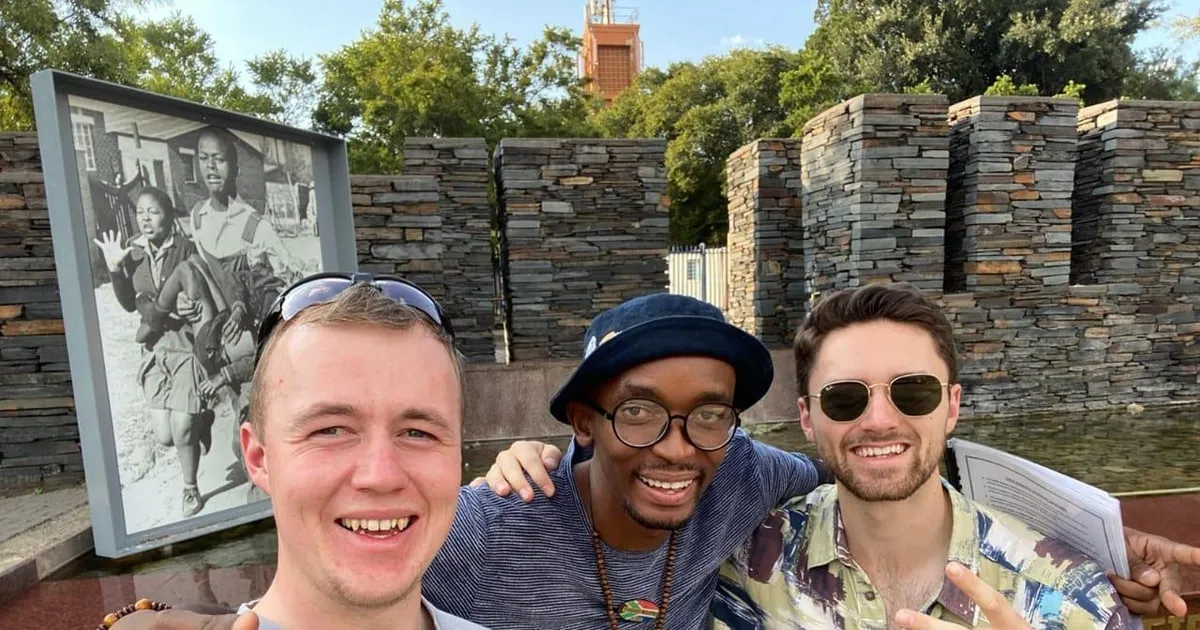
Johannesburg: Half-Day Soweto Tour with a Local Guide
Half day with a guide who lives there: Vilakazi Street, the Hector Pieterson Memorial and the Orlando Towers up close.
Check Availability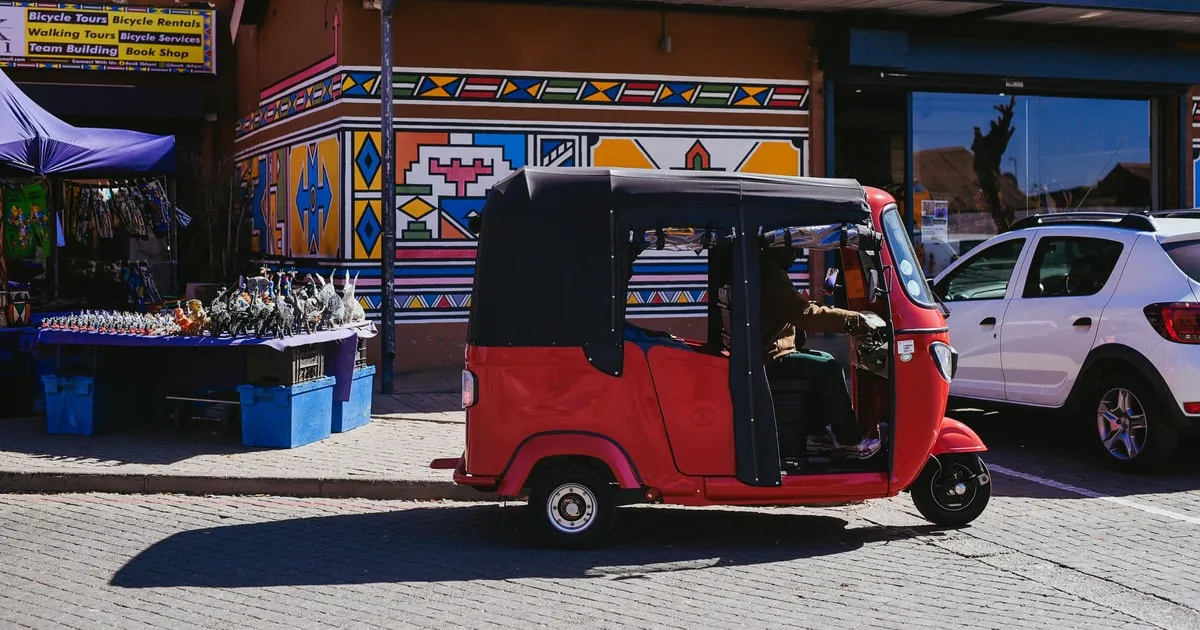 from $58
Johannesburg: Soweto Tour by Tuk Tuk
The tuk-tuk version: three wheels, open sides, the same Vilakazi Street story with the wind in it.
Check Availability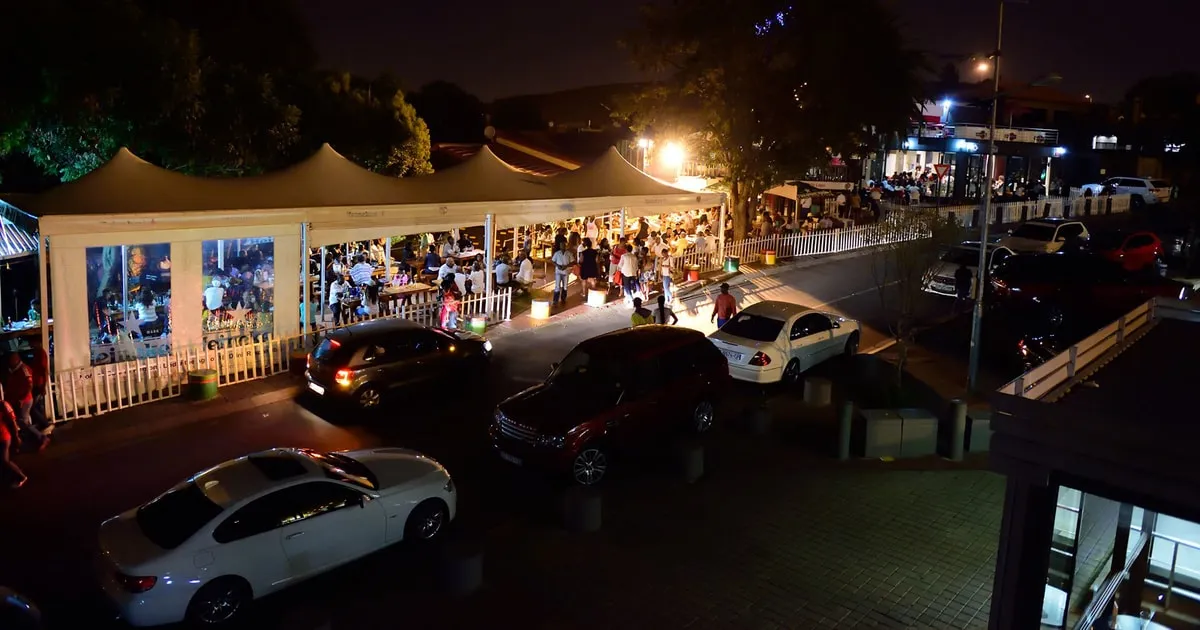 from $110
Johannesburg: Soweto Night Tour
Soweto after dark with a guide: the towers lit, dinner included, the evening version of the township story.
Check AvailabilityPrices, ratings and details are the platform's own. dollar figures are the listed prices — the platform bills in your account's currency.
What the Soweto Towers Are: Power Station to Canvas
The towers were never meant to be seen. They were the cooling system of a coal-fired power station — and outliving the plant is what turned them into Soweto's most photographed structure.
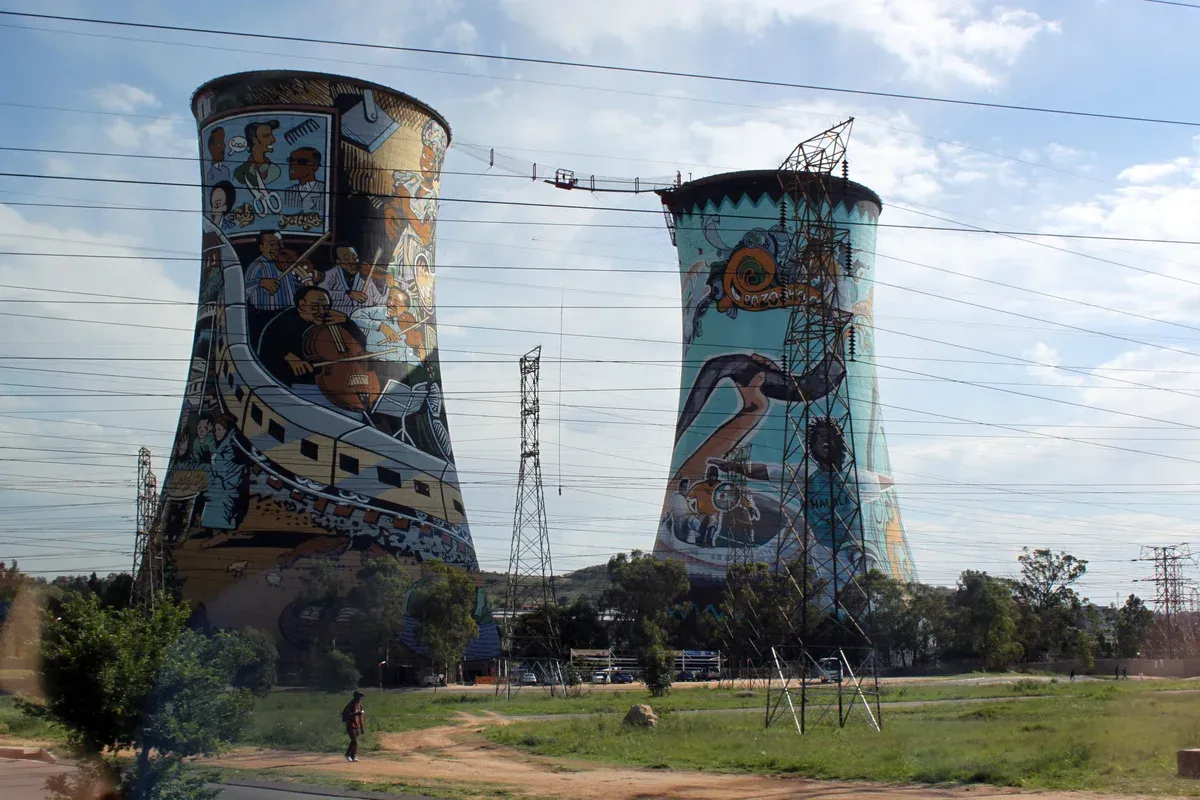
The Orlando Towers over Soweto. Photo: Anagoria, CC BY 3.0, via Wikimedia Commons (https://creativecommons.org/licenses/by/3.0)
Cooling towers, 1951
Orlando's power station was planned from 1935 to feed Johannesburg's growing appetite for electricity; construction started in 1939, was slowed by the war, and the last phase finished in 1955. The two cooling towers went up in 1951, when the spray ponds below them hit capacity — and those ponds were the first in South Africa to run on sewage effluent, piped from the Klipspruit sewage works, because clean water was too precious to burn. The station served Johannesburg for over 50 years before it was decommissioned in 1998.
Practical line: the towers are the landmark you navigate by — visible from ridges across the south of the city, they tell you exactly where you are in Soweto.
Paint and the adventure era, from 2006
In 2006 work began to turn the power station site into an entertainment and business precinct, and the towers became canvases: one operates as an advertising billboard, the other carries what is described as the largest mural painting in South Africa — most recently repainted by the South African illustrator Karabo Poppy, whose work South African Tourism calls a celebration of Soweto's creativity. The adventure business grew around them: bungee, swings and a viewing deck pitched at the same tourists who come for Vilakazi Street. Practical line: the painted sides face the street, so the classic photo costs nothing — the frame everyone takes is from below with a jumper mid-fall, if the jump is running.
The Bungee: What South African Tourism Describes
This is the documented shape of the experience, as the national tourism authority describes it — printed as description, not as a promise, because operating status could not be re-confirmed at check.
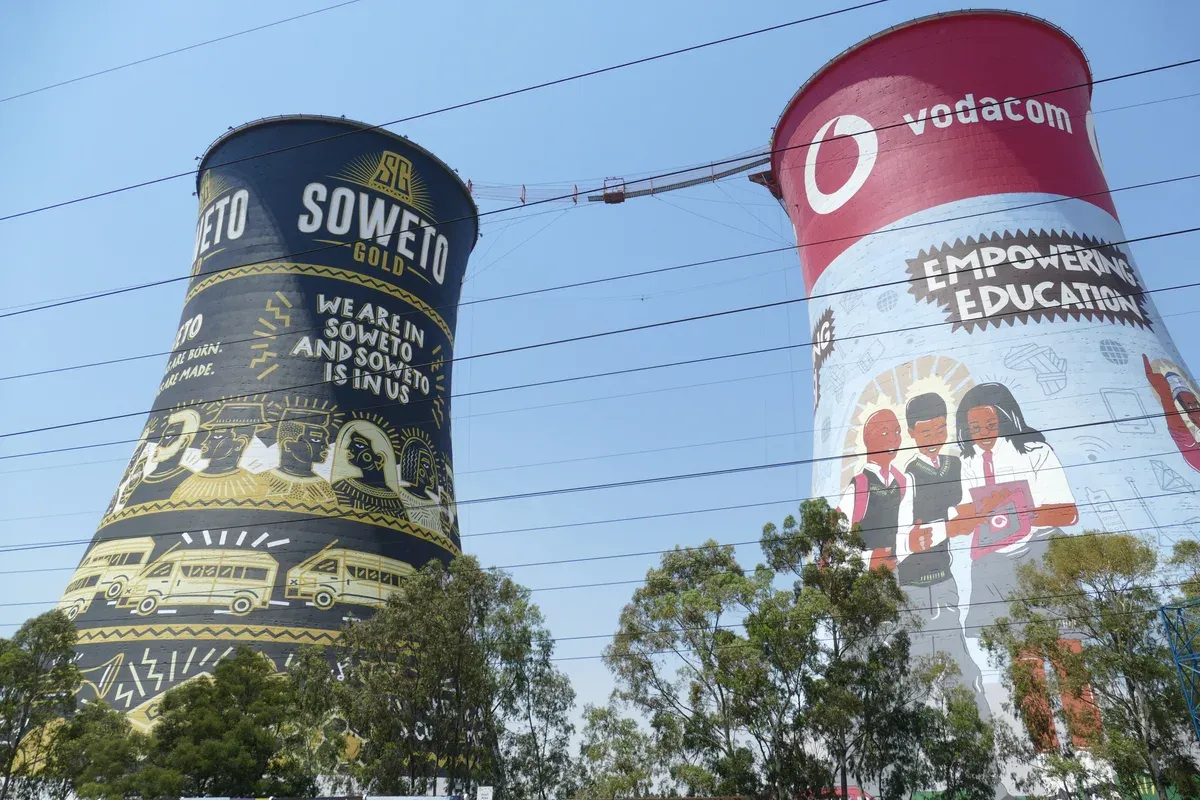
The painted faces of the towers from below. Photo: Bernard DUPONT from FRANCE, CC BY-SA 2.0, via Wikimedia Commons (https://creativecommons.org/licenses/by-sa/2.0)
From the lift to the sky bridge
Per South African Tourism: an open-air lift carries jumpers up the outside of the west tower to a platform 3 m below the rim, and a floating staircase finishes the climb to the top. The bungee itself runs from the sky bridge strung between the two towers, a 100 m drop — about 33 storeys — with the jump platform between them. Non-jumpers get a viewing platform at the top; the operators have also run a power swing with a 40 m freefall before the cables catch, the Abyss (a swing inside the tower's shaft, a world-first when launched) and base jumping events.
Practical line: this description is the authority's, from before the operator's site went dark — treat it as what the setup was built to be, and verify what it is today.
How the ground rules worked
Two operational facts from the same source matter even if you never leave the ground. First, bookings were not accepted — activities ran first come, first served, which is why tour timing mattered. Second, the operation was cashless: card payment only, so an unplanned visit with an unplanned wallet failed at the counter.
Practical line: both rules predate the outage at check, so confirm both when you phone — and if you are photographing rather than jumping, none of this stops you from standing under the towers with the tour.
Is the Bungee Operating? The Honest Status
Here is everything we know, and where it leaves you. The official website, orlandotowers.co.za, served only an "under maintenance / coming soon" page at check — no prices, no hours, no booking form. A second domain, sowetotowers.co.za, ranks high in search results, but the copy of it captured in our research was stuffed with hundreds of unrelated casino-listing pages, a sign the site is not being looked after — so nothing from it is printed here as fact.
South African Tourism still lists the operation, with two phone numbers: 071 674 4343 (office hours 09:00–17:00) and 064 681 8478 (Wednesday to Sunday). That is the practical answer: phone before you go, or let a guided Soweto day carry you past the towers so the day works whatever the jump's status. One more practical caveat: like anywhere in Johannesburg, load-shedding can pause card machines and lifts without warning — one more reason to confirm on the day.
- Verified: the towers stand, painted, and are a standard stop on Soweto tour routes
- Not verifiable at check: bungee prices, opening hours, booking, and that the jump is currently operating
- Best move: phone the numbers South African Tourism lists, or arrive as part of a tour and decide on the ground
How Much Time to Give the Towers
The towers sit at the Orlando end of the classic Soweto circuit, so the routing question is whether they are a stop, a half-day or the excuse for the whole township day.
For almost every visitor the towers are a photo stop inside a Soweto day: 20–30 minutes at the base between Vilakazi Street and the Hector Pieterson Memorial, both ten minutes away by vehicle. The jump, when it runs, is a half-day affair — first come, first served means arriving early and waiting your turn. Mandela House on Vilakazi Street charges $11.35 (R185) for international adults, and the Hector Pieterson Memorial's published fees run $1.84 (R30) for pensioners to $0.31 (R5) for children, with the adult rate not listed.
| Routing | What you get | What it skips | Door to door |
|---|---|---|---|
| Photo stop on a tour | The half-day guided Soweto day — towers up close, Vilakazi Street, the memorial, with the story told | The jump itself; nothing else | About 4 h from hotel pickup, towers stop included |
| The jump day, if operating | Phone ahead, arrive early — first come, first served, card only per the documented rules | The rest of Soweto for the morning; the jump eats the day's prime hours | Half a day, best started in the morning |
| Towers + the Soweto circuit | Towers, then Vilakazi Street (Mandela House, $11.35 (R185)) and the Hector Pieterson Memorial ($0.30–$1.84, R5–R30, published fees) | Nothing of the classic day; this is the classic day | A full day, the Soweto guide has the order |
At the Soweto Towers: Dos and Don'ts
Every line here is a decision argued somewhere above, compressed for the day of.
Do
- Phone the numbers South African Tourism lists — 071 674 4343 or 064 681 8478 — before building a day around the jump
- Take a guided Soweto tour that stops at the towers; the stop works even when the jump does not
- Photograph the painted sides from below in the morning, when the highveld light is on the murals
- Carry a card, not cash — the documented ground rule at the towers was cashless
- Pair the towers with Vilakazi Street and the Hector Pieterson Memorial, both minutes away on the same circuit
Don't
- Don't trust third-party price lists for the bungee — including old search snippets and cached pages
- Don't arrive after dark to photograph; Soweto visits run in daylight, and the night tour is the after-dark version done right
- Don't treat the "world's second highest bungee jump" line as verified — no official page states a ranking
- Don't drive across town for the jump alone without confirming it is running; the towers are free to see, the jump is not free to chase
- Don't wander the power station site beyond the towers — parts of the old plant are ruin, not attraction
Five Things Most Visitors Do Not Know About the Soweto Towers
All five come off the documented record, and each one makes the towers read as more than a backdrop.
- The towers were an afterthought. They went up in 1951, six years before the power station's last phase finished, only because the spray-pond cooling system had hit its ceiling [Wikipedia, Orlando Power Station]. - They ran on sewage. The spray ponds the towers served were the first in South Africa cooled by effluent from the Klipspruit sewage works — scarce clean water went to people, not to coolant [Wikipedia]. - The plant died; the towers outlived it. The station was decommissioned in 1998 after more than 50 years; within a decade the towers had started their second life as canvas and adrenaline rig [Wikipedia]. - Television found them early. The Amazing Race sent contestants across the suspension bridge 30 storeys up for a Fast Forward in season seven; An Idiot Abroad built an episode around trying to make Karl Pilkington jump; Chappie used the station as its gang HQ, towers painted in Die Antwoord artwork [Wikipedia, film and TV]. - The mural is a job, not a one-off. The towers carry advertising on one face and the country's largest mural painting on the other, most recently repainted by illustrator Karabo Poppy [South African Tourism].
Getting to the Soweto Towers
South African Tourism's driving route: take the N1 south towards Bloemfontein, leave at the M68 Soweto off-ramp and follow the signs to the towers. From Sandton or the northern suburbs count on 30–40 minutes by car; from the CBD less. Tours are easier: the Soweto cards on this page all include hotel pickup, which removes both the navigation and the daylight problem.
E-hailing works in Soweto and is the standard self-organised option — order from the memorial to the towers rather than walking between them in the Orlando grid unless your guide is leading. If you fly in and come straight here, OR Tambo sits roughly an hour away depending on traffic.
- By car: N1 south, M68 Soweto off-ramp, signed to the towers (SA Tourism routing)
- By tour: hotel pickup included on every card in the table above
- By e-hail: standard across Soweto; link the towers to Vilakazi Street by car, not on foot
- Timing: daylight only for visitors on foot; morning gives the mural its best light
The Orlando Towers in Eight Dates
From coal country to canvas: the short version of how two cooling towers outlived the machine they served.
-
1935
Planning the Orlando Power Station
Johannesburg's electricity demand is outrunning the downtown City Generating Station; a site near water and rail coal lines is chosen in Orlando.
-
1939
Construction starts
Merz & McLellan consult; the outbreak of the Second World War slows everything down.
-
1951
The cooling towers rise
Added to supplement the spray ponds, which were the first in South Africa to use sewage effluent as coolant.
-
1955
The station is complete
The last phase finishes; Orlando serves Johannesburg for the next several decades as one of its flagship municipal plants.
-
1998
Decommissioned
After more than 50 years of service the station goes quiet. The towers stay standing over Soweto, painted and unmaintained.
-
2006
The second life begins
Work starts to transform the site into an entertainment and business centre; the towers become billboard and mural, then adventure rig.
-
2005–2015
Television years
The Amazing Race, An Idiot Abroad and Wie is de Mol? all film the jump; Chappie paints the station in Die Antwoord artwork.
-
At check
The official site goes dark
orlandotowers.co.za serves a maintenance page; no official price, hour or booking channel is verifiable — the status this page documents.
Dates as recorded on Wikipedia's Orlando Power Station page and South African Tourism's towers article; the site status is our own check.
Soweto Towers Map: the Towers and the Soweto Circuit
The towers at the Orlando end, and the two stops every Soweto day is built around, ten minutes apart to the north-west.
- 1 Orlando Towers (Soweto Towers)The two painted cooling towers. Free to see and photograph; the bungee's operating status must be confirmed by phone.
- 2 Mandela House, 8115 Vilakazi StreetNelson Mandela's former home, now a museum: $11.35 (R185) international adult; cashless from December 2025.
- 3 Hector Pieterson Memorial & Museum, Khumalo StreetThe 1976 uprising memorial. Published fees $1.84 (R30) elderly to $0.31 (R5) children; adult rate not listed.
Numbers match the pins on the map.
Next stop from the towers
Both stops below sit on the standard Soweto circuit, minutes from the towers by vehicle — link them, do not walk the grid between them.
Soweto
The township is the attraction and the towers are one stop on its circuit. The Soweto guide covers Vilakazi Street, the memorials, the food streets and why a guide is worth it on a first visit.
you are in it Read the guideMandela House
8115 Vilakazi Street, the red-brick house Nelson Mandela lived in before his arrest. International adults $11.35 (R185), South African adults $6.44 (R105); the site went cashless. The Mandela House guide has the full fee grid.
10 min by car Read the guideHector Pieterson Memorial & Museum
The 1976 uprising memorial on Khumalo Street, where the march began. Published fees: $1.84 (R30) elderly, $0.61 (R10) teens and students, $0.31 (R5) children — the adult rate is not listed. The museum guide explains what you are standing in.
10 min by car Read the guideSoweto Towers questions
Is the bungee at the Soweto Towers operating?
We cannot tell you yes, and we will not pretend otherwise: at check the official site was a maintenance page with no booking channel, and nothing authoritative confirms current operations. South African Tourism still lists the operation with two phone numbers — 071 674 4343 and 064 681 8478. Phone before you go, or take a guided Soweto tour that stops at the towers and decide on the ground.
How much does the Soweto Towers bungee cost?
Not stated — that is the finding, not a dodge. The operator's site was down at check, no official price could be verified, and this page does not print numbers it cannot source. The Soweto tour cards that deliver you to the towers list from $58; the jump itself, if running, is paid at the towers by card.
How tall is the bungee jump between the towers?
The documented figure is a 100 m drop from the sky bridge strung between the two towers — about 33 storeys — per South African Tourism's description of the experience. You will also see the towers called the world's second highest bungee jump; no official page we could reach states that ranking, so treat it as marketing until an operator says otherwise.
What were the Soweto Towers built for?
Cooling. The two shafts went up in 1951 as part of the Orlando Power Station, supplementing spray ponds that cooled the plant — the first in South Africa to run on sewage effluent. The station was decommissioned in 1998; the towers became a billboard, the country's largest mural and an adventure site from the 2000s.
Who owns the Soweto Towers?
The adventure operation has been documented under the name Orlando Towers (Pty) Ltd, the company named in the historical sources for the site's development. Who runs it today is exactly what the dark website makes hard to confirm — one more reason the phone numbers on this page matter before you commit a day to the jump.
Can you go up the Soweto Towers without jumping?
The documented setup included a viewing platform reached by the open-air lift, for visitors who wanted the view over Soweto without the cord. Whether that deck is currently selling access is unverifiable at check — phone the numbers South African Tourism lists. The free version costs nothing: the best frames of the painted towers are from the street below, and every Soweto tour stops for them.
Do you need to book the Soweto Towers in advance?
The documented rule was no booking at all — activities ran first come, first served, cashless, which is why arriving early mattered. With the booking site down at check there is no online channel to book through anyway. What you can lock ahead is the transport: the Soweto tour cards on this page book online, cancel free up to 24 hours before, and stop at the towers whatever the jump's status.
Where the Towers Fit in a Soweto Day
The classic order works north to south: Vilakazi Street and Mandela House first while the street is quiet, the Hector Pieterson Memorial for the 1976 story, lunch off the tourist strip, and the towers last — the painted shafts read best with the day's context behind them, and the afternoon light lands on the murals. If a jump is confirmed, flip the order and take the towers in the morning, first-come-first-served. The Soweto guide carries the full township plan, is a Soweto tour worth it answers the booking question honestly, the one-day Johannesburg itinerary shows where Soweto sits in a short trip, and the Johannesburg guide homepage pulls the whole plan together.
The Soweto Towers on Film: the Jump, the View, the Drop
Three jump videos, filmed from the bridge, the air and the landing zone — the closest you can get to the 100 m drop without a cord around your feet.
Bungee Jumping Orlando Towers, Soweto
The full jump filmed end to end — the lift up, the sky bridge and the drop between the painted shafts.
Video: Chasing the RainbowBungee at Orlando Towers, Soweto, Jo'burg
The tourism authority's own clip of the jump, useful for the exact view a jumper gets over Soweto.
Video: South African Tourism UKOrlando Towers Bungee Jump GoPro Video
A chest-mounted view of the whole sequence, from the floating staircase to the rebound.
Video: Nicole MosetterVideos load from YouTube only when you press play. All predate the operator's site outage documented above.
Prices, hours and terms are set by the venue or operator and confirmed at checkout.
We may earn a commission if you book through one of our links, at no extra cost to you. Full affiliate disclosure