 Johannesburg Travel Guide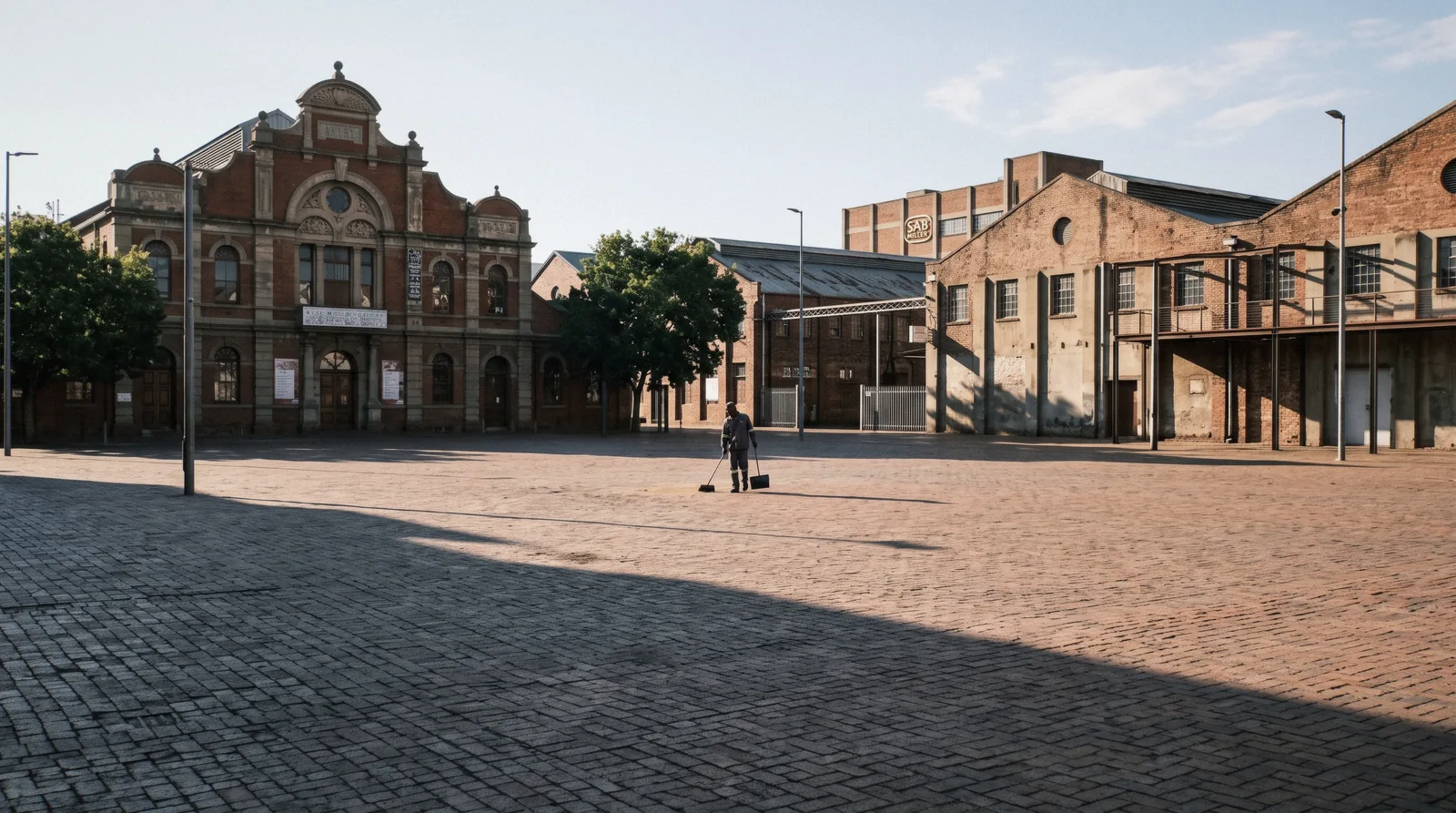
Newtown Johannesburg is the old market precinct on the CBD's western edge — Brickfields before that, the city's power-and-rail quarter before that — and today it runs on three things: the Market Theatre, which opened in June 1976 and turns fifty; Mary Fitzgerald Square and its jazz murals; and a mine-rail heritage you can walk in two guided hours. This page covers what stands there now, including the honest warning row — Museum Africa is in an upgrade phase with no confirmed public reopening — with show booking via Webtickets, the walking pairings over the Nelson Mandela Bridge, and the safety frame for the one district where locals say wandering without purpose is the mistake. Prices are dollar-first at $1 = R16.30.
Quick answer What runs, what does not, and how to spend a half-day
Newtown is the old market precinct on the CBD's western edge, free to walk in daylight, anchored by the Market Theatre (opened 1976, its 50th year, shows booked through Webtickets) and Mary Fitzgerald Square with its jazz-legend murals. Museum Africa is the honest warning: in an upgrade phase, no confirmed public reopening. Half a day covers it — pair it with Braamfontein over the Nelson Mandela Bridge, or take the two-hour guided walk through the precinct's mining-rail heritage for $37.
Key takeaways
- The theatre is the reason to come: the Market Theatre section has the 50th-year story and the Webtickets rule; the precinct's murals are the square's.
- The guided walk out of the precinct is real: the two-hour Newtown-to-mining-district walk ends at Constitution Hill's doorstep, rated 5.0 by its reviewers.
- Museum Africa is closed in an upgrade phase — the honest row explains what that means and what replaces it.
- The one walking link in the city runs from here over the Nelson Mandela Bridge to Braamfontein — the pairing the districts hub calls the classic.
The precinct at a glance: what runs and what does not
Every stop that matters in Newtown, with its current status, its rhythm and its cost at the sources' own figures, dollar-first at $1 = R16.30 — statuses checked against the theatre's own channels, the red bus operator's precinct guide and 2026 reporting in Q3 2026. The empty cost cells are empty because no flat figure is published; the notes say where each price actually lives.
| Stop | Status | Hours | Cost |
|---|---|---|---|
| Market Theatre | Open — its 50th-anniversary year, full 2026 slate | Performances evenings plus matinees; box office online | Varies by production — booked through Webtickets |
| Mary Fitzgerald Square | Open public square | Always; best in daylight | Free |
| Workers Museum | Listed as open by the red bus operator's precinct guide; no official status page at check | Daytime | No published figure at check — verify on the day |
| Sci-Bono Discovery Centre | Open | Daytime | $2.94 (R48) adult; $1.96 (R32) child; $8.59 (R140) family 2+2 |
| Museum Africa | Upgrade phase — no confirmed public reopening; 2026 reporting has it serving as collection storage | Closed to visitors | — |
The theatre's tickets vary show by show, which is why no rand figure is printed — the theatre section explains the Webtickets booking. Museum Africa's row is the page's honest warning: the building that anchors most older itineraries of this precinct is the one thing not running.
The walks out of the precinct
Two walking cards, used honestly: the two-hour highlight walk that starts in Newtown and reads the precinct's gold-and-rail heritage all the way to Constitution Hill's doorstep, and the city-centre walk that covers the CBD grid it connects to. Prices and ratings are the platforms' own listings.
 from $37
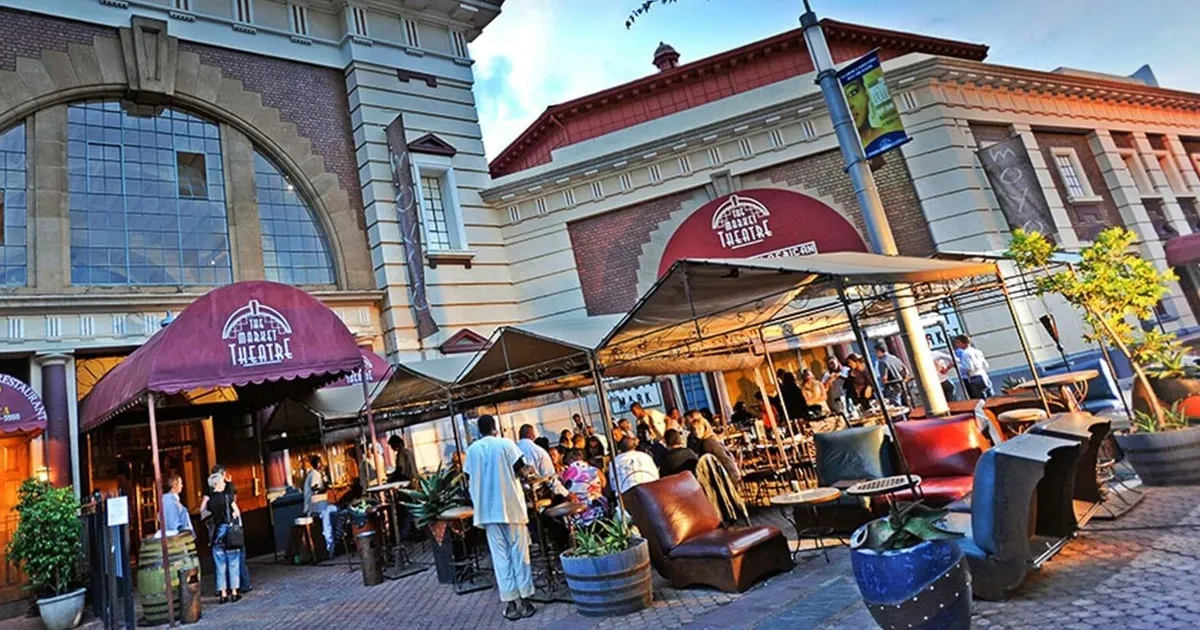
Johannesburg: Highlight tour Newtown to Mining District
A guided walk through Newtown and the mining district that ends at Constitution Hill's doorstep, told through the buildings' gold money.
Check Availability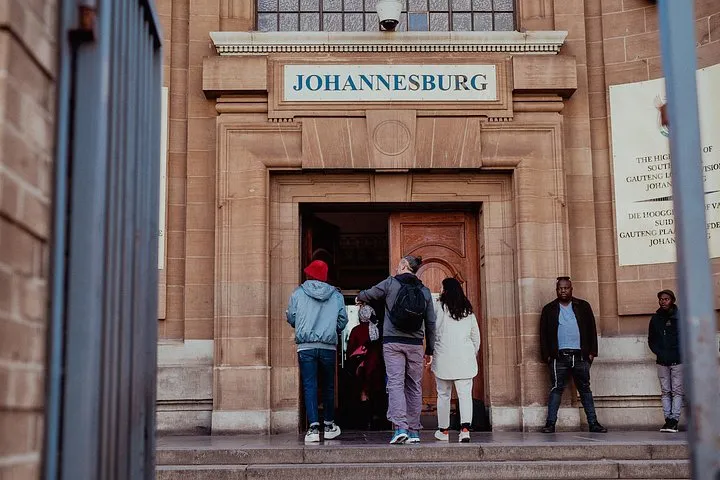 from $49.29
Johannesburg City Centre Walking Tour
The CBD grid on foot: mining headquarters, art deco towers and the quiet corners visitors never find alone.
Check AvailabilityPrices, ratings and details are the platform's own. dollar figures are the listed prices — the platform bills in your account's currency.
What Newtown is: Brickfields, power station, market, precinct
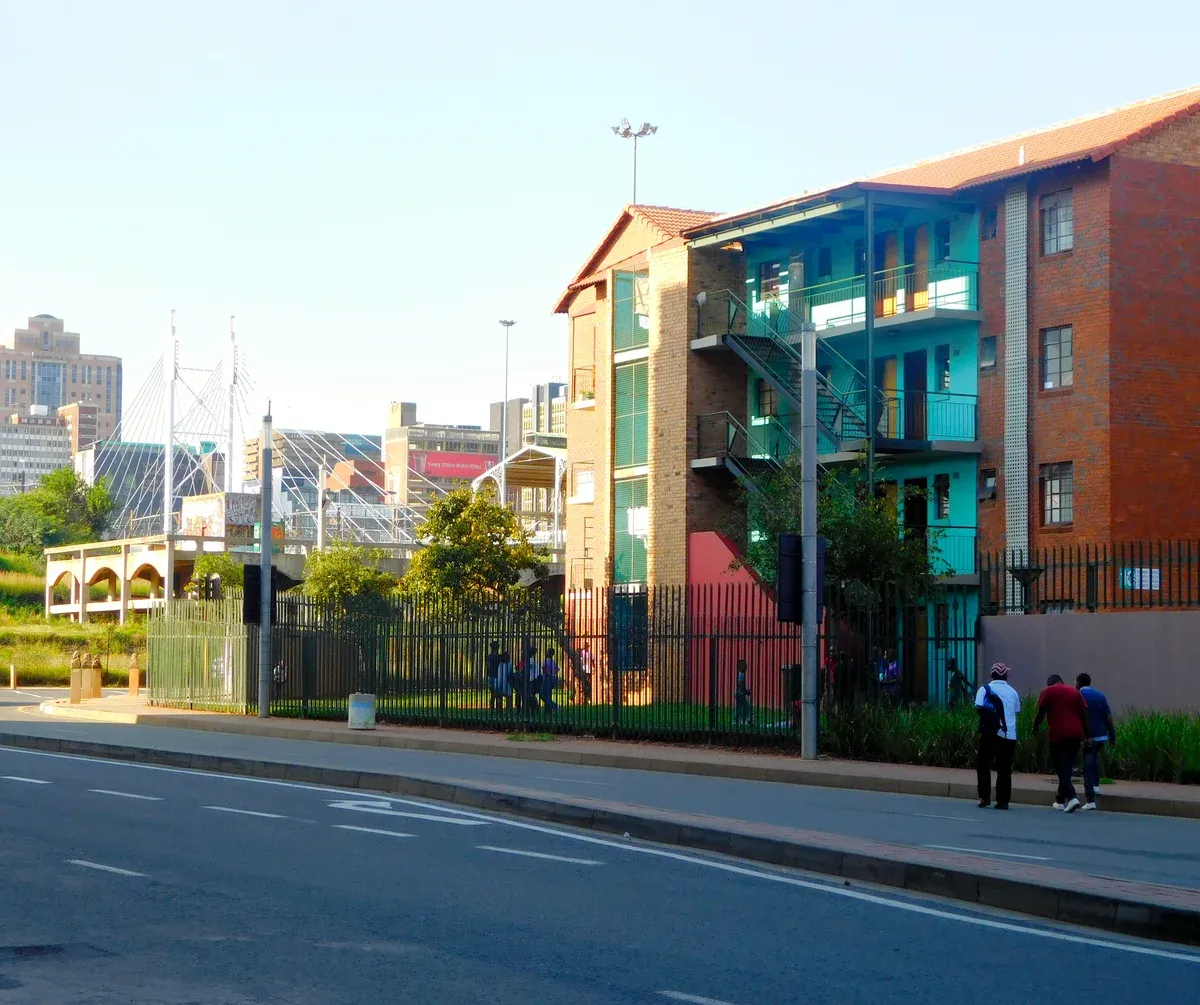
Newtown's brick fabric — the precinct began as the Brickfields, the city's brick-production quarter. Photo: Adamina, CC BY 2.0, via Wikimedia Commons
The precinct began as the Brickfields: a manufacturing district of brick works, trade firms, banks, a brewery and fisheries on the young city's western edge, home to about 7,000 people by 1896. Its founding catastrophe is part of the walk: in April 1904, with bubonic plague declared in the district — 82 people died — the authorities burned the settlement out, and the brickfields were remade as a planned industrial quarter and renamed Newtown.
The twentieth century layered the buildings you still walk. The Turbine Hall, built between 1927 and 1934, grew into one of the largest steam-driven power stations of its kind and remains the precinct's architectural anchor. The market buildings handled goods arriving by rail; workers' hostels housed the power-station workforce, segregated by law into houses and hostels whose reconstructed rooms you can still walk through. By mid-century Newtown was, in the phrase of the city historians who know it best, the driving force of the city — power generation, transport and commerce in a few blocks.
The renewal came in two moves: the city's regeneration programme with the provincial development agency, and the Nelson Mandela Bridge in 2003, which made the precinct the southern anchor of the one walking route into the inner city. The street lighting is by the French lighting designer Patrick Rimoux — the precinct was designed to be seen at night, even if the walking advice below keeps you to daylight.
The Market Theatre: 1976 to its fiftieth year
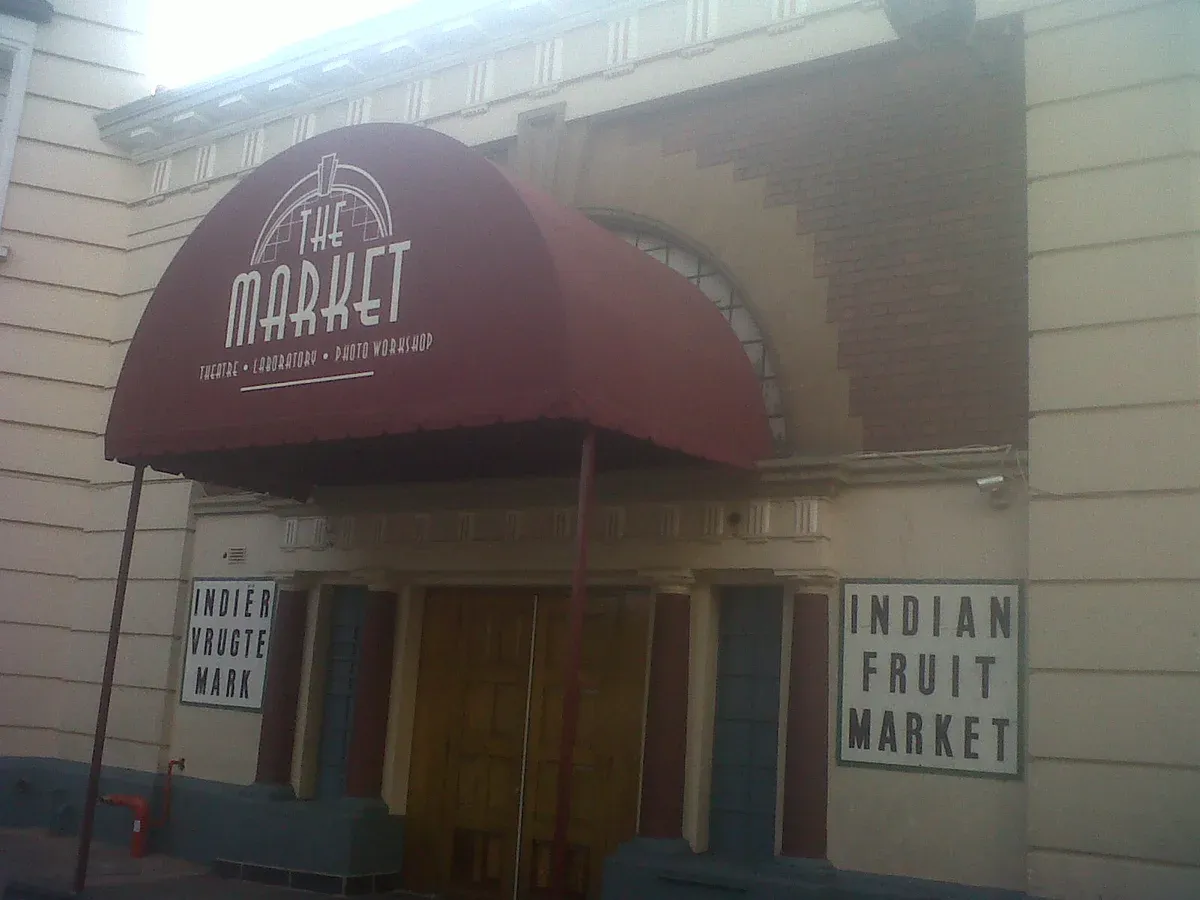
The Market Theatre — the old market buildings that became the crucible of South African theatre in 1976. Photo: Bobbyshabangu, CC BY-SA 3.0, via Wikimedia Commons
The Market Theatre opened in June 1976, converted from Johannesburg's old market buildings at the moment the country's townships rose — the uprising of that June is told on its own page — and it spent the apartheid years as the non-racial stage where much of the nation's dissenting theatre premiered. Its three stages carry the founders' names: the John Kani, the Mannie Manim and the Barney Simon, with Kippies, the jazz venue named for saxophonist Kippie Moeketsi, beside them. the theatre turns fifty, and its 2026 slate — Prima Facie and SHOCKWAVE among the productions — is its busiest in years. The booking fact that matters: tickets are sold through Webtickets, online, and the programme changes monthly — the theatre's own channels carry the current slate, not any printed list.
Matinees and evening performances both run; a show is the single best reason to be in the precinct at night, because you arrive with a destination and leave by e-hail, which is exactly how the precinct should be done after dark. Day visitors get the building's history for free: the market facade, the foyer photographs and the square it faces are all public ground — and the theatre anchors the guided two-hour walk that reads this precinct properly.
Museum Africa: the honest warning row
The imposing market building on the square's edge, a fruit-and-vegetable market from 1913, housed the city's social-history museum — photographic collections, Victorian carriages, rock art and the African artefacts — and most older itineraries of Newtown put it at the centre. Here is the finding that replaces that paragraph: Museum Africa has no official status page, and 2026 reporting describes the museum in an upgrade and transition phase, its building serving as temporary storage for the Johannesburg Art Gallery's collection, with no confirmed public reopening. This guide treats it as closed to visitors, and no hours or entry figure are printed here because none is published to print.
What still runs around it: the Workers Museum in the reconstructed migrant-labour hostels beside the old compound — listed as open by the red bus operator's own precinct guide, though with no official status page to check it against, verify on the day — and the Turbine Hall across the way, now an events venue whose 1930s turbine hall interior you can still see. The city's museum cluster, with what is open across Johannesburg, is tracked on the museums page.
The practical substitution: build the precinct visit around the theatre, the square and the heritage walk — the three things that are running — and let the museum be the reason to come back when the upgrade lands.
Mary Fitzgerald Square and the jazz murals
The precinct's living room is Mary Fitzgerald Square, the paved square under the freeway skirts where the market buildings, the theatre and the museum face one another across open ground. It is public, free and always open, and its walls carry the precinct's music history painted back into view: large-scale murals honouring the jazz greats — Miriam Makeba, Jonas Gwangwa, Busi Mhlongo, Kippie Moeketsi and Sibongile Khumalo — a reminder that this was the city's jazz quarter, with Kippies the venue that carried the name forward.
The square is also the practical anchor for a visit: the red bus stops here, the walking routes to the bridge and the mining district start from it, and on show nights it is where the theatre crowd assembles. Mid-morning to late afternoon is its best light — the murals face variously, and the photographers' hour is the one before the theatre's matinee curtain.
One honest note: the square's own naming history — Mary Fitzgerald, the trade unionist known as Pickhandle Mary — is told on signs around the precinct rather than on any official page checked for this guide, so take the square's stories from the precinct's own boards, which is where they are told best.
The mine-rail heritage, on a guided two hours
Newtown's deep story is industrial: gold came out of the reef a few kilometres south, arrived by rail in the yards this precinct was built beside, and was powered, provisioned and shipped from the buildings around the square — the first power station, the tram infrastructure, the Turbine Hall, the workers' hostels, the market sheds. Almost none of it explains itself from the pavement, which is why the guided walk is the honest format here.
The two-hour highlight walk runs from Newtown through the mining district along Main Street, where the mining houses that ran the reef had their headquarters, and ends at Constitution Hill's doorstep — the whole arc of the city's money and its control in one route. It is listed at $37, rated 5.0 by its reviewers, and the operator's own note is the practical one: wear walking shoes, the route is on pavement throughout.
The pairing logic writes itself: the walk in the morning, Constitution Hill's own visit after lunch — the two are a booked pairing the districts hub rates the classic inner-city day — or the walk as the half-day that makes a Braamfontein afternoon.
Doing the precinct with purpose, and the night rule
The locals' own advice for Newtown is the most useful safety line for any Johannesburg district: it is best explored with purpose rather than by wandering. Pick one anchor — a show, the square, the heritage walk — and work outward from it, parking once at Newtown Junction if you drive. That is not a verdict on the precinct; it is the difference between a precinct with a destination and streets that invite drifting, and Newtown rewards the first shape.
After dark, the national rule governs: the UK foreign office advises against walking around after dark, so the precinct's genuine nightlife — the club cluster on Gwigwi Mrwebi Street, where the city's techno and party institutions hold their residencies — is a venue-to-vehicle evening. You e-hail to the club's address and you e-hail out; the precinct's party years are real, but they are not walked.
Daylight is the precinct's visiting time and it is genuinely public ground: the square, the murals, the theatre facade and the market buildings all read well on an unhurried mid-morning. The sourced city-wide frame — what the advisories say, the scam patterns, the formats that close the gaps — is on safety and scams.
Getting to Newtown
The red bus stops at the square — its precinct stop on the 13-stop loop — which makes the lazy arrival the easy one: day ticket $23.0 (R375), first departure 09:00 and the last from Rosebank at 15:00. Drivers aim for Newtown Junction, the mall on the precinct's edge whose parking is the locals' own recommendation for a simple in-and-out; the mall's trading hours run to 18:00 on weekdays and shorter at weekends.
On foot, Newtown is the southern end of the city's one true district walking link: the Nelson Mandela Bridge to Braamfontein, fifteen minutes, daylight only — the pairing this site rates the classic inner-city day. Maboneng lies east, one e-hail away; the food quarter of Fordsburg lies west, close enough that a precinct lunch can become a Fordsburg dinner.
E-hailing works door to door from the northern suburbs in twenty-odd minutes outside peak. The full movement picture — trains, cars, the airport line — is on getting around Johannesburg, and how the precinct pairs with the other districts on the neighbourhoods hub. Earlier in the planning? Start from the Johannesburg travel guide.
The precinct on the map
Newtown's pins: the square and its murals, the theatre, the two museum buildings with their different statuses, the mall to park at, and the bridge that makes the walking pair with Braamfontein.
- 1 Mary Fitzgerald SquareThe precinct's free, always-open heart — jazz-legend murals, the red bus stop, and the walking routes' start.
- 2 Market TheatreOpened 1976, fiftieth year; shows booked through Webtickets — the precinct's best reason to be here at night.
- 3 Museum AfricaUpgrade phase, no confirmed public reopening — the honest warning row; the Workers Museum beside it is listed as open.
- 4 Turbine HallThe 1927-34 power station, now an events venue — the precinct's industrial anchor, worth seeing from the street.
- 5 Newtown JunctionThe mall on the precinct's edge — the practical parking for a purposeful visit; trading to 18:00 weekdays.
- 6 Nelson Mandela BridgeThe northern entrance since 2003 — the fifteen-minute walking link to Braamfontein, in daylight.
Numbers match the pins on the map.
Pins sit at the landmarks' addresses and the district centre used across this site; the square, theatre and museum pins are a two-minute walk apart.
Next from the precinct
Over the bridge
Constitution Hill, the free Wits Art Museum and the ridge, fifteen minutes on foot: the Braamfontein guide.
15-minute walk, daylight Read the guideThe mural precinct, east
The retrofitted warehouse blocks and their Sunday market, one e-hail east: the Maboneng precinct guide.
One e-hail Read the guideThe tower between
Ponte City's hollow cylinder on a small booked visit — the skyline this precinct sits under: the Ponte City guide.
One booked hour, by e-hail Read the guideNewtown: questions
Where is Newtown in Johannesburg?
On the CBD's western edge, in the city's Region F: the market precinct sits between the city centre and Fordsburg, with the Nelson Mandela Bridge as its northern entrance and Mary Fitzgerald Square at its heart. It is one e-hail from the northern suburbs, or a fifteen-minute walk from Braamfontein over the bridge.
Is Newtown safe for visitors?
By daylight and with purpose, yes — the locals' own advice is to pick one anchor (a show, the square, the guided walk) and work outward, parking once at Newtown Junction. After dark the national rule applies: no walking, e-hail venue to venue. The sourced city-wide frame is on safety and scams.
Is Museum Africa open?
Not at the time of check: the museum has no official status page, and 2026 reporting describes an upgrade and transition phase with the building in use as collection storage and no confirmed public reopening. This guide treats it as closed — the honest row explains what still runs around it.
How do I book a show at the Market Theatre?
Through Webtickets, online — the theatre sells no printed flat price because it varies by production, and the slate changes monthly. Evenings and matinees both run; a show is the best reason to be in the precinct at night, arriving and leaving by e-hail.
What is Newtown known for?
Theatre and heritage: the Market Theatre, which opened in June 1976 and turns fifty this year, the jazz murals of Mary Fitzgerald Square, the Turbine Hall power station, and the mine-rail story told properly on the two-hour guided walk to the mining district. It was Brickfields before it was Newtown — the brick quarter the 1904 plague burned and rebuilt.
Can you walk from the precinct to the student ridge over the bridge?
Yes — it is the one genuine walking link between Johannesburg's districts: the Nelson Mandela Bridge, about fifteen minutes across the rail yards, in daylight. The pairing makes the classic inner-city day: the precinct's murals and theatre on one end, Constitution Hill and the free museum on the other.
The precinct on film
Three ground-level passes over Newtown — a recent precinct walk, the route towards the city centre, and the drive that shows how the precinct sits against Braamfontein.
Johannesburg CBD | Newtown | 11 October 2025
A recent street pass through the precinct — current enough to check the square and its murals against this page.
Video: Studio28 - South AfricaSouth Africa, Newtown To Gandhi Square, Johannesburg CBD, 16 April 2026
The walk out of the precinct towards the CBD grid — the same line the guided heritage walk reads.
Video: Studio28 - South AfricaA driving tour of Braamfontein and Newtown in Johannesburg
Both ends of the Mandela Bridge pairing in one drive — the geography this page argues for walking.
Video: Sizwe Travel AdventuresVideos load from YouTube only when you press play.
Prices, hours and terms are set by the venue or operator and confirmed at checkout.
We may earn a commission if you book through one of our links, at no extra cost to you. Full affiliate disclosure